





Multiple Myeloma
Latest News
Advertisement
Latest Videos



CME Content






































Advertisement
More News




Results from the phase III ENDEAVOR trial showed that carfilzomib (Kyprolis) reduced the risk of death by 21% compared with bortezomib (Velcade) in patients with relapsed/refractory multiple myeloma

Shaji Kumar, MD, discusses his ixazomib maintenance trial, the latest FDA activity in myeloma, and the potential of chimeric antigen receptor (CAR) T-cell therapy in the field of myeloma.
Kenneth H. Shain, MD, PhD, assistant member, Moffitt Cancer Center, discusses the impact of subcutaneous therapy, such as bortezomib (Velcade) and daratumumab (Darzalex) for patients with multiple myeloma.
Ruben Niesvizky, MD, professor of medicine, Joan and Sanford I. Weill Department of Medicine, Weill Cornell Medical College/NewYork-Presbyterian Hospital, discusses sequencing agents for patients with multiple myeloma.

Peter Voorhees, MD, discusses treatments for both newly diagnosed and relapsed patients with multiple myeloma.

Selinexor (KPT-330), a small-molecule inhibitor with a novel mechanism of action, is being investigated in patients with multiple myeloma who have become refractory to the many new options that have been introduced in recent years for patients with the malignancy.
Reed Friend, MD, a medical oncologist in hematology and medical oncology, of Levine Cancer Institute and Carolinas HealthCare System, discusses the importance of appropriate work-ups for patients with multiple myeloma.

Saad Z. Usmani, MD, discusses recent multiple myeloma data, the potential role of CAR T-cell therapy, and what therapeutic advancements the community can expect in the remainder of 2017.

Rachid Baz, MD, discusses the change in risk factors for select treatments, the impact of daratumumab, and current sequencing questions in multiple myeloma.

Reed Friend, MD, discusses the revised steps in diagnosing patients with multiple myeloma and prognostic factors, as well as existing challenges and hopes for the field’s future.
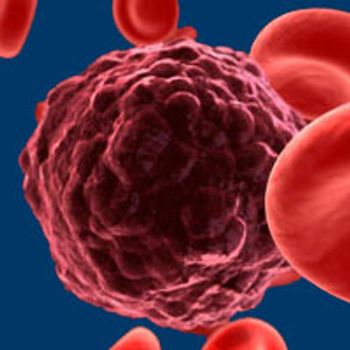
Kenneth H. Shain, MD, discusses the emergence of proteasome inhibitors in multiple myeloma and whether these agents will be best used as monotherapy or in combination regimens.
Two combination regimens anchored by different proteasome inhibitors are being compared in a national clinical trial for patients with newly diagnosed symptomatic multiple myeloma that also seeks to evaluate the ideal duration of lenalidomide (Revlimid) maintenance therapy.
Amgen has announced that it has submitted supplemental New Drug Applications (sNDA) in the United States and Europe based on data from 2 phase III studies showing carfilzomib (Kyprolis) improves overall survival (OS) for patients with relapsed/refractory multiple myeloma.

The combination of carfilzomib (Kyprolis), lenalidomide (Revlimid), and dexamethasone reduced the risk of death by 21% compared with lenalidomide and dexamethasone alone for patients with relapsed multiple myeloma.
Peter Voorhees, MD, hematology, medical oncology, Carolinas HealthCare System, discusses pivotal ongoing clinical trials in the field of multiple myeloma.

The FDA has placed a clinical hold on the phase III KEYNOTE-183 and KEYNOTE-185 pembrolizumab (Keytruda) trials and ordered the discontinuation of the lenalidomide/dexamethasone/pembrolizumab arm of the KEYNOTE-023 trial in patients with multiple myeloma.

Shaji K. Kumar, MD, professor of Medicine, Mayo Clinic, discusses ixazomib (Ninlaro) in multiple myeloma.

Shaji K. Kumar, MD, professor of Medicine, Mayo Clinic, discusses advances in the field of multiple myeloma.
Results from the phase III Myeloma XI study showed that patients with myeloma had deeper responses after induction and after allo-stem cell transplantation with outpatient-delivered quadruplet therapy than with sequential immunomodulatory triplet combinations.
Patients with newly-diagnosed multiple myeloma who did not elect to undergo stem cell transplant but remained on single agent ixazomib maintenance fared as well as those who received SCT.

All patients with multiple myeloma in a phase I study showed a response following treatment with an active dose of bb2121, an investigational anti–BCMA CAR T-cell construct.
Advertisement
Advertisement
Trending on OncLive
1
Five Under 5: Top Oncology Videos for the Week of 8/31/26
2
FDA Approves Camizestrant Plus a CDK4/6 Inhibitor for Emergent ESR1-Mutated HR+, HER2– Advanced Breast Cancer
3
B7-H4–Targeted ADCs Signal a New Frontier for Platinum-Resistant Ovarian and Endometrial Cancer
4
The OncFive: Top Oncology Articles for the Week of 8/30
5