
Multiple Myeloma
Latest News
Advertisement
Latest Videos





CME Content





































Advertisement
More News
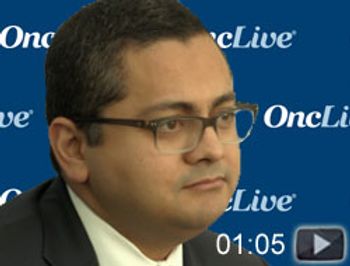
Saad Z. Usmani, MD, Department of Hematologic Oncology and Blood Disorders, Levine Cancer Institute/Carolinas HealthCare System, discusses the importance of the CASTOR and POLLUX trials for the treatment of patients with multiple myeloma.

Kevin R. Kelly, MD, PhD, associate professor of Medicine, Keck School of Medicine, discusses a study examining racial disparities in patients with multiple myeloma.

C. Ola Landgren, MD, PhD, chief of Myeloma Service at Memorial Sloan Kettering Cancer Center, discusses unanswered questions following the results of the phase III POLLUX and CASTOR studies, which explored the addition of daratumumab (Darzalex) to lenalidomide (Revlimid) and dexamethasone or bortezomib (Velcade) and dexamethasone, respectively.

The use of stem cell transplantation has changed over the last few years, with the emergence of novel therapies and treatment strategies. But even with the FDA approvals of new agents for multiple myeloma and select lymphomas, transplant remains to be a curative and reliable strategy.

The landscape of multiple myeloma continues to shift with more drug approvals, but pivotal results out of the 2016 ASH Annual Meeting will likely alter it even further.

Shaji Kumar, MD, professor of Medicine, Mayo Clinic, discusses the rationale for investigating venetoclax as a treatment for patients with multiple myeloma.

The BCL-2 inhibitor venetoclax (Venclexta) demonstrated activity in one-fifth of patients with heavily pretreated multiple myeloma.

The benefits of 2 FDA-approved daratumumab–based triplet regimens were sustained in long-term data from 2 pivotal phase III studies presented at the 2016 ASH Annual Meeting.

An analysis of c-MYC expression in relapsed myeloma identified subgroups of patients with improved response to the combination of an immunomodulator and a proteasome inhibitor.

Patients with newly diagnosed multiple myeloma had significant improvement in progression-free survival when treated with dual versus single autologous stem-cell transplant.

The addition of daratumumab to standard-of-care regimens tripled the increase in conversion to negative minimal residual disease status in the treatment of patients with relapsed/refractory multiple myeloma.
Multiple myeloma has seen significant treatment advances over the past decade. In 2015 alone, the FDA approved 5 new agents or regimens for previously treated patients.

The combination of elotuzumab, lenalidomide, and dexamethasone has excellent activity and is well-tolerated in the treatment of high-risk smoldering multiple myeloma (SMM), providing hope that it can delay or even halt progression to MM.

According to the results of the phase III StaMINA trial evaluating posttransplant therapy in multiple myeloma, a second a round of chemotherapy or stem cell transplant does not improve progression-free survival or overall survival compared with the current standard course of treatment alone.
Graham Jackson, MD, PhD, Northern Institute for Cancer Research, Newcastle University, discusses results of a study that determined lenalidomide (Revlimid) is a highly-effective maintenance therapy in myeloma patients of all ages.

Subcutaneous delivery of daratumumab was well tolerated with comparable efficacy to the FDA-approved intravenous dose in patients with relapsed/refractory multiple myeloma.

Adding venetoclax to bortezomib and dexamethasone showed very promising efficacy and acceptable safety for patients with relapsed/refractory multiple myeloma.

Selinexor, in combination with dexamethasone, induced a response rate of 20.5% (n = 16) among 78 heavily pretreated patients with relapsed/refractory multiple myeloma, according to results from the phase IIb STORM trial presented at the 2016 ASH Annual Meeting.

Treatment with the combination of pembrolizumab, pomalidomide, and dexamethasone demonstrated promising durable efficacy and a tolerable safety profile for patients with relapsed/refractory multiple myeloma.

Michael A. Thompson, MD, PhD, medical director, precision medicine, Vince Lombardi Cancer Clinic, Aurora Health Care, discusses some of the recent exciting advancements in the field of multiple myeloma during the American Society of Hematology (ASH) Annual Meeting.

An investigational anti-BCMA chimeric antigen receptor T-cell therapy demonstrated an objective response rate of 78% in patients with relapsed/refractory multiple myeloma.
The European Commission has granted a conditional approval to ixazomib in combination with lenalidomide and dexamethasone for adult patients with multiple myeloma following at least 1 prior therapy.

Shaji Kumar, MD, professor of Medicine, Mayo Clinic, discusses his vision for the future treatment landscape of multiple myeloma.
Rafael Fonseca, MD, professor of Medicine, Mayo Clinic, discuses the recent FDA approval of daratumumab (Darzalex) in combination with lenalidomide and dexamethasone or bortezomib (Velcade) and dexamethasone for patients with relapsed multiple myeloma following at least 1 prior therapy.

The FDA has approved daratumumab in combination with lenalidomide and dexamethasone or bortezomib and dexamethasone for patients with relapsed multiple myeloma following at least 1 prior therapy, based on findings from the phase III POLLUX and CASTOR studies.
Advertisement
Advertisement
Trending on OncLive
1
Five Under 5: Top Oncology Videos for the Week of 8/31/26
2
FDA Approves Camizestrant Plus a CDK4/6 Inhibitor for Emergent ESR1-Mutated HR+, HER2– Advanced Breast Cancer
3
B7-H4–Targeted ADCs Signal a New Frontier for Platinum-Resistant Ovarian and Endometrial Cancer
4
The OncFive: Top Oncology Articles for the Week of 8/30
5