





Multiple Myeloma
Latest News
Advertisement
Latest Videos














































Advertisement
More News

Shaji Kumar, MD, discusses the roles that the recently released updated consensus criteria by the International Myeloma Working Group and MRD testing will play going forward in multiple myeloma.
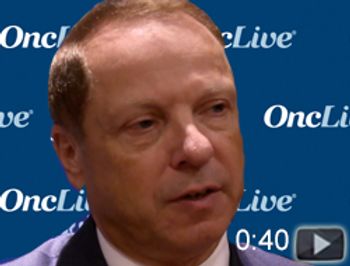
Dr. George Somlo, MD, medical oncologist, City of Hope, discusses recent highlights in multiple myeloma.

There have been 10 agents approved over the last 12 years for the treatment of patients with multiple myeloma, and pivotal data for each agent has supported rapid inclusion into the NCCN treatment algorithms.

The preferred primary therapy for patients with multiple myeloma is induction therapy with a triplet regimen followed by autologous stem cell transplantation, consolidation, and maintenance.
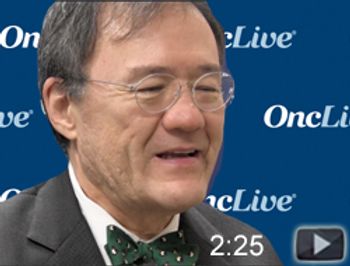
Philip McCarthy, BA, MD, professor of oncology and internal medicine director, blood and marrow transplant program, Roswell Park Cancer Institute discusses maintenance therapy for multiple myeloma patients that are eligible for transplant.

Carfilzomib did not improve progression-free survival compared with bortezomib when used in combination with melphalan and prednisone as a treatment for transplant ineligible patients with newly diagnosed multiple myeloma.
The CHMP has recommended a conditional approval for ixazomib in combination with lenalidomide and dexamethasone as a treatment for patients with multiple myeloma who have received at least 1 prior therapy.
Andrzej Jakubowiak, MD, PhD, professor of Medicine, director, Myeloma Program, University of Chicago Medicine, discusses minimal residual disease in multiple myeloma.

Despite multiple therapeutic advances in recent years, proteasome inhibitors remain a cornerstone of therapy for multiple myeloma, both newly diagnosed and relapsed and refractory disease.

Almost 90% of patients with previously treated light chain amyloidosis responded to single-agent daratumumab (Darzalex).

Shaji Kumar, MD, professor of Medicine, Mayo Clinic, discusses the role of stem cell transplant in treating patients with multiple myeloma.

Selinexor (KPT-330) demonstrated promising clinical activity in patients with heavily pretreated multiple myeloma.

Maria-Victoria Mateos, MD, PhD, provides insight on a subanalysis of the TOURMALINE-MM1 trial, the impact of ixazomib's (Ninlaro's) approval, and the future of triplet combinations in the treatment multiple myeloma.

Kenneth C. Anderson, MD, a 2014 Giant of Cancer Care in Myeloma, program director, Jerome Lipper Multiple Myeloma Center and LeBow Institute for Myeloma Therapeutics, institute physician, Dana-Farber Cancer Institute/Brigham and Women's Cancer Center, discusses how currently available agents will continue to impact the field of multiple myeloma.

Daratumumab (Darzalex) significantly improved progression-free survival when added to bortezomib (Velcade) and dexamethasone for patients with relapsed or refractory multiple myeloma.
Antonio Palumbo, MD, chief, Myeloma Unit, Department of Oncology, Section of Hematology, University of Torino, Italy, discusses the impact the triplet regimen of daratumumab (Darzalex), bortezomib (Velcade), and dexamethasone will have on the field of multiple myeloma.

A supplemental biologics license application has been submitted to the FDA for the use of daratumumab (Darzalex) in combination with lenalidomide and dexamethasone or bortezomib and dexamethasone as a treatment for patients with multiple myeloma following at least 1 prior therapy.
Sagar Lonial, MD, professor and chair, Department of Hematology & Medical Oncology, Emory University School of Medicine, chief medical officer, Winship Cancer Institute of Emory University, discusses the potential of the combination regimen of pomalidomide (Pomalyst) and daratumumab (Darzalex) for the treatment of patients with multiple myeloma.
Shaji Kumar, MD, professor of Medicine, Mayo Clinic, discusses the impact of combination treatments upfront in multiple myeloma.
Michele Cavo, MD, professor, Seràgnoli Institute of Hematology, Bologna University School of Medicine, discusses the role of upfront autologous stem cell transplantation (ASCT) in multiple myeloma.

Andrzej Jakubowiak, MD, discusses the impact of a recent cross-study comparison analysis and the continued role of autologous stem cell transplantation in treatment of patients with multiple myeloma.

Maintenance lenalidomide following frontline treatment with high-dose melphalan and autologous stem cell transplant reduced the risk of death by 26% versus placebo or no maintenance in patients with multiple myeloma.
Advertisement
Advertisement
Trending on OncLive
1
RELATIVITY-1093 Trial Aims to Advance Nivolumab Plus Relatlimab and Chemo in Nonsquamous NSCLC
2
Dostarlimab Monotherapy Elicits Durable cCRs in dMMR/MSI-H Locally Advanced Rectal Cancer
3
NEXERA-303 Trial Aims to Bring TGFβR2×PD-1 Bispecific Antibody INCA33890 Into First-Line MSS CRC
4
The OncFive: Top Oncology Articles for the Week of 10/25
5