



Myeloproliferative Neoplasms
Latest News
Advertisement
Latest Videos



































































Advertisement
More News

Patients with a suspected or diagnosed myeloproliferative neoplasm should undergo targeted next-generation sequencing versus sequential or allele specific testing to reduce the risk of identifying a false driver mutation or an excluded diagnosis of MPN.

Ruben A. Mesa, MD, discusses the importance of developing racially inclusive clinical trials in myeloproliferative neoplasms.

John O. Mascarenhas, MD, discusses ongoing clinical trials in myelofibrosis.

Ruben Mesa, MD, discusses racial and ethnic disparities in cancer clinical trials and efforts that are being made to address these issues.

Ruben A. Mesa, MD, discusses racial disparities in clinical trials for patients with myeloproliferative neoplasms, myelodysplastic syndrome, and acute myeloid leukemia.

Ronald Hoffman, MD, discusses the design of an ongoing phase 2 trial evaluating the first-in-class synthetic hepcidin mimetic PTG-300 in patients with polycythemia vera.

John O. Mascarenhas, MD, discusses approved and emerging treatment options in myelofibrosis.

Michael Wang, MD, discusses the importance of additional CAR T-cell therapy research in mantle cell lymphoma.

Ruben A. Mesa, MD, discusses mitigating racial disparities in myeloproliferative neoplasm clinical trials.

Ruben A. Mesa, MD, discusses the potential utility of CAR T-cell therapy in myeloproliferative neoplasms.

The FDA has granted breakthrough therapy designation to pevonedistat for the treatment of patients with higher-risk myelodysplastic syndromes.
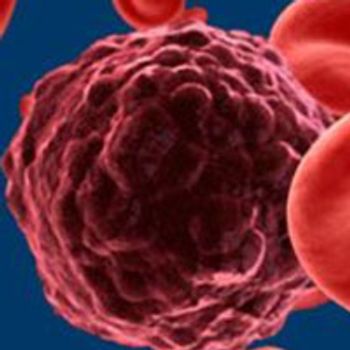
Findings from a phase 2 study presented during the 2020 European Hematology Association Congress shed light on the first-in-class, investigational lysine-specific demethylase-1 inhibitor, bomedemstat, along with its promising clinical activity and tolerable safety profile as monotherapy in patients with advanced myelofibrosis.

Ruben A. Mesa, MD, FACP, discussed the current state of treatment in essential thrombocythemia and polycythemia vera, the underutilization of fedratinib in myelofibrosis, and emerging JAK inhibitors on the horizon.

Jamile M. Shammo, MD, discusses the current treatment landscape of high-risk MDS recent data with the investigational small molecule inhibitor of the NEDD8-activating enzyme pevonedistat, and ongoing research efforts in the space.

Mutually exclusive gene combinations were observed between specific subtypes of patients with myelodysplastic syndromes and myeloproliferative neoplasms and most other types of MDS/MPNs that have an impact on patient outcomes.

Ruben A. Mesa, MD, director of the Mays Cancer Center at UT Health San Antonio MD Anderson Cancer Center, discusses recent data with momelotinib in myelofibrosis.

Ronald Hoffman, MD, discusses the safety profile of the first-in-class synthetic hepcidin mimetic agent PTG-300 in patients with polycythemia vera.

Ronald Hoffman, MD, discusses the advantages of self-administration with the investigational hepcidin mimetic PTG-300 for patients with polycythemia vera (PV).

The FDA has approved an oral combination comprised of decitabine and cedazuridine for the treatment of select adult patients with myelodysplastic syndromes.

Advances in the Management of MPNs
ByHarry P. Erba, MD, PhD, Duke Cancer Institute,Krisstina Gowin, DO, University of Arizona Cancer Center,Ruben A. Mesa, MD, FACP, UT Health San Antonio MD Anderson Cancer Center,Jamile M. Shammo, MD, FASCP, FACP, Rush University Medical Center,Srdan Verstovsek, MD, PhD, The University of Texas MD Anderson Cancer Center

Essential Thrombocythemia: Treatment Optimization
ByHarry P. Erba, MD, PhD, Duke Cancer Institute,Krisstina Gowin, DO, University of Arizona Cancer Center,Ruben A. Mesa, MD, FACP, UT Health San Antonio MD Anderson Cancer Center,Jamile M. Shammo, MD, FASCP, FACP, Rush University Medical Center,Srdan Verstovsek, MD, PhD, The University of Texas MD Anderson Cancer Center

Classifying Patients With Essential Thrombocythemia
ByHarry P. Erba, MD, PhD, Duke Cancer Institute,Krisstina Gowin, DO, University of Arizona Cancer Center,Ruben A. Mesa, MD, FACP, UT Health San Antonio MD Anderson Cancer Center,Jamile M. Shammo, MD, FASCP, FACP, Rush University Medical Center,Srdan Verstovsek, MD, PhD, The University of Texas MD Anderson Cancer Center

Primary Myelofibrosis: Trials of Interest
ByHarry P. Erba, MD, PhD, Duke Cancer Institute,Krisstina Gowin, DO, University of Arizona Cancer Center,Ruben A. Mesa, MD, FACP, UT Health San Antonio MD Anderson Cancer Center,Jamile M. Shammo, MD, FASCP, FACP, Rush University Medical Center,Srdan Verstovsek, MD, PhD, The University of Texas MD Anderson Cancer Center

JAK2 Inhibitor Selection for Primary Myelofibrosis
ByHarry P. Erba, MD, PhD, Duke Cancer Institute,Krisstina Gowin, DO, University of Arizona Cancer Center,Ruben A. Mesa, MD, FACP, UT Health San Antonio MD Anderson Cancer Center,Jamile M. Shammo, MD, FASCP, FACP, Rush University Medical Center,Srdan Verstovsek, MD, PhD, The University of Texas MD Anderson Cancer Center
Fedratinib for Primary Myelofibrosis
ByHarry P. Erba, MD, PhD, Duke Cancer Institute,Krisstina Gowin, DO, University of Arizona Cancer Center,Ruben A. Mesa, MD, FACP, UT Health San Antonio MD Anderson Cancer Center,Jamile M. Shammo, MD, FASCP, FACP, Rush University Medical Center,Srdan Verstovsek, MD, PhD, The University of Texas MD Anderson Cancer Center
Advertisement
Advertisement
Trending on OncLive
1
Dr Fradley on Real-World Atrial Fibrillation and Cardiovascular Outcomes in CLL
2
Poll Results Highlight Breast Cancer Abstracts of Interest at ESMO 2026
3
FDA Grants Fast Track Designation to Opamtistomig for Advanced Biliary Tract Cancer
4
Dr Hansen on the Integration of CAR T-Cell Therapy Into Earlier Myeloma Treatment Lines
5