





Myeloproliferative Neoplasms
Latest News
Advertisement
Latest Videos

































































Advertisement
More News

Polycythemia Vera: PROUD-PV Trial
ByHarry P. Erba, MD, PhD, Duke Cancer Institute,Krisstina Gowin, DO, University of Arizona Cancer Center,Ruben A. Mesa, MD, FACP, UT Health San Antonio MD Anderson Cancer Center,Jamile M. Shammo, MD, FASCP, FACP, Rush University Medical Center,Srdan Verstovsek, MD, PhD, The University of Texas MD Anderson Cancer Center

Utilization of Ruxolitinib for Polycythemia Vera
ByHarry P. Erba, MD, PhD, Duke Cancer Institute,Krisstina Gowin, DO, University of Arizona Cancer Center,Ruben A. Mesa, MD, FACP, UT Health San Antonio MD Anderson Cancer Center,Jamile M. Shammo, MD, FASCP, FACP, Rush University Medical Center,Srdan Verstovsek, MD, PhD, The University of Texas MD Anderson Cancer Center

Polycythemia Vera: Ruxolitinib Trial Data
ByHarry P. Erba, MD, PhD, Duke Cancer Institute,Krisstina Gowin, DO, University of Arizona Cancer Center,Ruben A. Mesa, MD, FACP, UT Health San Antonio MD Anderson Cancer Center,Jamile M. Shammo, MD, FASCP, FACP, Rush University Medical Center,Srdan Verstovsek, MD, PhD, The University of Texas MD Anderson Cancer Center

Polycythemia Vera: Switching Therapy
ByHarry P. Erba, MD, PhD, Duke Cancer Institute,Krisstina Gowin, DO, University of Arizona Cancer Center,Ruben A. Mesa, MD, FACP, UT Health San Antonio MD Anderson Cancer Center,Jamile M. Shammo, MD, FASCP, FACP, Rush University Medical Center,Srdan Verstovsek, MD, PhD, The University of Texas MD Anderson Cancer Center

Treatment Options for High-Risk Polycythemia Vera
ByHarry P. Erba, MD, PhD, Duke Cancer Institute,Krisstina Gowin, DO, University of Arizona Cancer Center,Ruben A. Mesa, MD, FACP, UT Health San Antonio MD Anderson Cancer Center,Jamile M. Shammo, MD, FASCP, FACP, Rush University Medical Center,Srdan Verstovsek, MD, PhD, The University of Texas MD Anderson Cancer Center
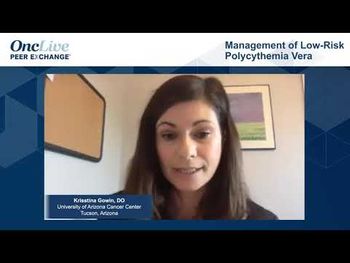
Management of Low-Risk Polycythemia Vera
ByHarry P. Erba, MD, PhD, Duke Cancer Institute,Krisstina Gowin, DO, University of Arizona Cancer Center,Ruben A. Mesa, MD, FACP, UT Health San Antonio MD Anderson Cancer Center,Jamile M. Shammo, MD, FASCP, FACP, Rush University Medical Center,Srdan Verstovsek, MD, PhD, The University of Texas MD Anderson Cancer Center

Polycythemia Vera: Monitoring Patients
ByHarry P. Erba, MD, PhD, Duke Cancer Institute,Krisstina Gowin, DO, University of Arizona Cancer Center,Ruben A. Mesa, MD, FACP, UT Health San Antonio MD Anderson Cancer Center,Jamile M. Shammo, MD, FASCP, FACP, Rush University Medical Center,Srdan Verstovsek, MD, PhD, The University of Texas MD Anderson Cancer Center

Polycythemia Vera: Risk Assessment
ByHarry P. Erba, MD, PhD, Duke Cancer Institute,Krisstina Gowin, DO, University of Arizona Cancer Center,Ruben A. Mesa, MD, FACP, UT Health San Antonio MD Anderson Cancer Center,Jamile M. Shammo, MD, FASCP, FACP, Rush University Medical Center,Srdan Verstovsek, MD, PhD, The University of Texas MD Anderson Cancer Center

Polycythemia Vera: Prognostic Markers
ByHarry P. Erba, MD, PhD, Duke Cancer Institute,Krisstina Gowin, DO, University of Arizona Cancer Center,Ruben A. Mesa, MD, FACP, UT Health San Antonio MD Anderson Cancer Center,Jamile M. Shammo, MD, FASCP, FACP, Rush University Medical Center,Srdan Verstovsek, MD, PhD, The University of Texas MD Anderson Cancer Center
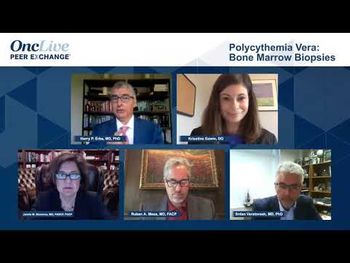
Polycythemia Vera: Bone Marrow Biopsies
ByHarry P. Erba, MD, PhD, Duke Cancer Institute,Krisstina Gowin, DO, University of Arizona Cancer Center,Ruben A. Mesa, MD, FACP, UT Health San Antonio MD Anderson Cancer Center,Jamile M. Shammo, MD, FASCP, FACP, Rush University Medical Center,Srdan Verstovsek, MD, PhD, The University of Texas MD Anderson Cancer Center

Polycythemia Vera: Diagnostic Work-up
ByHarry P. Erba, MD, PhD, Duke Cancer Institute,Krisstina Gowin, DO, University of Arizona Cancer Center,Ruben A. Mesa, MD, FACP, UT Health San Antonio MD Anderson Cancer Center,Jamile M. Shammo, MD, FASCP, FACP, Rush University Medical Center,Srdan Verstovsek, MD, PhD, The University of Texas MD Anderson Cancer Center

Characterization of Myeloproliferative Neoplasms
ByHarry P. Erba, MD, PhD, Duke Cancer Institute,Krisstina Gowin, DO, University of Arizona Cancer Center,Ruben A. Mesa, MD, FACP, UT Health San Antonio MD Anderson Cancer Center,Jamile M. Shammo, MD, FASCP, FACP, Rush University Medical Center,Srdan Verstovsek, MD, PhD, The University of Texas MD Anderson Cancer Center

Srdan Verstovsek, MD, PhD, discusses the limitations of the current treatment landscape of myelofibrosis.

The European Commission has approved luspatercept-aamt (Reblozyl) as a treatment for patients with transfusion-dependent anemia from very low-, low-, and intermediate-risk myelodysplastic syndromes with ring sideroblasts who had unsatisfactory response or are not candidates for erythropoietin-based therapy, and patients with transfusion-dependent anemia linked with beta thalassemia.

The novel BET inhibitor CPI-0610 demonstrated clinical activity with or without ruxolitinib in patients with JAK inhibitor-naïve and JAK inhibitor-exposed or -intolerant myelofibrosis.

Jorge E. Cortes, MD, discusses the benefits of ruxolitinib (Jakafi) in patients with myeloproliferative neoplasms.

Shella Saint Fleur-Lominy, MD, PhD, discusses targeted pathways in myeloproliferative neoplasms.

Naveen Pemmaraju, MD, discusses the potential benefit of rechallenging ruxolitinib in patients with myelofibrosis.

Prithviraj Bose, MD, discusses management strategies for patients with myelofibrosis who progress on ruxolitinib (Jakafi).
Prithviraj Bose, MD, associate professor in the Department of Leukemia of the Division of Cancer Medicine at The University of Texas MD Anderson Cancer Center, discusses management strategies for patients with myelofibrosis who progress on ruxolitinib (Jakafi).

Prithviraj Bose, MD, discusses the utility of ruxolitinib in patients with myelofibrosis.

Ronald Hoffman, MD, discusses the current polycythemia vera treatment paradigm.

John O. Mascarenhas, MD, discusses the impact of ruxolitinib in the myelofibrosis treatment paradigm.

The FDA has accepted an application for ropeginterferon alfa-2b for use as a treatment for patients with polycythemia vera.

Jorge E. Cortes, MD, discusses challenges with ruxolitinib in myeloproliferative neoplasms.
Advertisement
Advertisement
Trending on OncLive
1
Dr Fradley on Real-World Atrial Fibrillation and Cardiovascular Outcomes in CLL
2
Poll Results Highlight Breast Cancer Abstracts of Interest at ESMO 2026
3
FDA Grants Fast Track Designation to Opamtistomig for Advanced Biliary Tract Cancer
4
Dr Hansen on the Integration of CAR T-Cell Therapy Into Earlier Myeloma Treatment Lines
5