

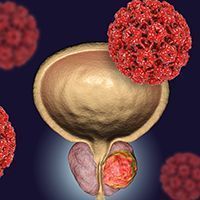




































































The addition of darolutamide to androgen deprivation therapy and docetaxel prolonged overall survival in patients with metastatic hormone-sensitive prostate cancer, irrespective of disease volume or disease risk.
The addition of darolutamide to androgen deprivation therapy and docetaxel prolonged overall survival in patients with metastatic hormone-sensitive prostate cancer, irrespective of disease volume or disease risk.
Brexucabtagene autoleucel demonstrated a survival benefit in patients with relapsed/refractory B-cell acute lymphoblastic leukemia regardless of prior lines of treatment or exposure to blinatumomab or allogeneic stem cell transplant, according to data from subgroup analyses of the ZUMA-3 trial.
The presence of minimal residual disease led to a higher likelihood of relapse in patients with acute lymphoblastic leukemia who underwent hematopoietic cell transplant compared with those who had undetectable MRD pre and post transplant.
The fully-human scFv CD19-targeted CAR T-cell therapy JCAR021 elicited durable responses but with a high rate of neurotoxicity when administered at a dose of 7 x 10⁶ cells/kg in patients with relapsed or refractory large B-cell lymphoma, according to data from a phase 1/2 trial.

The dual CD19- and CD20-directed, freshly administered CAR T-cell therapy zamtocabtagene autoleucel elicited a high response rate with deepening responses over time in patients with relapsed/refractory diffuse large B-cell lymphoma.
An independent data monitoring committee has recommended that a phase 3 trial evaluating uproleselan plus chemotherapy for patients with relapsed/refractory acute myeloid leukemia should continue to the planned overall survival event trigger.
Press Release
New UC Davis study finds relationship between tumor microbiome and immune system in patients with soft tissue sarcoma.

Press Release
Sacituzumab govitecan, a novel antibody drug-conjugate therapy has been granted accelerated approved by the U.S. Food and Drug Administration for the treatment of metastatic HR+, HER2- breast cancer.
The primary end point of the phase 3 PhALLCON study was met as first-line ponatinib plus reduced-intensity chemotherapy outperformed imatinib for the treatment of patients with newly diagnosed Philadelphia chromosome–positive acute lymphoblastic leukemia.
Toripalimab plus gemcitabine and cisplatin demonstrated a statistically significant and clinically meaningful improvement in overall survival compared with chemotherapy alone as frontline therapy in patients with recurrent or metastatic nasopharyngeal carcinoma.
The FDA has granted priority review to the new drug application for avasopasem manganese as a treatment for radiotherapy-induced severe oral mucositis in patients with head and neck cancer undergoing standard-of-care treatment.

Yara Abdou, MD, discusses the racial and clinical analysis of the RxPONDER trial, the need to further investigate the factors that create racial disparities in breast cancer, and the importance of enrolling minority populations onto clinical trials.
Treatment with neoadjuvant nivolumab led to encouraging 5-year recurrence-free survival and overall survival rates compared with historical outcomes in patients with non–small cell lung cancer who underwent surgical resection.

Press Release
Cedars-Sinai investigators verify that rates are trending up for both sexes; younger women and Black women see steepest increase.
Advances in the development of bispecific antibodies have demonstrated response rates close to or surpassing those of other agents in development, offering investigators an avenue to pursue phase 3 studies such as EPCORE DLBCL-1 to challenge standard of care with the CD3 × CD20 agent, epcoritamab in diffuse large B-cell lymphoma.

François-Clément Bidard, MD, PhD, discusses how elacestrant fits into the treatment paradigm for postmenopausal patients with estrogen receptor-positive, HER2-negative, ESR1-mutated advanced or metastatic breast cancer.
The FDA has issued a refusal to file letter for a new drug application seeking the approval of HyBryte, Soligenix’s synthetic hypericin, for use in patients with early-stage cutaneous T-cell lymphoma.

Treatment with brexucabtagene autoleucel in the standard-of-care relapsed/refractory mantle cell lymphoma setting provided an efficacy and safety profile consistent with data reported in the phase 2 ZUMA-2 trial.

Dario R. Roque, MD, discusses incorporating PARP inhibitors into practice for patients with homologous recombination deficient ovarian cancer, the role of PARP inhibitors for patients with homologous recombination–proficient ovarian cancer and the expanding investigation of mirvetuximab soravtansine in ovarian cancer.

The National Comprehensive Cancer Network breast cancer guidelines issued February 7, 2003, added the MammaPrint UltraLow Risk gene expression assay to its list of recommended assays for consideration of adjuvant systemic therapy.
Press Release
Researchers at Fox Chase Cancer Center were recently awarded a $550,000 grant from Stand Up To Cancer (SU2C) to fund a new project, “Accelerating and Diversifying Access to Clinical Trials.”
The FDA has granted regenerative medicine advanced therapy and fast track designations to equecabtagene autoleucel for the treatment of patients with relapsed/refractory multiple myeloma.
A renewed focus on dismantling the barriers and closing gaps in care will aid in the mission to drive down the rate of cancer mortality and incidence across disease states.
Mariana Chavez-MacGregor, MD, MSC, discussed key efficacy and safety data from the SWOG 1207 trial of adjuvant everolimus in postmenopausal patients with high-risk, hormone receptor–positive breast cancer.