



























































Treatment selection and sequencing in genitourinary cancers, such as metastatic bladder cancer and metastatic renal cell carcinoma, have become more complicated and require nuanced decision making.

Sotorasib Approaches EU Approval for KRAS G12C–Mutated Advanced NSCLC
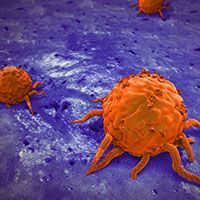
Surufatinib Induces Robust Responses in US Patients with Extrapancreatic and Pancreatic NETs
Treatment selection and sequencing in genitourinary cancers, such as metastatic bladder cancer and metastatic renal cell carcinoma, have become more complicated and require nuanced decision making.
The administration of trilaciclib prior to chemotherapy reduced chemotherapy-induced myelosuppression and the need for associated supportive care in patients with extensive-stage small cell lung cancer.

It is crucial to understand and interpret the results from the landmark clinical trials in the context of recent FDA approvals in gastroesophageal cancers.
Chemotherapy has demonstrated mixed findings in patients with resectable colorectal hepatic metastases, and long-term data suggest incorporating it into treatment algorithms have little impact on overall survival.
Although BCMA-directed CAR T-cell therapy has shown early and deep responses in patients with relapsed/refractory multiple myeloma, there is much more to learn about optimal cytokine release syndrome and neurotoxicity management and treatment sequencing, particularly as off-the-shelf T-cell therapies, bispecific antibodies, and non–BCMA-directed therapies become available.

American Oncology Network, LLC, a high-growth national network of independent community oncologists, is pleased to announce the opening of Desert Hematology Oncology in Surprise, Ariz.

The FDA has granted an orphan drug designation to LYT-200, a fully human IgG4 monoclonal antibody targeting galectin-9, for use as a potential therapeutic option for patients with pancreatic cancer.
Matthew Galsky, MD, discusses the role of immunotherapy in urothelial cancer, as well as unmet needs and future research directions for this patient population.
Lanreotide autogel/depot administered at 120 mg every 28 days may be an appropriate treatment for patients with advanced bronchopulmonary neuroendocrine tumors.
The FDA cleared an investigational new drug application for a phase 1b clinical trial examining DSP107, a first-in-class anti-CD47 fusion protein, in patients with acute myeloid leukemia and myelodysplastic syndrome.

Wasif M. Saif, MD, discusses the evolving role of PARP inhibitors and anticipated trends for research in pancreatic cancer.
John R. Zalcberg, MBBS, PhD, discusses the INVICTUS trial examining ripretinib in patients with heavily pretreated gastrointestinal stromal tumors, the impact of the agent on the paradigm, and ongoing efforts to provide additional options to this population.

The 9th Annual Giants of Cancer Care® awards ceremony was a featured event at the 39th Annual CFS®: Chemotherapy Foundation Symposium Innovative Cancer Therapy for Tomorrow®, hosted by Physicians’ Education Resource® LLC.
The combination of nivolumab and low-dose ipilimumab resulted in a deep and durable clinical benefit when used in the first-line treatment of patients with microsatellite instability–high and mismatch repair deficient metastatic colorectal cancer.
The small molecule drug conjugate PEN-221 was generally well tolerated and elicited significant clinical benefit in patients with pretreated gastrointestinal neuroendocrine tumors.

Following a national search, Roswell Park Comprehensive Cancer Center has promoted Emese Zsiros, MD, PhD, FACOG, to lead its Department of Gynecologic Oncology.
Several breakthroughs in recent years have rapidly shifted the treatment landscape for advanced HCC.
The FDA has granted an orphan drug designation to the HER2-targeted natural killer cell engager therapy, DF1001, as a potential therapeutic option for patients with esophageal cancer.

The FDA has greenlit an investigation new drug application to expand the ongoing phase 1/2 ABILITY trial, which is evaluating the beta-only IL-2 superagonist MDNA11 in patients with solid tumors, to clinical trial sites in the United States.
Alice Indini, MD, discusses the ongoing PULSAR trial examining pembrolizumab plus lenvatinib as a novel therapeutic option for patients with classic Kaposi sarcoma.
The FDA granted a fast track designation to the selective AXL inhibitor bemcentinib in combination with a PD-1/PD-L1 agent in the treatment of patients with STK11-altered advanced or metastatic non–small cell lung cancer without actionable mutations.
Sameek Roychowdhury, MD, PhD, discusses the efficacy and safety data reported with infigratinib in FGFR2-positive cholangiocarcinoma, nuances to treatment with the agent, and ongoing research efforts to further improve outcomes in this population.

Katherine Poruk, MD, a board-certified and fellowship-trained surgical oncologist and researcher, is the latest addition to the Cancer Treatment Centers of America®, Atlanta, physician team.
An increased understanding of the biology of non–small cell lung cancer has led to a significant increase in therapeutic options for patients.
Gastrointestinal cancer is increasingly viewed through a multidisciplinary lens, and the 2021 International Society of Gastrointestinal Oncology Annual Meeting produced intriguing developments in the armamentarium.