








































































Early identification of patients with liver-only metastatic colorectal cancer who are eligible for resection is crucial to determining their course of treatment and what role modalities like chemotherapy will play in their treatment strategy.
Early identification of patients with liver-only metastatic colorectal cancer who are eligible for resection is crucial to determining their course of treatment and what role modalities like chemotherapy will play in their treatment strategy.

A panel of breast cancer experts shared their insights on 4 recently approved targeted therapies for patients with relapsed HER2-positive metastatic breast cancer.

Malin Hultcrantz, MD, PhD, discusses the efficacy of belantamab mafodotin, as well as standard management for common adverse effects associated with the treatment.

Steven L. Spitalnik, MD, discusses the evolution of red blood cell storage and the potential impact the Hemanext storage technique could have for patients with hematologic malignancies.
The European Medicines Agency’s Committee for Medicinal Products for Human Use has recommended the approval of single-agent pembrolizumab for use as an adjuvant treatment in adult patients with renal cell carcinoma who are at increased risk of recurrence after nephrectomy, or following nephrectomy and the resection of metastatic lesions.

The European Medicines Agency’s Committee for Medicinal Products for Human Use has adopted a positive opinion in favor of the approval of enfortumab vedotin as a monotherapy in the treatment of adult patients with locally advanced or metastatic urothelial cancer.
Pembrolizumab demonstrated a statistically significant and clinically meaningful improvement in disease-free survival vs placebo as a postnephrectomy adjuvant therapy in patients with renal cell carcinoma at intermediate-high or high risk of recurrence, and in those who are M1 with no evidence of disease.

Real-world data from the PACIFIC-R trial evaluating durvalumab following chemoradiotherapy in patients with stage III, unresectable non–small cell lung cancer provide evidence supporting the agent’s efficacy in this population, solidifying its role as a standard-of-care treatment

Treatment options for patients with Waldeström macroglobulinemia are often derived from those devel-oped for patients with multiple myeloma and other low-grade lymphomas.

The triplet regimen of belantamab mafodotin plus pomalidomide and dexamethasone was revealed to have a manageable safety profile, which is consistent with the known individual safety profiles of belantamab mafodotin or pomalidomide and dexamethasone, in patients with relapsed/refractory multiple myeloma.

Parsaclisib, an investigational highly selective phosphatidylinositol 3-kinase δ inhibitor, demonstrated rapid and durable responses as monotherapy with an acceptable safety profile in patients with relapsed/refractory follicular lymphoma in the phase 2 CITADEL-203 study.

Red blood cells processed and stored in a hypoxic state maintain their integrity, which may reduce the risk of developing vaso-occlusion after red blood cell transfusion.
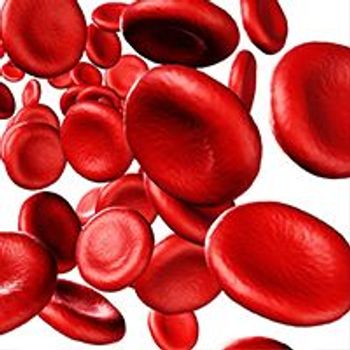
Itolizumab showed the potential to decrease the response of host T cells to a donor graft, minimize the incidence of acute graft-vs-host disease following hematopoietic stem cell transplantation, and improve outcomes for these patients.

Elise Nassif, MD, discusses the evolving standard of care for patients with soft tissue sarcoma and the benefits of early phase inclusion, as well as histotype testing for this population.

The WEE1 inhibitor adavosertib improved progression-free survival with a tolerable safety profile compared with active monitoring in patients with RAS/TP53-mutated metastatic colorectal cancer.

The first patient with high-risk, early-stage HER2-positive breast cancer has received a dose of neoadjuvant fam-trastuzumab deruxtecan-nxki as part of the global, phase 3 DESTINY-Breast11 trial.

Preliminary research with datopotamab deruxtecan has shown a promising, unprecedented duration of response in heavily pretreated patients with non–small cell lung cancer.

A combination of two targeted cancer drugs showed unprecedented, “clinically meaningful” activity in patients with highly malignant brain tumors that carried a rare genetic mutation, according to a clinical trial report by investigators from Dana-Farber Cancer Institute.
R. Lor Randall, MD, FACS, elaborates on the results of a study and provided insight into future research directions in Ewing sarcoma

Data presented from the INSEMA trial during the 2021 San Antonio Breast Cancer Symposium indicated that patients with early-stage breast cancer had better quality of life outcomes when forgoing a sentinel lymph node biopsy and axillary lymph node dissection. However, patients had improved arm symptoms and functioning with SLNB vs ALND.

Preclinical evidence suggests that pairing KO-539 with targeted agents directed against BCL-2, BET, and CDK6 could result in superior efficacy against KMT2A-rearranged and NPM1-mutated acute myeloid leukemia.
The investigational bispecific antibody APVO436 demonstrated tolerability with encouraging anti-neoplastic efficacy in patients with relapsed/refractory acute myeloid leukemia or myelodysplastic syndrome, according to updated findings from an ongoing phase 1 trial.

Elevated amphiregulin was associated with increased mortality risk in acute graft–versus-host-disease, according to a sample of 2 prospective clinical trials showed.
The addition of daratumumab to lenalidomide, bortezomib, and dexamethasone continued to elicit improved outcomes vs RVd alone in patients with newly diagnosed, transplant-eligible multiple myeloma, according to findings from the extended 2-year follow-up analysis of the phase 2 GRIFFIN trial.
Treatment with the CD123- and CD3-engaging bispecific antibody APVO436 caused cytokine release syndrome in approximately 1 of 5 patients with relapsed/refractory acute myeloid leukemia and myelodysplastic syndrome but was generally well managed with steroids.