






































































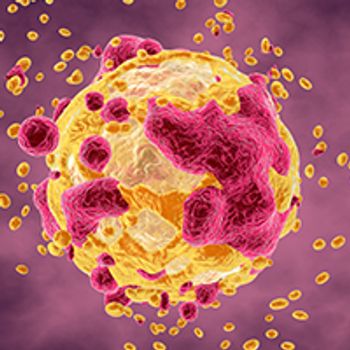
Dysregulated platelet-derived growth factor receptor signaling is implicated in a number of cancer types and is among the targets of many FDA-approved multikinase inhibitors.

The FDA has granted approval to the Guardant360 CDx liquid biopsy assay as the first companion diagnostic for amivantamab-vmjw to determine which patients with locally advanced or metastatic non–small cell lung cancer harboring EGFR exon 20 insertion mutations may derive benefit from the agent after progressing on, or after, platinum-based chemotherapy.
Dysregulated platelet-derived growth factor receptor signaling is implicated in a number of cancer types and is among the targets of many FDA-approved multikinase inhibitors.
Andrea Saltos, MD, provides perspective on the use of targeted therapy across EGFR-, RET-, and MET-positive NSCLC.
The FDA has granted a breakthrough therapy designation to VS-6766 plus defactinib for the treatment of patients with recurrent low-grade serous ovarian cancer, irrespective of KRAS status, following 1 or more previous lines of therapy, including platinum-based chemotherapy

The European Medicines Agency’s Committee for Medicinal Products for Human Use has recommended the approval of cemiplimab for use in 2 advanced cancers: non–small cell lung cancer and basal cell carcinoma.

High tumor mutational burden was useful in predicting clinical responses to checkpoint inhibitors in patients with certain cancer subtypes; however, TMB-H failed to demonstrate utility as a biomarker for treatment with checkpoint inhibitors across all solid cancer types.
The European Medicines Agency’s Committee for Medicinal Products for Human Use has recommended the approval of pembrolizumab plus platinum- and fluoropyrimidine-based chemotherapy for the frontline treatment of patients with locally advanced unresectable or metastatic esophageal carcinoma or HER2-negative gastroesophageal junction adenocarcinoma with PD-L1 positivity.
The European Medicines Agency’s Committee for Medicinal Products for Human Use has adopted a positive opinion for the combination of nivolumab and ipilimumab as an option for patients with mismatch repair deficient or microsatellite instability–high metastatic colorectal cancer following fluoropyrimidine-based combination therapy.
A biologics license application has been submitted to the FDA for the PD-1 monoclonal antibody penpulimab for the third-line treatment of patients with metastatic nasopharyngeal carcinoma.

Larotrectinib (Vitrakvi) has proved to be highly active in patients with thyroid cancer with NTRK gene fusions, exhibiting rapid and durable disease control.
MEK inhibition combined with an anti-IGFR1 agent shrank tumors in pediatric PAX fusion–negative rhabdomyosarcoma.

The COVID-19 pandemic has inspired a new mantra for wellness in the oncology community and beyond.

YoungNa Lee-Kim, MD, shares advice on how to advance as an oncology fellow.
The FDA has announced that it will need more time to review the biologics license application for narsoplimab as a potential therapeutic option in patients with hematopoietic stem cell transplant–associated thrombotic microangiopathy.
The FDA has accepted a new drug application for maribavir for the treatment of post-transplant recipients with cytomegalovirus infection who are refractory and/or resistant to previous anti-CMV treatment.

Eric M. Horwitz, MD, FABS, FASTRO, and Stephanie E. Weiss, MD, FASTRO, highlight ongoing research efforts with radiation therapy that are generating excitement at their institution.
The FDA has approved amivantamab-vmjw as the first treatment for adult patients with non–small cell lung cancer who harbor EGFR exon 20 insertion mutations.

Hematology/oncology programs can make it easier and more rewarding for would-be mothers to participate in fellowship.
Stephanie E. Weiss, MD, FASTRO and Eric M. Horwitz, MD, FABS, FASTRO, discuss ways to leverage radiation in the treatment of central nervous system metastases, areas of active investigation, and different available strategies that are improving outcomes for patients with cancer.

The combination of the anti–PD-1 tislelizumab and chemotherapy was found to significantly improve progression-free survival compared with chemotherapy alone in the frontline treatment of patients with recurrent or metastatic nasopharyngeal cancer, meeting the primary end point of the phase 3 RATIONALE 309 trial.

Results of the National Lung Screening Trial demonstrated a 20% decrease in lung cancer mortality in individuals aged 55 to 74 years with a 30 pack-year smoking history using a low-dose computed tomography scan.

The integration of the anti-CD30 antibody-drug conjugate brentuximab vedotin into the frontline treatment of pediatric patients with high-risk Hodgkin lymphoma resulted in favorable clinical outcomes with promising tolerability and a reduction in radiation exposure, according to data from a phase 2 HLHR130 trial.

The PARP inhibitor rucaparib has proven to be a safe and effective maintenance option for patients with platinum-sensitive, advanced pancreatic cancer that harbors pathogenic variants such as BRCA1, BRCA2, or PALB2.

Bruna Pellini, MD, discusses the current state of treatment in ES-SCLC, the importance of including a diverse and representative patient population in clinical trials, and ongoing research in ES-SCLC.
The FDA has approved nivolumab for the adjuvant treatment of completely resected esophageal or gastroesophageal junction cancer with residual pathologic disease, in patients have received neoadjuvant chemoradiotherapy.

Ullas Batra, MBBS, MD, DM, discusses the durability of targeted therapy in advanced NSCLC and the movement of targeted therapy and immunotherapy into earlier stages of disease.