



Non-Hodgkin Lymphoma
Latest News
Advertisement
Latest Videos











































Advertisement
More News
December 23, 2020 — Findings from the International, Prospective ALCL-Relapse trial showed that allogeneic SCT after reinduction chemotherapy can lead to survival improvements in children and adolescents with high-risk relapsed or refractory anaplastic large cell lymphoma, provide more insight into how to treat this population.
December 23, 2020 - The FDA has updated the prescribing information for ibrutinib to include safety and efficacy data for the agent in combination with rituximab in the treatment of patients with Waldenström macroglobulinemia.
December 21, 2020 - The submission of a biologics license application to the FDA has been initiated for JZP-458 for use as a component of a multiagent chemotherapy regimen in the treatment of adult and pediatric patients with acute lymphoblastic leukemia or lymphoblastic lymphoma.

December 21, 2020 — The 5-drug regimen of venetoclax, ibrutinib, prednisone, obinutuzumab, and lenalidomide showed a tolerable safety profile and encouraging antitumor activity with complete responses in patients with relapsed/refractory diffuse large B-cell lymphoma.

Javier L. Munoz, MD, discusses the nuances of choosing treatment options for patients with CLL in the frontline and relapsed/refractory settings, as well as novel therapeutic strategies on the horizon.
December 17, 2020 - The FDA has approved rituximab-arrx, a biosimilar to rituximab, for the treatment of adult patients with non-Hodgkin lymphoma, chronic lymphocytic leukemia, granulomatosis with polyangiitis, and microscopic polyangiitis.

December 17, 2020 — The European Commission has granted a conditional marketing authorization to the CD19-targeted CAR T-cell therapy KTE-X19 for use in adult patients with relapsed or refractory mantle cell lymphoma who had previously received 2 or more lines of systemic therapy including a BTK inhibitor.

The antibody-drug conjugate TRPH-222 demonstrated early signs of efficacy with favorable tolerability at higher dose levels in patients with relapsed/refractory B-cell non-Hodgkin lymphoma.
LOXO-305, an investigational, highly selective, non-covalent BTK inhibitor, demonstrated an investigator-assessed 63% objective response rate in patients with chronic lymphocytic leukemia and small lymphocytic lymphoma.

December 7, 2020 - In high-risk patients with relapsed/refractory chronic lymphocytic leukemia or small lymphocytic lymphoma, lisocabtagene maraleucel treatment resulted in a high rate of undetectable minimal residual disease with rapid and durable responses
December 6, 2020 - Odronextamab, is a novel CD20xCD3 bispecific antibody, continues to show intriguing antitumor activity and an acceptable safety profile in patients with relapsed/refractory B-cell non-Hodgkin lymphoma, including those who have previously received chimeric antigen receptor T-cell therapy.

December 6, 2020 - The bispecific IgM antibody IGM-2323 shrank tumors in 9 of 14 patients with CD20-positive, relapsed/refractory non-Hodgkin lymphomas in preliminary results from a phase 1 clinical trial presented at the 2020 ASH Annual Meeting

December 5, 2020 - Engineering chimeric antigen receptors T cells to overcome CD58 loss may provide a path forward for patients with large B-cell lymphomas who do not respond to treatment with immunotherapy.

The anti-inducible T-cell co-stimulator monoclonal antibody MEDI-570 showed clinical activity with durable responses, as well as acceptable safety and tolerability in patients with relapsed/refractory angioimmunoblastic T-cell lymphoma and peripheral T-cell lymphoma.

December 5, 2020 - VLS-101, a novel ROR1-targeted antibody-drug conjugate, demonstrated encouraging clinical efficacy, consistent pharmacokinetics, and a favorable safety profile in patients with heavily pretreated mantle cell lymphoma and diffuse large B-cell lymphoma.

December 5, 2020 - Axicabtagene ciloleucel demonstrated high rates of durable responses in patients with indolent non-Hodgkin lymphoma.
December 5, 2020 - Selinexor demonstrated a clinical benefit in patients with relapsed/refractory diffuse large B-cell lymphoma, regardless of age.
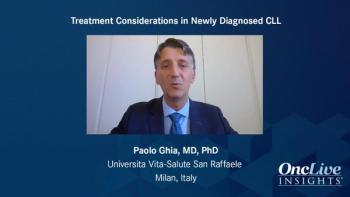
Drs Stilgenbauer and Ghia provide insight on initial treatment considerations for patients with newly diagnosed chronic lymphocytic leukemia.

Nirav N. Shah, MD, associate professor, Medical College of Wisconsin, discusses the dosing of tandem receptor CAR T-cell therapy in B-cell malignancies.

Stephen A. Strickland, MD, BS, MS, MSCI, relays insightful questions from the audience to the speakers, who provided insight into how they are navigating the evolving treatment landscape of hematologic malignancies.
November 20, 2020 - The FDA has granted a priority review designation to a biologics license application for loncastuximab tesirine for the treatment of patients with relapsed or refractory diffuse large B-cell lymphoma.

November 17, 2020 - The review of the biologics license application for the CAR T-cell product lisocabtagene maraleucel for the treatment of adult patients with relapsed/refractory large B-cell lymphoma following at least 2 previous therapies has been delayed.
Nishitha M. Reddy, MD, MBBS, discusses the significance of the ECHELON-2 trial in peripheral T-cell lymphoma, the need for novel therapies for those with CD30-negative disease, and the excitement surrounding duvelisib in the relapsed/refractory setting.
Advertisement
Advertisement
Trending on OncLive
1
Ifinatamab Deruxtecan BLA Voluntarily Withdrawn in Previously Treated Extensive-Stage SCLC
2
Tegavivint Plus Osimertinib Shows Early Activity in First-Line EGFR-Mutated NSCLC
3
Etentamig Improves Response and PFS vs Standard Therapies in Triple-Class Exposed Relapsed/Refractory Myeloma
4
FDA Approves Lirafugratinib for Pretreated, Locally Advanced or Metastatic Cholangiocarcinoma
5