




Prostate Cancer
Latest News
Advertisement
Latest Videos





























































Advertisement
More News

The top 5 OncLive videos of the week cover insights in MCL, prostate cancer, plexiform neurofibromas, breast cancer, and follicular lymphoma.

HLD-0915 has received fast track designation from the FDA, allowing for more frequent communication with the agency regarding the drug’s candidacy for approval.

Dana E. Rathkopf, MD, discusses the clinical significance of findings from the phase 3 AMPLITUDE trial in HRR gene–mutated mCSPC.

Gerhardt Attard, MD, PhD, FRCP, discusses niraparib plus abiraterone acetate and prednisone in mCSPC with HRR gene alterations.

Panelists discuss how successful metastatic castration-sensitive prostate cancer (mCSPC) management requires balancing cancer control with quality-of-life preservation, emphasizing the need for better tools to measure patient-reported outcomes, comprehensive survivorship care addressing cardiovascular and bone health, and personalized approaches that help patients understand their prognosis while maintaining their ability to thrive during treatment.

Alicia Morgans, MD, MPH, discusses enzalutamide plus radium-223 in with metastatic castration-resistant prostate cancer.

The FDA grants accelerated approval to zongertinib in lung cancer, clears dordaviprone in glioma, and awards priority review to liso-cel sBLA in MZL.

The FDA accepted the NDA seeking the approval of a new formulation of piflufolastat F 18 in prostate cancer.
Panelists discuss how quality-of-life considerations are paramount in treatment selection for patients with metastatic castration-sensitive prostate cancer (mCSPC), with data showing that achieving ultralow prostate-specific antigen (PSA) levels correlates with better quality-of-life outcomes and that tolerability profiles, particularly regarding fatigue and drug-drug interactions, significantly impact daily patient experience.
Panelists discuss how managing patients with suboptimal prostate-specific antigen (PSA) response or rising PSA requires careful consideration of PSA kinetics, doubling time, duration of prior response, and imaging findings to determine whether to continue monitoring, add therapy, or transition to castration-resistant treatment approaches.

The phase 1/2 CaRe Prostate trial examining INKmune in patients with metastatic CRPC has met its primary and secondary end points.
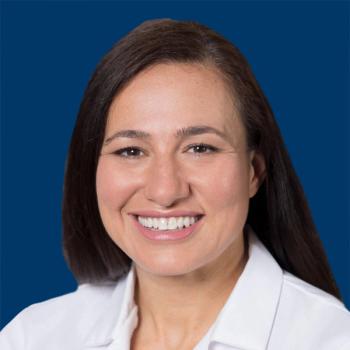
Rana R. McKay, MD, expands on key updates and knowledge gaps in prostate cancer management discussed at the Bridging the Gaps in Prostate Cancer meeting.
Read a recap of the episodes of OncLive On Air that debuted in July 2025.
Panelists discuss how data from the International Registry for Men with Advanced Prostate Cancer (IRONMAN) demonstrates that achieving a prostate-specific antigen (PSA) threshold below 0.2 ng/mL at 6 to 12 months is associated with improved progression-free survival and overall survival regardless of treatment regimen.

Jue Wang, MD, outlines how prolonged androgen suppression may drive prostate cancer evolution.

Jue Wang, MD, discusses persistent gaps between clinical advances and real-world care and the evolving role of personalized treatment strategies in mCRPC.
The combination of talazoparib and tazemetostat was safe and led to PSA reductions in certain patients with metastatic castration-resistant prostate cancer.
Darolutamide receives EU approval with ADT for metastatic hormone-sensitive prostate cancer.

Qian (Janie) Qin, MD, discusses the importance of early molecular testing, evolving PARP inhibitor strategies, and the phase 2 HARMONY trial in mHSPC.
Qian (Janie) Qin, MD, discusses the current arsenal of radioligand therapies in metastatic castration-resistant prostate cancer.

Apalutamide plus carotuximab has been demonstrated to be well tolerated in patients with metastatic castration-resistant prostate cancer

Pasritamig was safe and produced durable responses in heavily pretreated metastatic castration-resistant prostate cancer.
The FDA approves Y-90 resin microspheres in HCC, the sNDA for decitabine/cedazuridine plus venetoclax in AML is under review, and more.
The combination of enzalutamide and leuprolide improved OS vs leuprolide alone in nmHSPC with high-risk biochemical recurrence at high risk for metastasis.
TRE-515 has received FDA fast track designation in combination with radioligand therapy for PSMA-positive mCRPC.
Advertisement
Advertisement
Trending on OncLive
1
Savolitinib Plus Osimertinib NDA Submitted to FDA for MET-Driven, EGFR-Mutated NSCLC After EGFR TKI
2
FDA Grants Priority Review to Elinzanetant for Endocrine Therapy–Associated Vasomotor Symptoms in HR+ Breast Cancer
3
China's NMPA Approves Pirtobrutinib Across CLL
4
Calculating the Real Cost of False Positive Findings in Cancer Screening
5