

Buparlisib plus paclitaxel did not show an improvement in OS vs paclitaxel alone in PD-1/PD-L1–pretreated recurrent/metastatic HNSCC.

Your AI-Trained Oncology Knowledge Connection!
Buparlisib plus paclitaxel did not show an improvement in OS vs paclitaxel alone in PD-1/PD-L1–pretreated recurrent/metastatic HNSCC.
The bispecific ADC iza-bren improved ORR and led to more durable responses vs chemotherapy in heavily pretreated recurrent or metastatic NPC.

Enfortumab vedotin plus pembrolizumab demonstrated meaningful first-line clinical activity in PD-L1–positive recurrent or metastatic HNSCC.
Neoadjuvant chemotherapy improved organ preservation in nasal and paranasal sinus squamous cell carcinoma.
Selpercatinib resulted in a statistically significant improvement in progression-free survival and overall response rate compared with cabozantinib or vandetanib in patients with advanced, multikinase inhibitor–naïve, RET-mutant medullary thyroid cancer, according to interim findings from the phase 3 LIBRETTO-531 trial.

Sacituzumab govitecan-hziy led to modest but durable antitumor activity with predominant gastrointestinal toxicities in patients with metastatic or locally recurrent head and neck squamous cell carcinoma who received between 1 and 3 prior lines of therapy.

The addition of xevinapant to standard-of-care chemoradiotherapy elicited continued 5-year overall survival and 3-year duration of response benefits in patients with unresected head and neck locally advanced squamous cell carcinoma.

Potent and durable clinical activity was shown with pralsetinib as treatment of patients with RET-mutant advanced medullary thyroid cancer, regardless of the line of therapy.

Three-year follow-up data for the phase 2 study of the first-in-class inhibitor of apoptosis protein antagonist, xevinapant, in combination with standard cisplatin-based concomitant fractionation chemoradiation therapy reduced the risk of mortality by half compared with CRT alone in patients with locally advanced squamous cell carcinoma of the head and neck.

The highly selective RET inhibitor selpercatinib (formally LOXO-292) demonstrated robust objective response rates for patients with RET-mutant medullary thyroid cancer and in those with other RET fusion-positive thyroid cancer.
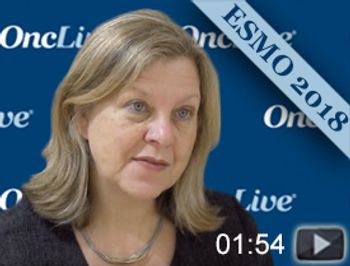
Barbara Burtness, MD, professor of medicine, Yale Cancer Center, discusses findings from the KEYNOTE-048 in head and neck squamous cell carcinoma (HNSCC).

Cisplatin plus radiotherapy results in better overall survival and the same rate of all-grade toxicity compared with cetuximab plus radiotherapy in patients with HPV-positive oropharyngeal cancer.

Frontline pembrolizumab monotherapy showed an improvement in overall survival and duration of response versus standard therapy in patients with PD-L1–positive recurrent or metastatic head and neck squamous cell carcinoma; however, there was not a similar improvement in progression-free survival or overall response rate with the PD-1 inhibitor.

Pembrolizumab (Keytruda) reduced the risk of death compared with standard of care therapy in patients with relapsed/metastatic head and neck squamous cell carcinoma, but the difference fell just shy of statistical significance.
Two doses of nivolumab given about 1 month prior to surgery are well tolerated and reduces tumor size in about half of patients with squamous cell carcinoma of the head and neck.
Adding a Toll-like receptor 8 agonist to standard care for patients with recurrent or metastatic squamous cell carcinoma of the head and neck failed to improve progression-free survival.

Afatinib delayed disease progression for approximately one month longer than chemotherapy and helped prevent painful symptoms from worsening for patients with relapsed or metastatic head and neck squamous cell carcinoma.
Ezra Cohen, MD, from the University of Chicago Medical Center, discusses the impact of cabozantinib's dose size on tolerability.
Ezra E.W. Cohen, MD, from the University of Chicago Medical Center, on the pharmacokinetics and efficacy of cabozantinib for medullary thyroid cancer.