

Experts shared the key data that stood out in hematologic oncology at the 2026 ASCO Annual Meeting.
Experts shared the key data that stood out in hematologic oncology at the 2026 ASCO Annual Meeting.

Real-world data showed zanubrutinib was associated with longer time to next treatment and improved overall survival vs acalabrutinib in treatment-naive CLL.
Experts highlight some top hematologic oncology data presented at ASCO 2026, including from key studies in multiple myeloma and diffuse large B-cell lymphoma.

First-line zanubrutinib improved real-world treatment duration, time to next treatment, and survival in older chronic lymphocytic leukemia.

Atrial fibrillation was associated with real-world cardiovascular and health care resource utilization burden in CLL/SLL.

Selinexor plus ruxolitinib produced higher SVR35 rates than ruxolitinib alone in JAK inhibitor-naive myelofibrosis.
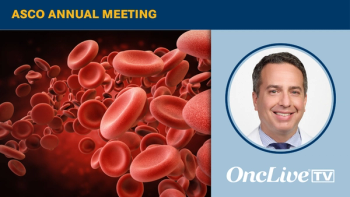
John Mascarenhas, MD, discusses key data from the SENTRY trial of selinexor plus ruxolitinib in JAK inhibitor–naïve myelofibrosis.
DVRd maintained efficacy benefits over VRd in transplant-ineligible, newly diagnosed multiple myeloma.
Tafasitamab plus lenalidomide and R-CHOP showed significant PFS improvements compared with R-CHOP alone in diffuse large B-cell lymphoma.
Mezigdomide plus carfilzomib and dexamethasone significantly improved PFS in patients with relapsed or refractory multiple myeloma.

Results from the phase 3 MajesTEC-9 trial show superior PFS, OS, and ORR outcomes with teclistamab monotherapy in pretreated relapsed/refractory myeloma.
Final analysis of DREAMM-9 shows promising efficacy data and an optimal dosing schedule for BVRd in transplant-ineligible newly diagnosed multiple myeloma.
Epcoritamab monotherapy yielded durable remissions and survival benefits in relapsed/refractory LBCL that remained in CR 2 years after starting treatment.

JNJ-79635322 had a tolerable safety profile and elicited responses comparable with those generated by CAR T-cell therapy in relapsed/refractory myeloma.

The first CAR T-cell therapy designed for patients with relapsed/refractory AL amyloidosis showed feasibility and early efficacy and safety signals.
Elranatamab plus daratumumab and lenalidomide was safe and effective in transplant-ineligible patients with newly diagnosed multiple myeloma.
A single infusion of cilta-cel led to a 5-year PFS in patients with heavily pretreated relapsed/refractory myeloma in long-term follow-up of CARTITUDE-1.
Dara-KRd improved rates of MRD negativity compared with KRd alone in patients with newly diagnosed multiple myeloma, regardless of transplant eligibility.
Daratumumab plus VRd continued to demonstrate improvements in MRD negativity and PFS in newly diagnosed, transplant-ineligible multiple myeloma.
Ziftomenib monotherapy elicited clinically meaningful, MRD-negative responses, including CRs, in heavily pretreated, relapsed/refractory NPM1-mutant AML.

D-VRd led to deeper and more durable responses that translated into improved PFS vs VRd alone in transplant-ineligible patients with multiple myeloma.
In the VERIFY study, rusfertide significantly improved clinical responses vs placebo in polycythemia vera, offering a potential new therapy.
Belantamab mafodotin plus Pd improved PFS and response rates in patients with relapsed/refractory multiple myeloma with high-risk cytogenetics.

Andrew Kuykendall, MD, discusses responses with rusfertide for patients with phlebotomy-dependent polycythemia vera.