

Postmenopausal women with hormone receptor-positive metastatic breast cancer had significant slowing of disease progression with the addition of the investigational cyclin-dependent kinase 4/6 inhibitor ribociclib to endocrine therapy.

Your AI-Trained Oncology Knowledge Connection!
Postmenopausal women with hormone receptor-positive metastatic breast cancer had significant slowing of disease progression with the addition of the investigational cyclin-dependent kinase 4/6 inhibitor ribociclib to endocrine therapy.

Maintenance therapy with niraparib reduced the risk of progression or death by 73% compared with placebo for patients with germline BRCA-positive platinum-sensitive, recurrent ovarian cancer.

Treatment with ipilimumab reduced the risk of death by 28% versus placebo in patients with high-risk stage III melanoma.

Antonio Llombart-Cussac, MD, PhD, medical oncologist, chairman, Medical Oncology Service, University Hospital Arnau de Vilanova in Valencia, Spain, discusses the CASCADE study, which assessed declines in treatment efficacy over time in patients with metastatic breast cancer, during an interview at the 2016 ESMO Congress.

Lars Bastholt, MD, clinical oncologist, Odense University Hospital, discusses the use of lenvatinib to treat patients with non-small cell lung cancer at the 2016 ESMO Congress.

The majority of heavily pretreated patients with high-grade ovarian cancer and germline or somatic BRCA mutations showed a durable response to rucaparib.
Almost 40% of patients with resected early-stage non–small cell lung cancer had evidence of tumor regression following neoadjuvant treatment with nivolumab (Opdivo) in a preliminary clinical trial.
Over one-fourth of patients with metastatic melanoma in Europe do not have access to groundbreaking therapies that could extend their lives.
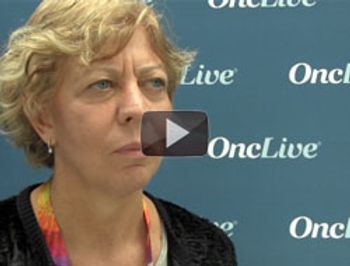
Enriqueta Felip, MD, PhD, medical oncologist, Vall d'Hebron University Hospital, Barcelona, Spain, discusses the efficacy and safety of ceritinib in patients with ALK-positive non-small cell lung cancer (NSCLC).

Adding saracatinib to vascular endothelial growth factor (VEGF)-targeted therapy did not improve response rates or overall survival while adding to toxicity in VEGF-resistant metastatic renal cell carcinoma
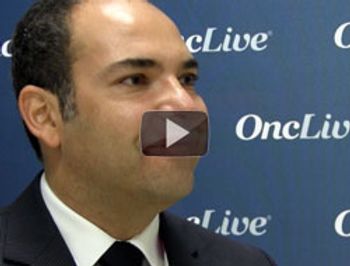
Christian Rolfo, MD, PhD, MHBA, head, phase I clinical trials unit, Antwerp University Hospital, Belgium, discusses the potential utility of ceritinib.
Roy S. Herbst, MD, PhD, professor, Yale Cancer Center, chief of medical oncology, Smilow Cancer Hospital at Yale-New Haven, discusses next generation lung cancer trials.
Jonathan Ledermann, BSc, MD, FRCP, Professor of Medical Oncology in the UCL Cancer Institute, University College London, discusses health-related quality of life during olaparib maintenance therapy in patients with platinum-sensitive relapsed serous ovarian cancer and a BRCA mutation.
Tanios Bekaii-Saab, MD, discusses the results of a phase II study of the oncolytic virus reolysin in the first-line treatment metastatic adenocarcinoma of the pancreas.

Durable responses were obtained with the immune checkpoint inhibitor nivolumab, with a manageable safety profile, in a phase II dose-ranging trial conducted in patients with previously treated metastatic renal cell carcinoma (mRCC).

The combination of abiraterone acetate and prednisone has demonstrated a statistically significant improvement in overall survival (OS) for men with metastatic castration-resistant prostate cancer (mCRPC) who had not received prior treatment with chemotherapy

Patients with unresectable melanoma had a significant improvement in the odds of survival when treated in first line with a combination of BRAF and MEK inhibitors, as opposed to anti-BRAF monotherapy

All patients with metastatic colorectal cancer should undergo RAS mutation testing to ensure optimal patient selection for EGFR inhibitor therapy.
Robert J. Motzer, MD, attending physician, Memorial Sloan Kettering Cancer Center, provides an overview of a phase II study of nivolumab for the treatment of patients with clear cell metastatic renal cell carcinoma.

Inhibiting BRAF and MEK at the same time improves progression-free survival (PFS) more so than BRAF inhibition alone in patients with BRAF V600 mutation-positive metastatic melanoma, according to results of a phase III placebo-controlled trial.

In patients with advanced gastric cancer expressing PD-L1, pembrolizumab (Keytruda) has robust antitumor activity and an acceptable safety profile

Treatment with crizotinib (Xalkori) demonstrated an overall response rate (ORR) of 72% in patients with ROS1-rearranged non–small cell lung cancer (NSCLC), according to phase I data presented at the 2014 ESMO Congress and published in The New England Journal of Medicine.
Jeffrey S. Weber, MD, PhD, discusses the results of a phase III study of nivolumab compared with investigator's choice chemotherapy for the treatment of patients with advanced melanoma after prior anti-CTLA-4 therapy.

Treatment with nivolumab (Opdivo) demonstrated superior objective response rates (ORR) and longer durations of response compared with chemotherapy in a phase III trial of patients with previously treated advanced metastatic melanoma, reported Jeffrey Weber, MD, at the 2014 ESMO Congress.
Susan Galbraith, MD, PhD, head, Oncology Innovative Medicine, AstraZeneca, discusses updated data from the ongoing phase I/II AURA study looking at AZD9291 for NSCLC.

Dual HER2 blockade with pertuzumab and trastuzumab plus chemotherapy for the treatment of HER2-positive metastatic breast cancer improved median OS by almost 16 months over standard first-line therapy.
Sandra M. Swain, MD, discusses final overall survival analysis from the CLEOPATRA study of first-line pertuzumab, trastuzumab, and docetaxel for the treatment of patients with HER2-positive metastatic breast cancer.
Cediranib improved response rate and median PFS when added to conventional chemotherapy in a phase II study of patients with relapsed or metastatic cervical cancer.

Almost 60% of patients with advanced non–small cell lung cancer experienced tumor shrinkage when treated with the PD-L1 inhibitor pembrolizumab.

Vintafolide in combination with docetaxel showed improvements in PFS and OS compared with single-agent docetaxel as second-line treatment of patients with folate receptor–positive NSCLC.