
Advances in subtype-specific treatments, immunotherapy, ongoing issues with younger patients, the optimal use of neoadjuvant and adjuvant regimens, and molecular testing will be discussed at the 20th Annual Lynn Sage Breast Cancer Symposium.
Advances in subtype-specific treatments, immunotherapy, ongoing issues with younger patients, the optimal use of neoadjuvant and adjuvant regimens, and molecular testing will be discussed at the 20th Annual Lynn Sage Breast Cancer Symposium.
Massimo Cristofanilli, MD, professor of medicine, Feinberg School of Medicine, Robert H. Lurie Comprehensive Cancer Center, discusses endocrine therapy for patients with breast cancer.
Arti Hurria, MD, director, Cancer and Aging Research Program, co-leader, Cancer Control and Population Sciences Program, professor, Department of Medical Oncology and Therapeutics Research and Department of Population Sciences, City of Hope, discusses challenges facing geriatric patients with breast cancer.
Ongoing studies are hoping to find a biomarker to guide which premenopausal women with ER-positive breast cancer need extended adjuvant therapy and which need ovarian function suppression.
Treating older patients with breast cancer must include more quality of life considerations and different types of survival calculations.
The sequencing of therapies for patients with HER2-positive breast cancer is largely driven by stage of disease and hormone receptor status.
Health investment is failing to match the challenge presented by a growing cancer burden in countries at all economic levels, enhancing the need for new approaches that help optimize the delivery of care.
There is a significant transformation underway in the treatment of breast cancer as research advances and new laboratory techniques continue to shrink the so-called "undruggable genome."
Hyman B. Muss, MD, School of Medicine, University of North Carolina (UNC)-Chapel Hill, Breast Cancer, Geriatric Oncology Program, Mary Jones Hudson Distinguished Professorship in Geriatric Oncology, UNC Lineberger Comprehensive Cancer Center, UNC School of Medicine, 2017 Giant of Cancer Care in Supportive/Palliative/Geriatric Care, discusses adjuvant therapy for elderly patients with HER2-positive or triple-negative breast cancer (TNBC).
Patients have a hard time with artificially induced menopause and some research suggests it may have a negligible effect on the success of their treatment.
Ruth O’Regan, MD, division head of Hematology and Oncology in the Department of Medicine at the University of Wisconsin School of Medicine and Public Health, discusses treatment for premenopausal patients with breast cancer.
José Baselga, MD, PhD, medical oncologist at Memorial Sloan Kettering Cancer Center, discusses biomarker research for patients with breast cancer.
Benjamin O. Anderson, MD, a surgical oncologist at the Seattle Cancer Care Alliance, discusses the biggest unmet need for patients with breast cancer in low- and middle-income countries.
Multigene panel testing offers a new but often puzzling tool for breast cancer treatment, since the results are often difficult to interpret, both for relative risk and risk management.
Even with advancements in technology, the prospect of artificial intelligence treating patients with cancer still remains out of reach. At least, for now.

Extra vigilance, careful management, and an emphasis on empathy makes treating cancer pain more effective during an opioid addiction epidemic.
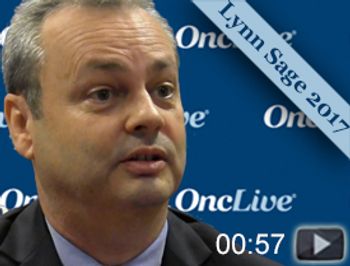
William F. Symmans, MD, professor of Pathology, The University of Texas MD Anderson Cancer Center, discusses the staging system for patients with breast cancer.
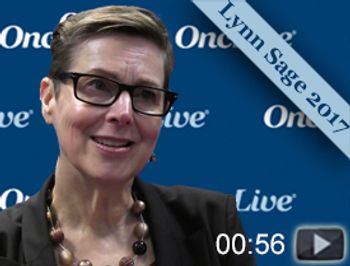
Judith Paice, PhD, RN, director of the Cancer Pain Program, Division of Hematology-Oncology, and research professor of Medicine, Northwestern University, discusses the pain management for patients with breast cancer.