

For all the positive data associated with PARP inhibitors in patients with epithelial ovarian cancer who have known BRCA mutations and despite several agents winning FDA approval over the past few years, PARP inhibitors aren’t curing patients.
For all the positive data associated with PARP inhibitors in patients with epithelial ovarian cancer who have known BRCA mutations and despite several agents winning FDA approval over the past few years, PARP inhibitors aren’t curing patients.
Shannon Westin, MD, discusses the evolving role of PARP inhibitors in ovarian cancer, novel investigational agents, and the importance of molecular testing.
Adria Suarez Mora, MD, second-year fellow at UPMC Magee-Womens Hospital, discusses how sequential sampling of intraperitoneal fluid during chemotherapy help better define the immunogenic effects of the treatment.
Kathleen G. Essel, MD, gynecologic oncology fellow at the University of Oklahoma Health Science Center with the Stephenson Cancer Center, discusses the benefits of using quantitative computed tomography image feature analysis to predict response to immune checkpoint inhibitors in patients with gynecologic cancers.

Carolyn Lefkowits, MD, gynecologic oncologist, and palliative care doctor, at the University of Colorado, addresses common misconceptions regarding palliative care integration.
Targeted therapy is effectively established as an option for patients with ovarian cancers. However, beyond PARP inhibition in the BRCA-mutated or homologous recombination deficient population, questions remain about how to best treat these patients.
The prognosis for women with recurrent or metastatic cervical cancer after treatment failure is notoriously poor, but immunotherapy agents may offer longer survival for this population.

Katherine Kurnit, MD, OBGYN oncology fellow at the University of Texas MD Anderson Cancer Center, compares the benefit of gastrointestinal-based versus gynecologic-based adjuvant chemotherapy regimens in patients with mucinous ovarian cancer.
Results from a recent retrospective study indicate that treatment with a gastrointestinal-based adjuvant chemotherapy regimen may be more beneficial than that of a gynecologic-based one in patients with mucinous ovarian cancer.
Genomic testing to guide treatment decisions for women with ovarian cancer is in its early days. However, as more platforms become commercially available, physicians will need to understand the similarities and differences between tests.
Eleftheria Kalogera, MD, MSc, instructor in Obstetrics and Gynecology, fellow in Gynecologic Oncology, in the department of Obstetrics and Gynecology, at Mayo Clinic College of Medicine, discusses the controversial topic of bowel preparation following minimally invasive or open hysterectomies.
Shannon N. Westin, MD, MPH, associate professor, The University of Texas MD Anderson Cancer Center, discusses advances made with PARP inhibitors in the ovarian cancer treatment paradigm.
Several ongoing trials are examining combinations of PARP inhibitors and immunotherapy agents as frontline maintenance for patients with ovarian cancer.
Several phase III studies are exploring immunotherapy combinations with the potential to disrupt the systemic treatment paradigm for patients with ovarian cancer.
PARP inhibitor combination regimens have the potential to enhance the relatively modest benefit offered by several monotherapy approaches used for the treatment of patients with ovarian cancer.
Floor J. Backes, MD, associate professor at The Ohio State University Comprehensive Cancer Center, discusses pelvic exenteration surgery for patients with gynecologic cancer.

Rebecca C. Arend, MD, assistant professor, UAB School of Medicine, UAB Department of Obstetrics and Gynecology, UAB Comprehensive Cancer Center, discusses the rationale behind novel combination strategies for patients with gynecologic cancer.
Rebecca C. Arend, MD, discussed novel combinations being investigated for the treatment of patients with ovarian cancer.
David O'Malley, MD, discusses the excitement surrounding PARP inhibitors for patients with ovarian cancer.
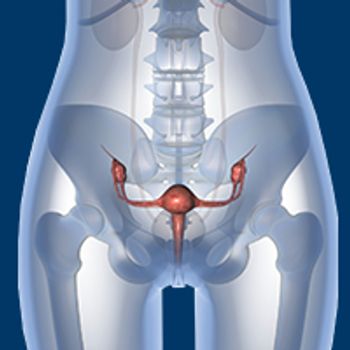
Many endometrioid cancers express high RNA levels for multiple immune checkpoints, and this may allow physicians to treat these patients with combination immune therapies.

Kathleen N. Moore, MD, assistant professor, The Stephenson Cancer Center, The University of Oklahoma, discusses combinations of immunotherapy with PARP inhibitors for patients with BRCA-mutated ovarian cancer.

Lindsay West, MD, gynecologic oncologist, UNC Department of Obstetrics and Gynecology, UNC School of Medicine, discusses the challenges with quality of life for patients with gynecologic cancer.
Adjuvant therapy, regardless of the treatment modality, did not improve overall survival compared with observation for women with early stage, uterine-confined leiomyosarcoma.
The administration of stereotactic body radiation therapy through the use of CyberKnife therapy appears to be a safe and effective salvage treatment for women with previously irradiated, locally recurrent gynecologic cancer.
Kathleen Moore, MD, discusses combination strategies with immunotherapy for patients with ovarian cancer.

An analysis of black women of Caribbean descent with type I or type II endometrial cancer showed that this population expressed significant differences in genetic variations compared with a nationwide population of patients with endometrial cancer.

Ahmed N. Al-Niaimi, MD, assistant professor of obstetrics and gynecology, University of Wisconsin School of Medicine and Public Health, discusses the future role for cytoreductive surgery for the treatment of patients with ovarian cancer.

Erin K. Crane, MD, MPH, gynecologic oncologist, Levine Cancer Institute, Carolinas HealthCare System, discusses the impact of PARP inhibitors for patients with ovarian cancer.