
Axatilimab displayed similar efficacy regardless of the number of prior lines of therapy in chronic graft-versus-host disease.
Axatilimab displayed similar efficacy regardless of the number of prior lines of therapy in chronic graft-versus-host disease.
Orca-T with reduced-intensity conditioning displayed robust and early donor myeloid and T-cell engraftment in advanced hematologic malignancies.
Ruxolitinib plus standard GVHD prophylaxis reduced GVHD in patients with myelofibrosis undergoing transplant.

Favorable responses were demonstrated with the treatment of axatilimab plus ruxolitinib/belumosudil in heavily pretreated patients with chronic GVHD.

Nirav Shah, MD, MSHP, discusses evaluating zamtocabtagene autoleucel in patients with relapsed/refractory diffuse large B-cell lymphoma

Dr Dholaria discusses the phase 1 trial of P-BCMA-ALLO1, highlighting high response rates, rapid CAR T-cell expansion, and a favorable safety profile in RRMM.

Sairah Ahmed, MD, discusses evaluating NKTR-255 in combination with CD19-directed CAR T-cell therapy in patients with relapsed/refractory large B-cell lymphoma.

P-BCMA-ALLO1 displayed early efficacy and safety data in relapsed/refractory multiple myeloma.

Zamto-cel produced responses and was associated with low rates of CD19 and/or CD20 antigen loss in relapsed/refractory diffuse large B-cell lymphoma.

Anakinra did not reduce cytokine release syndrome or immune effector cell–associated neurotoxicity in patients with large B-cell lymphoma receiving liso-cel.
NKTR-255 combined with CD19-directed CAR T-cell therapy improved 6-month CR rates vs placebo in patients with relapsed/refractory large B-cell lymphoma.

A high-risk CAR-HEMATOTOX score was associated with worse outcomes with obe-cel in relapsed/refractory B-ALL.
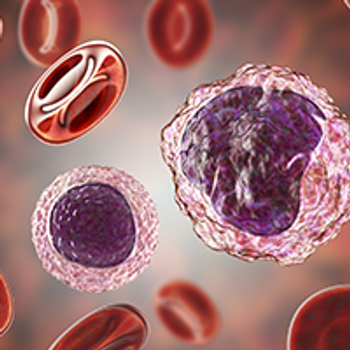
Real-world ruxolitinib use in chronic GVHD was primarily in the second- or third-line, lasted for a median of 8 months, and involved dose adjustments.

Encouraging data with RFS, OS, and NRM for Orca-T was also matched in a population of patients with hematologic cancers aged 55 years and older.

Jeremy L. Ramdial, MD, discusses the myeloablative conditioning regimen gemcitabine, clofarabine, and busulfan in patients with aggressive lymphomas.

In a retrospective analysis, Orca-T improved survival rates vs PTCy in patients with hematologic malignancies receiving myeloablative conditioning.

Alexandra Gomez Arteaga, MD, discusses a retrospective study of Orca-T vs post-transplant cyclophosphamide in acute leukemia and MDS.

Rahul Banerjee, MD, FACP, discusses the use of nivolumab in multiple myeloma or non-Hodgkin lymphoma after progression following CAR T-cell therapy.
Alice Bertaina MD, PhD, discusses T-allo10 infusion post–aβdepleted-HSCT in young patients with hematologic malignancies.

Belumosudil plus ruxolitinib elicited responses with acceptable tolerability in patients with chronic graft-vs-host disease.
Jeffery Auletta, MD, discusses the impact of post-transplant cyclophosphamide in hematologic malignancies.
Betty Hamilton, MD, discusses quality of life differences between post-transplant gilteritinib vs placebo in FLT3-ITD–positive acute myeloid leukemia.

Stephanie Lee, MD, MPH, discusses 3-year follow-up data from the phase 3 ROCKstar Study of belumosudil in cGVHD.

Treatment with immune engager therapies following relapse on ide-cel resulted in better median PFS vs other therapies for patients with multiple myeloma.

Lisocabtagene maraleucel elicited durable responses in patients with relapsed/refractory chronic lymphocytic leukemia or small lymphocytic lymphoma.

Concomitant azoles did not negatively affect efficacy with ruxolitinib or best available therapy in patients with acute graft-versus-host disease.
Cilta-cel continues to elicit deep and durable responses in patients with early relapsed multiple myeloma, including those refractory to lenalidomide.
Ruxolitinib and belumosudil demonstrated a beneficial ORR, indicating synergistic effects in targeting multiple inflammatory pathways in chronic GVHD.

A cream formulation of ruxolitinib was deemed safe and effective compared with placebo in patients with cutaneous graft-versus-host disease.

Early data seen with acalabrutinib plus axi-cel indicate the combination’s feasibility as bridging therapy in relapsed/refractory B-cell lymphoma.