
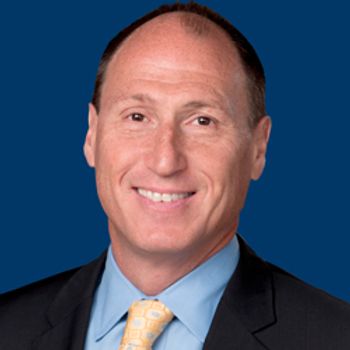
Rogerio Lilenbaum, MD, highlights the current treatment approaches for patients with EGFR-positive non–small cell lung cancer and shed light on the potential for immunotherapy in the space.
Rogerio Lilenbaum, MD, highlights the current treatment approaches for patients with EGFR-positive non–small cell lung cancer and shed light on the potential for immunotherapy in the space.
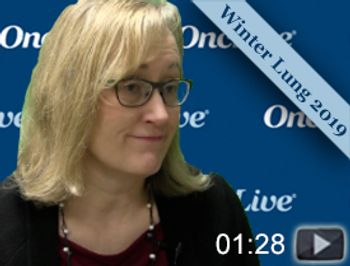
Julie R. Brahmer, MD, associate professor of oncology, co-director of the Upper Aerodigestive Department, Bloomberg Kimmel Institute for Cancer Immunotherapy, Johns Hopkins Medicine, discusses managing immune-related adverse events in lung cancer.
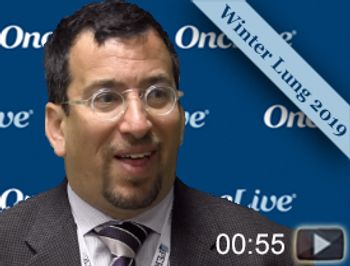
Edward B. Garon, MD, director of Thoracic Oncology at the Jonsson Comprehensive Cancer Center at University of California, Los Angeles, discusses the potential for immunotherapy in the treatment of patients with EGFR-positive non–small cell lung cancer.

Jarushka Naidoo, MBBCh, discusses some of the most commonly seen immune-related adverse events in patients with lung cancer and how to manage them.
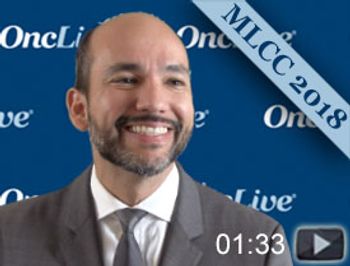
Gilberto Lopes Jr, MD, a medical director for International Programs at Sylvester Comprehensive Cancer Center, University of Miami Miller School of Medicine, discusses the important of addressing financial toxicity during the 5th Annual Miami Lung Cancer Conference.
ROS1, NTRK, MET, and HER2 are all less common molecular targets found in non–small cell lung cancer, but emerging therapeutic strategies are being explored to attack these abnormalities.
Heather Wakelee, MD, professor of medicine, division of oncology, Stanford University, discusses first-line therapy for patients with EGFR-mutant lung cancer.
Upfront testing for BRAF V600E mutations is necessary for patients with non–small cell lung cancer, but if results are positive, physicians are unsure when to administer BRAF/MEK combination therapy—and they must be prepared to manage the associated adverse events.
Heather Wakelee, MD, discusses the rapidly changing landscape of frontline EGFR tyrosine kinase inhibitors in non–small cell lung cancer.
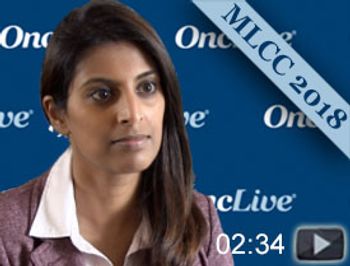
Jarushka Naidoo, MBBCh, assistant professor of oncology, Johns Hopkins University, discusses advancements in the management of immune-related adverse events (irAEs) in patients with lung cancer during the 5th Annual Miami Lung Cancer Conference.
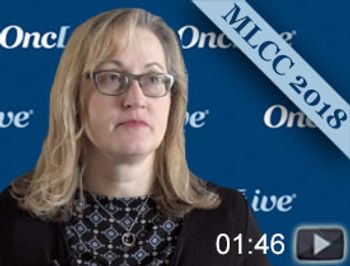
Julie R. Brahmer, MD, associate professor of oncology, co-director of the Upper Aerodigestive Department, Bloomberg Kimmel Institute for Cancer Immunotherapy, Johns Hopkins Medicine, discusses pembrolizumab (Keytruda) in the first-line treatment of non–small cell lung cancer during the 5th Annual Miami Lung Cancer Conference.
Immune-based therapies continue to show promising signals for patients with small cell lung cancer and mesothelioma, but better predictive biomarkers are needed to determine who is most likely to benefit.
With durvalumab (Imfinzi) being hailed as a potentially practice changing therapy in locally advanced non–small cell lung cancer, ongoing studies are seeking to determine the efficacy of immunotherapy in earlier stages of disease.
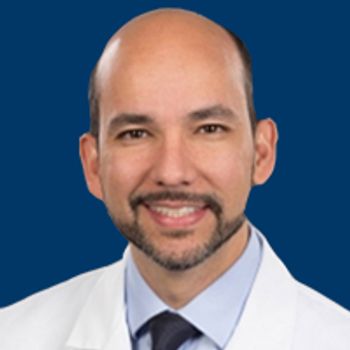
Gilberto Lopes, MD, discusses the global disparities occurring in lung cancer care and some of the steps that are being taken to better serve patients with the available and emerging therapeutic approaches.
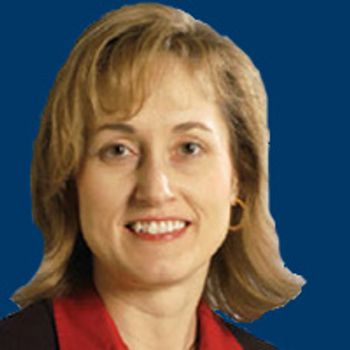
Julie R. Brahmer, MD, discusses first-line immunotherapy, targeted therapies for molecularly driven tumors, and recently released guidelines for the treatment of patients with lung cancer.
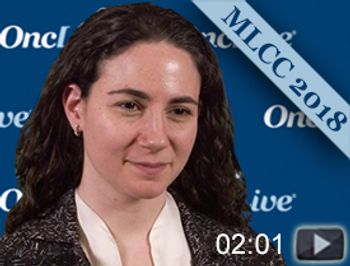
Sarah B. Goldberg, MD, MPH, an assistant professor of medicine at the Yale School of Medicine and Yale Cancer Center, discusses testing for and treating resistance to EGFR tyrosine kinase inhibitor (TKI) therapy in non–small cell lung cancer.
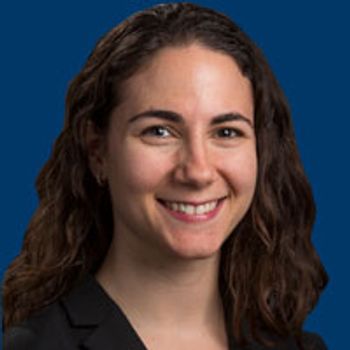
Sarah B. Goldberg, MD, discusses testing for and treating resistance to EGFR TKI therapy in non-small cell lung cancer.