

As more agents are evaluated either in addition to or following PD-1/PD-L1 inhibitors, more information may be learned about how best to leverage alternate biomarkers, according to Marina C. Garassino, MD.
As more agents are evaluated either in addition to or following PD-1/PD-L1 inhibitors, more information may be learned about how best to leverage alternate biomarkers, according to Marina C. Garassino, MD.

FDA approvals in recent years have started to carve out a role for immunotherapy in the frontline treatment of patients with small cell lung cancer.

With 9 approved markers in non–small cell lung cancer and a plethora of established and emerging therapies that have been designed to target them, the need for molecular testing is more important than ever.

Lyudmila A. Bazhenova, MD, discusses future research questions with fam-trastuzumab deruxtecan-nxki in HER2-mutated lung cancer.

Upal Basu Roy, PhD, MPH, discusses the challenges of interpreting molecular testing results in lung cancer.

Lyudmila Bazhenova, MD, explores key challenges faced with diagnosing and appropriately treating patients with non–small cell lung cancer that harbors EGFR exon 20 insertion mutations and provides insight into the second-line options that have recently garnered regulatory approval.

Checkpoint inhibitors are often used in the advanced stage, but Erin A. Gillaspie, MD, MPH, argues that the data show physicians should consider utilizing this class of agents earlier in treatment.

Russell Kenneth Hales, MD, discusses the role of multidisciplinary care in locally advanced lung cancer.

Benjamin Philip Levy, MD, discusses potential methods to optimize molecular testing in lung cancer.
Antibody-drug conjugates appear to have the most activity in those with non–small cell lung cancer and HER2 expression.

Repeat histologic evaluation and molecular testing in patients with EGFR-mutant non–small cell lung cancer who develop acquired resistance to osimertinib can deliver pertinent information that can help guide subsequent treatment decisions.

Although PD-L1 expression and histology served as helpful stratification factors in pivotal trials, the paradigm will need to build out more tailored selection strategies as additional checkpoint inhibitors move through development.

Concurrent chemoradiation followed by durvalumab has become the standard of care for patients with unresectable stage III non–small cell lung cancer based on the results of the phase 3 PACIFIC trial. However, several strategies are under clinical evaluation to push the paradigm beyond the PACIFIC regimen.

In the past 2 years, key data from clinical trials in advanced lung cancer have demonstrated that immunotherapy has expanded the bounds of the armamentarium for the treatment of several lung cancers.
Upal Basu Roy, PhD, MPH, discusses addressing barriers to biomarker testing in lung cancer.
Russell Kenneth Hales, MD, discusses investigational treatment strategies that have the potential to build upon the positive results of the phase 3 PACIFIC trial in stage III non–small cell lung cancer.

Surgical resection remains the key treatment modality for early-stage non–small cell lung cancer; however, both systemic adjuvant and neoadjuvant therapeutics are options that have value for patients.

The field of non–small cell lung cancer has exploded with continuous advances in targeted therapies directed toward key molecular alterations, including rare mutations like MET exon 14 skipping mutations, RET rearrangements, and ROS1 mutations.

With the emergence of multiple immunotherapy approaches in recent years, the decision of whether to use a single agent, to pair it with chemotherapy, or to pair it with another immunotherapy agent has come to the forefront of treatment.

Julie R. Brahmer, MD, discusses factors to consider when determining when to initiate immunotherapy in a patient with newly diagnosed non–small cell lung cancer.

Luis E. Raez, MD, discusses the potential utility of cemiplimab-rwlc in non–small cell lung cancer.
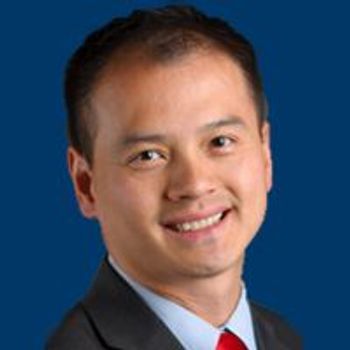
Vincent Lam, MD, describes frontline indications for this patient population, as well as strategies that can be utilized to overcome TKI resistance in later lines of therapy.
Immunotherapy plus chemotherapy is a standard of care for patients with advanced PD-L1–negative non–small cell lung cancer who do not harbor actionable driver mutations.

Now that a new standard of care has been established in frontline mesothelioma, clinical trials are needed to evaluate optimal sequencing with checkpoint inhibitors in the salvage setting and determine whether biomarkers of response to immunotherapy could further tailor treatment to individual patients.

Synergizing EGFR TKIs with antiangiogenic agents and chemotherapy, as well as improving the use of molecular classification, are novel strategies aimed at taking the frontline setting for patients with EGFR-mutant non–small cell lung cancer to the next level.

Mark A. Socinski, MD, discusses the nuances of the PACIFIC trial and ongoing research with durvalumab that could extend the reach of immunotherapy in early-stage lung cancer.

Over the past 2 decades, the field of EGFR-mutated non–small cell lung cancer has grown tremendously, but the influx of data and the recent regulatory approval of adjuvant osimertinib have raised several important questions to be addressed to ensure that the optimal treatment approach is utilized.

Rogerio C. Lilenbaum, MD, discusses some of the key clinical issues facing the lung cancer field, the role of genomic testing and multidisciplinary care, and the challenges that arose with telemedicine during the coronavirus disease 2019 pandemic.

In the quest for scientific purity, one should not lose sight of the meaningful end points that can make a difference in patients’ daily lives.

Mary Jo J. Fidler, MD, discusses the potential utility of circulating tumor DNA to inform treatment escalation in lung cancer.