OncLive Insights

OncLive Insights

Series

All
All

Third-Line Treatment Options for Metastatic Colorectal Cancer

Panelists discuss how current third-line treatment options for metastatic colorectal cancer, including regorafenib, trifluridine-tipiracil plus bevacizumab, and fruquintinib, are selected based on patient-specific factors, safety profiles, and treatment goals, while also exploring future directions and unmet needs in mCRC management.
Evolving Treatment in Newly Diagnosed Multiple Myeloma Patients

Elizabeth O’Donnell, MD, discusses how recent clinical trial findings are reshaping frontline treatment strategies for transplant-ineligible patients with newly diagnosed multiple myeloma, emphasizing the importance of patient-specific factors in therapy selection.

Furthermore, Douglas Sborov, MD, discusses how recent advancements in clinical trials and treatment strategies are reshaping the management of newly diagnosed multiple myeloma patients who are eligible for transplant.

Nitin Jain, MD, and Joanna M Rhodes, MD, MDCS, are featured in this series.

Optimizing R/R CLL Treatment: Therapy Sequencing and Supportive Care Strategies

Nitin Jain, MD, and Joanna M. Rhodes, MD, MDCS, discuss how various aspects of chronic lymphocytic leukemia (CLL) management are approached, including treatment selection based on prior therapies and patient factors, the use of novel agents such as pirtobrutinib, strategies for relapsed/refractory (R/R) disease, treatment sequencing, and the role of multidisciplinary teams in optimizing patient care and outcomes.

Clinical Updates in Treating Advanced Prostate Cancer

Panelists discuss how advancements in biomarker and genetic testing, along with updated treatment guidelines, are transforming the diagnosis and management of prostate cancer, emphasizing the importance of personalized approaches in optimizing patient outcomes.

My Treatment Approach: Optimizing Treatment for Chronic GVHD

This educational program, led by experts Shernan Holtan, MD, and Haris Ali, MD, explores the latest strategies and emerging treatments for optimizing management of chronic graft-vs-host disease (cGVHD), including monitoring techniques, therapeutic options, and patient-reported outcomes.

2 KOLs are featured in this series.

My Treatment Approach: Optimizing Care for Relapsed / Refractory Multiple Myeloma: Translating Evidence to Clinical Practice

Robert Z. Orlowski, MD, PhD, and Jonathan Kaufman, MD, Leading experts in relapsed/refractory multiple myeloma, explore evolving treatment landscapes, including CAR T-cell therapies, the role of selinexor, and optimized sequencing strategies, while addressing two complex clinical scenarios and providing key insights for community oncologists to enhance patient care.

A panel of 3 experts on ALL

Inside the Clinic: Treating AYA ALL

Experts on adolescent and young adult acute lymphoblastic leukemia review patient cases have a comprehensive discussion on treatment practices and the evolving therapeutic landscape.

Hannah Choe, MD, an expert on GVHD

Focus on Pathways: Targeting the CSF-1R Pathway in Graft-vs-Host Disease

Hannah Choe, MD discusses the role of the CSF-1 receptor (CSF-1R) pathway in the pathogenesis of graft-versus-host disease (GVHD) and other diseases. She reviews the rationale for targeting this pathway as a therapeutic strategy and examines preclinical and clinical data on the use of CSF-1R inhibitors, such as axatilimab, for the treatment of GVHD. Dr. Choe provides insights on the practical considerations for integrating these novel agents into clinical practice.

OncLive - "ASK THE EXPERTS: Advanced Neuroimaging of Glioblastoma"

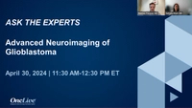
ASK THE EXPERTS: Advanced Neuroimaging of Glioblastoma

Nathalie Albert, MD, and Matthias Preusser, MD, explore the latest advancements in neuroimaging technologies and techniques, focusing on the use of amino acid tracers to enhance the diagnosis, treatment, and overall care of patients with glioblastoma.

A panel of 3 experts on breast cancer

My Treatment Approach: HER2+ Breast Cancer

Tiffany A. Traina, MD; Vijayakrishna Gadi, MD, PhD, and Heather McArthur, MD, explore the current treatment landscape for HER2-positive metastatic breast cancer. They discuss standard of care therapies across lines, pivotal trial data, management of brain metastases, optimal sequencing strategies after, and emerging novel agents. Two patient cases help illustrate real-world decision-making.

OncLive: "My Treatment Approach: Targeting Genetic Alterations in Tumors: Clinical Cases and Precision Oncology Approaches "

My Treatment Approach: Targeting Genetic Alterations in Tumors: Clinical Scenarios and Precision Oncology Approaches

Insights into integrating tumor agnostic therapies for actionable genetic alterations across solid tumors. Renowned experts Dr. Vivek Subbiah, Dr. Karisa Schreck, and Dr. Rimas Lukas delve into pivotal clinical cases showcasing the identification and targeted treatment of BRAF and RET fusions. The in-depth discussion spotlights practical strategies for NGS testing, overcoming barriers to adoption, efficacy and safety data from landmark trials, sequencing of therapies, and the evolving landscape of precision oncology beyond current approvals. Gain invaluable clinical pearls for optimizing patient outcomes with tumor agnostic targeted agents in the community setting.

OncLive series - "Optimizing Patient Outcomes in High-Risk HR+, HER2- Early-Stage Breast Cancer"

Optimizing Patient Outcomes in High-Risk HR+, HER2- Early-Stage Breast Cancer

Hope Rugo, MD, FASCO, and Naomi Dempsey, MD, provide a comprehensive analysis of risk stratification in high-risk HR+/HER2- early-stage breast cancer, clinical approaches with high-risk breast cancer, recent trial data with CDK4/6 inhibitors, and strategies for managing toxicities for treatment continuity in the management of HR+/HER2- early-stage breast cancer, offering valuable insights to optimize patient care.

Year in Review: Updates in Treating Myelofibrosis

Andrew Kuykendall, MD, and Raajit K. Rampal, MD, PhD, discuss the nuanced treatment landscape of myelofibrosis, exploring the latest advancements in JAK inhibitors, the importance of individualized care, and the potential of emerging combination therapies to enhance patient outcomes.