
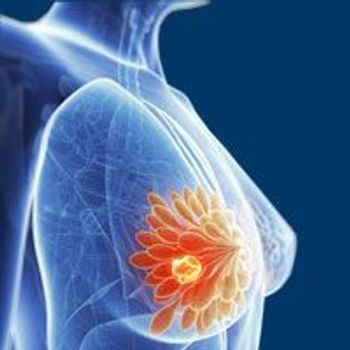
Entrectinib produced deep and durable responses in patients with breast cancer harboring NTRK fusions.
Entrectinib produced deep and durable responses in patients with breast cancer harboring NTRK fusions.
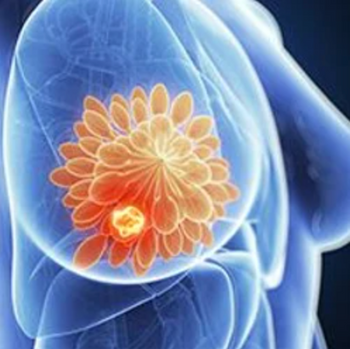
The addition of abemaciclib to endocrine therapy improved invasive disease-free survival and distant relapse-free survival vs endocrine therapy alone in patients with high-risk, hormone receptor–positive, HER2-negative, early-stage breast cancer, irrespective of menopausal status.

The addition of nivolumab to trastuzumab deruxtecan did not result in a marked clinical benefit in patients with locally advanced unresectable or metastatic HER2-positive breast cancer.
HER2 expression appeared to be a significant predictor for response to fam-trastuzumab deruxtecan-nxki, according to findings from a biomarker analysis of patients with metastatic breast cancer in the phase 2 DAISY trial.
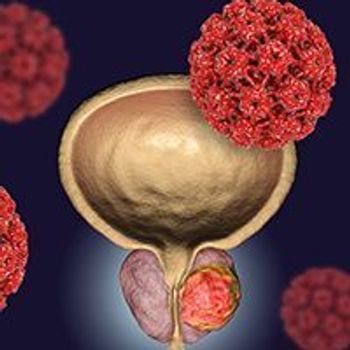
Niraparib was found to maintain or improve health-related quality of life in patients with advanced or metastatic castration-resistant prostate cancer, according to data from the final analysis of the phase 2 GALAHAD trial.
The addition of adjuvant abemaciclib to endocrine therapy resulted in a clinically meaningful reduction in the risk of developing invasive disease, particularly incurable distant metastatic disease, in patients with high-risk, hormone receptor–positive, HER2-negative, early breast cancer who comprised cohort 1 of the phase 3 monarchE trial.
The addition of pembrolizumab to chemotherapy led to significant survival benefits without substantial deterioration in health-related quality of life among patients with treatment-naïve, PD-L1–positive advanced triple-negative breast cancer according to results from the phase 3 KEYNOTE-355 trial.

Nearly all patients with HER2-positive breast cancer with brain metastases who received fam-trastuzumab deruxtecan-nxki elicited benefit, according to data from a primary outcome analysis of the phase 2 TUXEDO-1 trial.

The combination of alpelisib plus endocrine therapy elicited a clinical benefit across all subgroups of patients with hormone receptor–positive, HER2-negative advanced breast cancer with PIK3CA mutations.
Overall health status and quality of life were maintained among patients with HER2-positive metastatic breast cancer who were treated with fam-trastuzumab deruxtecan-nxki compared with those who received ado-trastuzumab emtansine.
Sacituzumab govitecan-hziy maintained clinical benefit in patients with metastatic triple-negative breast cancer regardless of HER2 expression according to a post hoc analysis of the phase 3 ASCENT trial.
The addition of ribociclib to fulvestrant continued to significantly prolong overall survival, delayed time to second disease progression, and improved chemotherapy-free survival vs placebo plus fulvestrant in the first-line treatment of patients with advanced hormone receptor–positive, HER2-negative breast cancer.
Although it is not considered to be a standard of care for patients with indolent non-Hodgkin lymphoma, very low dose radiation therapy was found to have efficacy in the palliative setting and to allow for retreatment to the same field when needed.
The time-limited combination of ublituximab and umbralisib plus ibrutinib resulted in an undetectable minimal residual disease rate of 77% in patients with chronic lymphocytic leukemia, according to findings from a phase 2 trial (NCT04016805)
The combination of JSP191, fludarabine, and low-dose total body irradiation demonstrated facilitation of full donor myeloid chimerism, clearance of minimal residual disease, and a tolerable safety profile in patients with myelodysplastic syndrome or acute myeloid leukemia.
Administration of the SARS-CoV-2 vaccine resulted in heterogeneous immune response in patients with chronic graft-vs-host disease (cGVHD), further highlighting concerns about protection against infection or severe COVID-19 disease in this population

Patients with relapsed/refractory acute lymphoblastic leukemia who underwent matched sibling donor transplants had a significantly higher overall survival at 2 years compared with those who underwent haploidentical stem cell transplant.
The use of 131-iodine generated high rates of allogeneic hematopoietic cell transplantation in patients with relapsed/refractory acute myeloid leukemia who did not achieve a complete response following standard therapy.
Itolizumab decreased levels of cell surface CD6 and increased soluble CD6 in serum in patients with acute graft-vs-host-disease.
The use of ruxolitinib following an allogeneic hematopoietic cell transplantation was associated with the prevention of serious graft-versus-host disease.

Results of a match-adjusted analysis of patients with follicular lymphoma treated with axicabtagene ciloleucel in ZUMA-5 trial vs those treated with tisagenlecleucel in ELARA showed a similar efficacy profile between the 2 cellular therapies.
Myeloablative transplantation with a total body irradiation regimen followed by a graft-versus-host disease prophylaxis regimen led to a low occurrence of GVHD in adult and pediatric patients with hematologic malignancies.
Topical ruxolitinib has shown improved reduction of body surface area of cutaneous chronic graft-vs-host disease vs standard moisturizer vehicle cream, according to interim study results from a poster presented at the 2022 Transplantation & Cellular Therapy Meetings.

Investigators have identified immunoglobulin G heavy chain, soluble B-cell maturation agent, prothrombin time and international normalized ratio, and high vector copy number in drug product as predictors for response in patients with multiple myeloma.
The CAR T-cell therapies axicabtagene ciloleucel, tisagenlecleucel, and lisocabtagene maraleucel evoked responses without increased risk of cytokine release syndrome or immune effector cell–associated neurotoxicity syndrome in patients with primary or secondary central nervous system large B-cell lymphoma.

Ciltacabtagene autoleucel generated deep responses and demonstrated manageable safety in patients with progressive multiple myeloma who were refractory to lenalidomide.
Axicabtagene ciloleucel continued to elicit high response rates and durable activity in patients with relapsed/refractory follicular lymphoma and marginal zone lymphoma, according to updated findings from the phase 2 ZUMA-5 trial.

The CAR T-cell therapy axicabtagene ciloleucel produced encouraging responses when used in the first-line treatment of patients with high-risk large B-cell lymphoma.

The utilization of lisocabtagene maraleucel in patients with relapsed/refractory large B-cell lymphomas produced durable outcomes at a 2 years follow-up.

Belimumab could be a potential treatment used to prevent chronic graft-vs-host-disease in patients undergoing allogeneic hematopoietic transplantation by inhibiting BAFF and limiting the survival of aforeactive B cells.