
Frontline treatment with the combination of lenvatinib plus pembrolizumab in patients with metastatic renal cell carcinoma led to similar health-related quality of life outcomes and disease-related symptom scores vs sunitinib.
Frontline treatment with the combination of lenvatinib plus pembrolizumab in patients with metastatic renal cell carcinoma led to similar health-related quality of life outcomes and disease-related symptom scores vs sunitinib.

Treatment with intra-tumoral SD-101 in combination with pembrolizumab and paclitaxel resulted in a non-statistically significant increase in estimated pathological complete response rates in patients with high-risk, HER2-negative stage II/III breast cancer across 3 HER2-negative biomarker signature groups.
Although prolonged treatment with bevacizumab for up to 30 months is feasible with consistent safety data for patients with primary epithelial ovarian, fallopian tube, or peritoneal cancer, the regimen did not improve survival over the standard 15 month treatment regimen.

Mirvetuximab soravtansine in combination with bevacizumab yielded durable responses in patients with recurrent, platinum agnostic ovarian cancer, a population in need of more effective, non-platinum treatments.

Larotrectinib has demonstrated efficacious responses and disease control in patients with TRK fusion–positive central nervous system tumors.

OncLive sits down with Erika P. Hamilton, MD, and Milind Javle, MD, on the pivotal studies in breast cancer and gastrointestinal cancers, respectively, at the 2021 ASCO Annual Meeting.
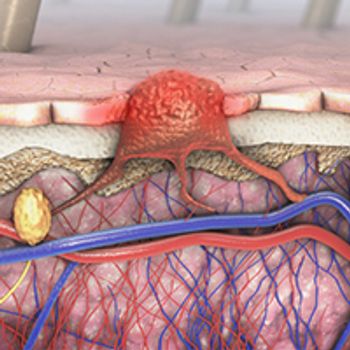
Lenvatinib and pembrolizumab continued to yield meaningful and durable responses in patients with advanced melanoma who had progressed on previous PD-L1 inhibitor treatment.

Lifileucel has demonstrated promising long-term responses in patients with heavily pretreated advanced or metastatic melanoma who have progressed following PD-1 and PD-L1 inhibition.

Nivolumab monotherapy, or in combination with ipilimumab, continued to demonstrate durable improvements in overall survival compared with ipilimumab alone in patients with previously untreated advanced melanoma.

Selpercatinib demonstrated evidence of preliminary efficacy and safety in pediatric patients with advanced RET-altered solid tumors.

Selpercatinib improved overall response rates in most patients with RET-mutated medullary thyroid cancer irrespective of prior systemic therapy.
Neoadjuvant nivolumab in combination with platinum-doublet chemotherapy significantly improved pathological complete response rates and had a greater depth of pathological response compared with chemotherapy alone in patients with resectable non–small cell lung cancer.

Adjuvant treatment with gefitinib delayed early relapse in patients with completely resected EGFR-mutant non–small cell lung cancer. However, the EGFR inhibitor did not significantly improve disease-free survival or overall survival compared with cisplatin/vinorelbine.

Patients with early-stage breast cancer who have ultralow risk disease indicated by a 70-gene signature demonstrated have an excellent survival prognosis regardless of clinical risk.

The combination of pyrotinib plus trastuzumab, docetaxel, and carboplatin (TCbH) significantly improved the total pathological complete response rate over TCbH alone in the neoadjuvant treatment of patients with HER2-positive breast cancer.
Pertuzumab plus trastuzumab, and nab-paclitaxel used as neoadjuvant therapy in patients with HER2-positive locally advanced breast cancer induced a pathologic complete response similar to that achieved with docetaxel, carboplatin, trastuzumab, and pertuzumab, with less treatment-related toxicities.
The autologous CAR T-cell product CART-ddBCMA was found to elicit a 100% objective response rate in patients with relapsed/refractory multiple myeloma, with deep and durable responses noted in those with poor prognostic factors.

A de-escalated course of neoadjuvant therapy of trastuzumab and pertuzumab with or without added weekly paclitaxel for only 12 weeks yielded high response rates and significant survival in patients with HER2-positive, hormone receptor–negative early breast cancer.

The addition of durvalumab to neoadjuvant anthracycline and taxane–based chemotherapy was found to significantly improve survival in patients with early triple-negative breast cancer.

Patients with stage III melanoma who progressed following placebo-based treatment in the first part of the phase 3 EORTC 1325/KEYNOTE-054 trial and crossed over to receive pembrolizumab post-recurrence derived a 38.8% overall response rate and a 32% overall 3-year progression-free survival rate.

Hussein A. Tawbi, MD, PhD, discusses the efficacy of relatlimab plus nivolumab in patients with advanced melanoma.
Investigators validated the safety and efficacy of anti-C-type lectin-like molecule-1-based CAR T cells in a small clinical trial of pediatric patients with relapsed/refractory acute myeloid leukemia.

Three-year follow-up data from the phase 2 L-MIND study demonstrated that tafasitamab-cxix in combination with lenalidomide induces sustainable response in relapsed/refractory diffuse large B-cell lymphoma.

OncLive sits down with Edward S. Kim, MD, and Anthony R. Mato, MD, on the pivotal studies in lung cancer and leukemia at the 2021 ASCO Annual Meeting.

Selumetinib did not elicit clinical activity in pediatric and young adult patients with refractory cancers who had actionable mutations in the RAS/RAF/MAPK1/2-ERK pathway.
Data from the phase 2 NIFTY trial demonstrated that liposomal irinotecan in combination with 5-fluorouracil/leucovorin significantly improved progression-free survival and overall survival for patients with metastatic biliary tract cancer whose disease had progressed following first-line line gemcitabine/cisplatin.

Ribociclib plus fulvestrant continued to significantly improve overall survival over fulvestrant alone in postmenopausal patients with hormone receptor–positive, HER2-negative advanced breast cancer at almost 5 years of follow-up, irrespective of whether patients received the regimen in the first- or second-line setting.

Camrelizumab in combination with chemotherapy demonstrated improved overall survival and progression-free survival and a manageable safety profile as frontline therapy compared with placebo plus chemotherapy in patients with advanced or metastatic esophageal squamous cell carcinoma.

The combination of venetoclax and fulvestrant failed to improve overall outcomes vs fulvestrant alone in patients with locally advanced or metastatic estrogen receptor–positive, HER2-negative breast cancer who had previously received a CDK4/6 inhibitor.