
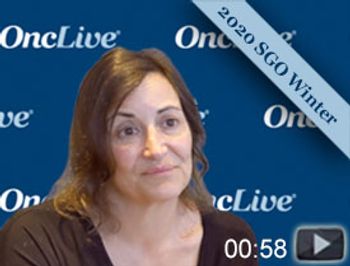
Angeles Alvarez Secord, MD, discusses a presentation from the 2020 SGO Winter Meeting that focused on assistance with the financial burden associated with PARP inhibitors in patients with ovarian cancer.

Your AI-Trained Oncology Knowledge Connection!
Angeles Alvarez Secord, MD, discusses a presentation from the 2020 SGO Winter Meeting that focused on assistance with the financial burden associated with PARP inhibitors in patients with ovarian cancer.
Significant research advances in targeted therapy and immunotherapy within the past years have created a more personalized approach to treatment for patients with advanced non–small cell lung cancer.
Three pivotal clinical trials evaluating PARP inhibitors have significantly impacted the treatment of patients with newly diagnosed ovarian cancer.
Based on available data, treatment is not that obvious for patients with metastatic non–small cell lung cancer who are tolerating treatment well and have either a complete or partial response to therapy.

Ian Hagemann, MD, PhD, discusses the main take home from his presentation at the 2020 SGO Winter Meeting.
Julia Fehniger, MD, shares her thoughts on the development of PARP inhibitors in ovarian cancer and expansion into other tumor types.

With few chemotherapy options available for patients with cervical cancer, R. Wendel Naumann, MD, said that immunotherapy represents an attractive treatment option in the landscape.
Suresh S. Ramalingam, MD, FASCO, discusses the current treatment parameters for osimertinib in EGFR-mutant non–small cell lung cancer and ongoing research with the agent.
Gilberto De Lima Lopes, MD, discusses the standard of care for pembrolizumab in patients with metastatic lung cancer.
The standard of care for patients with small cell lung cancer has been trapped in a period of stagnation for the past several decades.
The potential therapeutic benefits of immune checkpoint inhibitors as monotherapy as well as in combination with chemotherapy for patients with non–small cell lung cancer depend greatly on the timing of treatment initiation. However, for patients with EGFR, ALK, and other actionable mutations, identifying the optimal combination is a hurdle.
Angeles Alvarez Secord, MD, gynecologic oncologist, Duke Cancer Center, discusses the role of PARP inhibitors in ovarian cancer based on their current indications in the treatment landscape.

Carrie L. Langstraat, MD, gynecologic oncologist, Mayo Clinic, discusses the role of sentinel lymph nodes in patients with endometrial cancers.
Floor J. Backes, MD, discusses the latest advancements made in the treatment of patients with ovarian cancer and the ongoing research efforts that are being made with novel combinations.
Advancements in the prevention and treatment of patients with lung cancer have picked up momentum over the past decade and now is the time to build on that progress according to Suresh S. Ramalingam, MD, FASCO.
Tumors from a significant percentage of patients with endometrial cancer at NYU Langone Health’s Perlmutter Cancer Center were found to have BRCA1/2 somatic mutations.
Jamie E. Chaft, MD, discusses the rise of immunotherapy in lung cancer and research with this treatment modality that is on the horizon.
Rogerio C. Lilenbaum, MD, discusses using PD-L1 as a predictive biomarker for immunotherapy and the search for additional biomarkers in lung cancer.
Benjamin P. Levy, MD, discusses emerging oncogenic markers in lung cancer and what impact they are poised to make on the paradigm.
In ovarian cancer, disease that returns within 6 months of treatment following platinum-based therapy is defined as platinum-sensitive.
Researchers and practicing physicians have done as much as possible with chemotherapy as a systemic treatment for endometrial cancers, and other modalities—alone and in combination—are likely to become standard of care in the coming years, Shannon N. Westin, MD, MPH, said during a presentation at the 2020 SGO Winter Meeting.
Maintenance treatment with PARP inhibitors should be the standard of care in the frontline setting for patients with ovarian cancer, Kathleen M. Moore, MD, said during a presentation at the 2020 Society of Gynecologic Oncology Winter Meeting.
Analysis of patient-reported outcomes from the phase III IMbrave 150 study showed meaningful benefits in quality of life, functioning, and key symptoms with atezolizumab plus bevacizumab compared with sorafenib as first-line treatment in patients with unresectable hepatocellular carcinoma.
Encorafenib plus cetuximab with or without binimetinib demonstrated longer maintenance of quality of life on patient-reported assessments over current standard of care in the treatment of patients with BRAF V600E-mutant metastatic colorectal cancer.
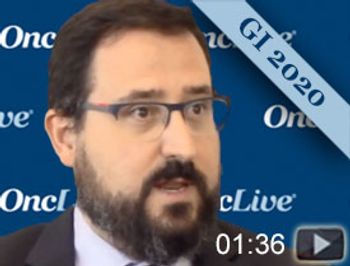
Augusto Villanueva, MD, an assistant professor of the Division of Liver Diseases at the Tisch Cancer Institute of Icahn School of Medicine at Mount Sinai, discusses mutations and gene signatures for patients with hepatocellular carcinoma, a topic he presented at the 2020 Gastrointestinal Cancers Symposium.

Eileen M. O’Reilly, MD, discusses the randomized phase II trial of gemcitabine and cisplatin versus gemcitabine and cisplatin and veliparib in patients with pancreas adenocarcinoma harboring a known germline BRCA or PALB2 mutation, which was presented at the 2020 Gastrointestinal Cancers Symposium.
Third-line treatment of patients with metastatic colorectal cancer using regorafenib plus oral fluoropyrimidine TAS-102 provides clinically meaningful disease control with toxicities consistent with the safety profiles of either agent, according to data from the phase I dose-escalation trial REMETY presented at the 2020 Gastrointestinal Cancers Symposium.
Ramucirumab as second-line therapy after sorafenib induces improved overall survival compared with placebo, irrespective of Barcelona Clinic Liver Cancer stage, in patients with intermediate-stage hepatocellular carcinoma and an elevated baseline level of alpha fetoprotein.
Tanios S. Bekaii-Saab, MD, examines the effectiveness of umbrella trials and their importance in aiding precision medicine in gastrointestinal oncology.
A regimen of avelumab and cetuximab plus oxaliplatin, leucovorin, and 5-fluorouracil in patients with RAS/BRAF-wildtype metastatic colorectal cancer induced a very high response rate but did not meet its primary progression-free survival end point.