

Gilteritinib was found to significantly improve overall survival in patients with relapsed/refractory FLT3 mutation–positive acute myeloid leukemia, according to updated findings of the phase III ADMIRAL trial.

Your AI-Trained Oncology Knowledge Connection!
Gilteritinib was found to significantly improve overall survival in patients with relapsed/refractory FLT3 mutation–positive acute myeloid leukemia, according to updated findings of the phase III ADMIRAL trial.

The PI3K-delta inhibitor umbralisib was found to demonstrate an overall response rate of 52% and show an encouraging tolerability profile in patients with relapsed/refractory marginal zone lymphoma, according to findings from a cohort of the phase IIb UNITY-NHL trial.
A majority of patients with large triple-negative breast tumors achieved pathologic complete response when treated with the viral oncolytic talimogene laherparepvec plus neoadjuvant chemotherapy.
Sameek Roychowdhury, MD, PhD, associate professor of medical oncology, the Ohio State University Comprehensive Cancer Center, discusses a phase II study with infigratinib (BGJ398) in patients with cholangiocarcinoma.

Prasad S. Adusumilli, MD, surgeon, deputy chief of Thoracic Service, co-director of the Mesothelioma Program, head of Solid Tumors Cell Therapy, Cellular Therapeutics Center, at Memorial Sloan Kettering Cancer Center, discussed the results of a phase I study exploring mesothelin-targeted CAR T-cell therapy in patients with advanced solid tumors during the 2019 AACR Annual Meeting.

The combination of osimertinib and the MET inhibitor savolitinib demonstrated encouraging clinical activity and an acceptable risk-benefit profile in patients with EGFR-mutant, MET-amplified non–small cell lung cancer who previously received EGFR TKIs.

The immune checkpoint inhibitor combination of nivolumab and ipilimumab induced a greater than 40% response rate and was well tolerated in patients with high-grade neuroendocrine carcinoma.

CAR T cells targeting mesothelin-expressing tumors demonstrated safety and efficacy in a preliminary clinical evaluation in patients with malignant pleural disease.
The administration of HER2-directed CAR T-cell therapy and lymphodepletion chemotherapy demonstrated antitumor activity and was found to be safe in pediatric and adult patients with advanced HER2-positive sarcoma.

A theme of the 2019 NCCN Annual Conference was the expansion of biomarker testing to guide treatment, and a review of brand-new changes for guidelines in colorectal cancer was no different.

Jarushka Naidoo, MD, BCh, discusses the application of biomarker testing for use of checkpoint inhibitors in patients with cancer.

Anthony J. Olszanski, MD, RPh, discusses the treatment selection process for use of cemiplimab in patients with cutaneous squamous cell carcinoma.
An updated guideline (version 1.2019) from the NCCN for the management of ovarian cancer recommends specific PARP inhibitors for the treatment of recurrent disease, describes patient selection criteria for each agent, and establishes criteria for PARP inhibitor maintenance therapy.

Thomas W. Flaig, MD, discusses the latest updates to the NCCN guidelines for the treatment of patients with muscle-invasive bladder cancer and highlights the latest approvals of checkpoint inhibitors in this patient population.

PD-L1 testing, while an imperfect biomarker, is the key determinant of frontline immunotherapy selection in the NCCN guidelines for non–small cell lung cancer.

With careful monitoring, discontinuation of TKI therapy is considered safe in adult patients with chronic myeloid leukemia in the chronic phase, who achieve and maintain a major molecular response.

Emmanuel S. Antonarakis, MD, discusses the prevalence of mismatch repair and homologous recombination deficiency genes and how they may play a role in determining a patient’s treatment plan in addition to promising agents that have been introduced to the field in clinical trials.

Louis B. Nabors, MD, of University of Alabama, Birmingham Comprehensive Cancer Center, discusses the evolving treatment landscape for patients with brain metastases.

William J. Gradishar, MD, discusses the latest updates in HER2-negative advanced breast cancer and the role of molecular assays in this space.

In recent years, pancreatic has passed breast cancer as the third leading cause of cancer death in the United States, and by 2030 it could be the leading cause.

The 2019 National Comprehensive Cancer Network guideline on the management of advanced clear cell renal cell carcinoma undergoes a major shift in risk category used to define preferred and alternative first-line treatments.

​​John H. Ward, MD, discusses his preferences in multilane testing for patients with hormone receptor–positive, node-negative breast cancer.

Gary H. Lyman, MD, MPH, medical oncologist, Fred Hutchinson Cancer Research Center, discusses the differences in approving a biosimilar and the original biologic product during the 2019 NCCN Annual Conference.
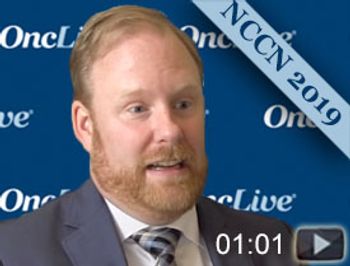
Matthew A. Gubens, MD, MS, discusses an update to the NCCN Guidelines regarding patients with PD-L1 non–small cell lung cancer.
Patients with recurrent or advanced endometrial cancer demonstrated an overall response rate of almost 30% with dostarlimab treatment.

Combination use of olaparib and neratinib may represent a novel therapeutic option for chemotherapy-resistant patients with HER2-positive, homologous recombination–proficient ovarian cancer tumors.
The addition of the dendritic cell-based immunotherapy DCVAC/OvCA to standard carboplatin and gemcitabine led to a significant improvement in overall survival in patients with relapsed, platinum-sensitive, epithelial ovarian cancer.

David S. Hong, MD, deputy director of the Department of investigational Cancer Therapeutics and associate vice president of clinical research at The University of Texas MD Anderson Cancer Center, discusses the promising results of the phase II innovaTV 201 study, in which tisotumab vedotin was used to treat patients with previously treated recurrent or metastatic cervical cancer.

Karen H. Lu, MD, professor and chair in the Department of Gynecologic Oncology and Reproductive Medicine at The University of Texas MD Anderson Cancer Center discusses the challenges of risk-reducing salpingo-oophorectomy in women with an increased risk for hereditary ovarian cancer.

Treatment with neratinib led to a clinical benefit rate of 54.5% in patients with HER2-mutant cervical cancer.