
Francois-Clement Bidard, MD, PhD, professor, medical oncologist, Institut Curie, discusses the clinical utility of circulating tumor cell count (CTC) in breast cancer at the 2018 San Antonio Breast Cancer Symposium.

Your AI-Trained Oncology Knowledge Connection!
Francois-Clement Bidard, MD, PhD, professor, medical oncologist, Institut Curie, discusses the clinical utility of circulating tumor cell count (CTC) in breast cancer at the 2018 San Antonio Breast Cancer Symposium.
Frank A. Vicini, MD, radiation oncologist, 21st Century Oncology of Michigan, compares the use of partial breast irradiation (PBI) with that of whole breast irradiation (WBI) in women with early-stage breast cancer at the 2018 San Antonio Breast Cancer Symposium.
Improvements observed in progression-free survival and overall survival with the addition of first-line atezolizumab to nab-paclitaxel in patients with metastatic triple negative breast cancer or inoperable locally advanced TNBC are exclusive to those patients with PD-L1 expression ≥1% in immune cells.
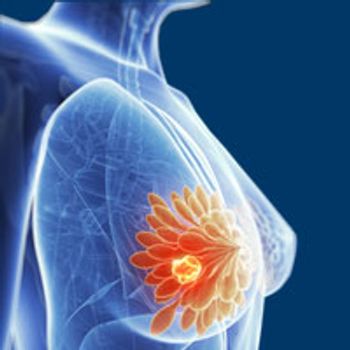
Delayed treatment with chemotherapy of more than 30 days after surgery for patients with triple-negative breast cancer is associated with worse survival rates and outcomes than those who receive adjuvant chemotherapy within 30 days of their procedure.
Jennifer Litton, MD, associate professor in the Department of Breast Medical Oncology at The University of Texas MD Anderson Cancer Center, discusses a neoadjuvant study of talazoparib (Talzenna) for patients with BRCA1/2 mutated triple-negative breast cancer (TNBC) during the 2018 San Antonio Breast Cancer Symposium.
Dawn Hershman, MD, MS, professor of Medicine and Epidemiology, Columbia University Medical Center, leader of the breast cancer program at NewYork-Presbyterian/Columbia University Irving Medical Center, discusses the association between cardiovascular medication and cardiovascular events following a diagnosis of early-stage breast cancer during the 2018 San Antonio Breast Cancer Symposium.
Pathologic complete response following neoadjuvant chemotherapy appeared to be associated with improved survival outcomes among patients with breast cancer.
Adjuvant treatment with capecitabine in patients with early-stage triple-negative breast cancer did not significantly improve disease-free or overall survival compared with observation, according to results from the phase III GEICAM/CIBOMA trial that were presented at the 2018 San Antonio Breast Cancer Symposium.
Ado-trastuzumab emtansine reduced the risk of invasive disease recurrence or death by 50% compared with trastuzumab as an adjuvant treatment for patients with HER2-positive early breast cancer who had residual invasive disease following neoadjuvant therapy.
The combination of venetoclax and rituximab for relapsed/refractor chronic lymphoblastic leukemia produced high rates of undetectable minimal residual disease, which was associated with prolonged progression-free survival, a new analysis of a randomized trial showed.
A multitude of BCMA-targeted CAR T-cell therapies are currently in development, each demonstrating different efficacy and safety profiles and each with different constructs.
A newly discovered recurrent mutation in the B-cell leukemia/lymphoma 2 protein mediates clinical resistance to venetoclax in patients with chronic lymphocytic leukemia.
The triplet of daratumumab, lenalidomide, and dexamethasone reduced the risk of disease progression or death by 44% compared with lenalidomide plus dexamethasone in newly diagnosed patients with multiple myeloma who were not candidates for high-dose chemotherapy and autologous stem-cell transplant.
Rivaroxaban may significantly reduce venous thromboembolism occurrence among patients actively being treated with systemic therapy, according to results from the phase IIIb CASSINI trial.
Patients with relapsed/refractory chronic lymphoblastic leukemia treated with single-agent venetoclax attained high rates of minimal residual disease in peripheral blood and bone marrow.
The combination of ibrutinib and rituximab significantly improved overall survival and progression-free survival compared with standard fludarabine, cyclophosphamide, and rituximab for younger patients with chronic lymphocytic leukemia.
A Selinexor combination regimen induced an overall response rate of 26.2% in heavily pretreated patients with penta-refractory multiple myeloma.
Viola Poeschel, MD, department of hematology, oncology and rheumatology, Saarland University Medical School, Germany, discusses outcomes of patients with diffuse large B-cell lymphoma (DLBCL) who were treated with 4 cycles of R-CHOP during the 2018 ASH Annual Meeting.
Nina Shah, MD, associate professor of medicine at the University of California, San Francisco Helen Diller Comprehensive Cancer Center, discusses initial results from a phase I clinical trial of bb21217, a next-generation anti-BCMA CAR T-cell therapy, in patients with multiple myeloma during the 2018 ASH Annual Meeting.
Axicabtagene ciloleucel elicited a 2-year overall survival rate of 51% in patients with refractory large B cell lymphoma, representing a clear plateau in the survival curve.
The overall survival benefit with quizartinib in patients with relapsed/refractory FLT3-ITD-mutated acute myeloid leukemia was observed across patient subgroups and reproduced consistently across sensitivity analyses.
The first-line combination of ibrutinib (Imbruvica) and obinutuzumab (Gazyva) was associated with a 77% reduction in the risk for disease progression or death compared with chemoimmunotherapy in patients with chronic lymphocytic leukemia/small lymphocytic lymphoma.
Long-term follow-up of acalabrutinib monotherapy in patients with relapsed/refractory mantle cell lymphoma shows that responses are durable with no new safety signals observed.
The R2 regimen of lenalidomide (Revlimid) plus rituximab (Rituxan) reduced the risk of disease progression or death by 54% versus rituximab alone in patients with relapsed/refractory indolent non-Hodgkin lymphoma.
The addition of a CD79b-targeted antibody-drug conjugate to bendamustine and rituximab more than doubled overall survival in patients with relapsed/refractory diffuse large B-cell lymphoma.
More than 70% of older patients ineligible for intensive chemotherapy for acute myeloid leukemia had complete responses to venetoclax combined with hypomethylating agents, preliminary results from clinical trials have shown.
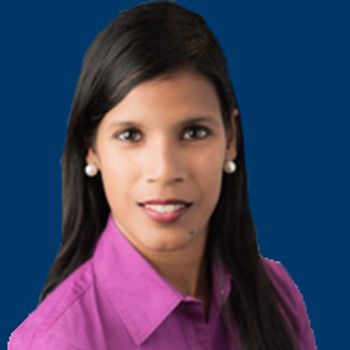
The anti-BCMA CAR T cell therapy bb21217 demonstrated an objective response rate of 83.3%, with a very good partial response or better rate of 75% in patients with heavily pretreated relapsed/refractory multiple myeloma.
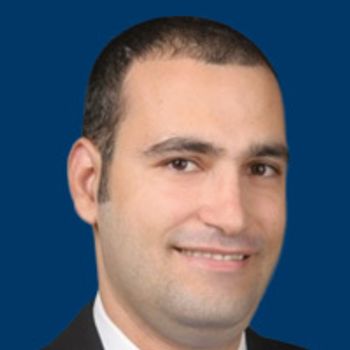
An approach using machine learning to analyze genomic and clinical data from patients with myelodysplastic syndromes could replace the gold standard of predicting how long patients may live with the disease.
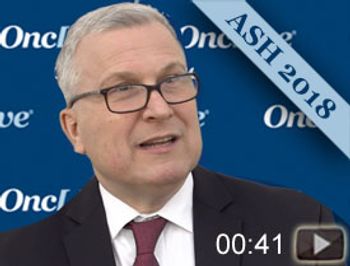
John P. Leonard, MD, associate dean for clinical research and Richard T. Silver Distinguished Professor of Hematology and Medical Oncology, Meyer Cancer Center, Weill Cornell Medicine and New York Presbyterian Hospital, discusses the key takeaway from the phase III AUGMENT trial, a randomized study of lenalidomide (Revlimid) plus rituximab (Rituxan) (R2) versus rituximab/placebo in patients with relapsed/refractory indolent non-Hodgkin lymphoma, during the 2018 ASH Annual Meeting.
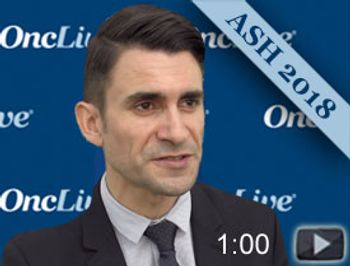
Jordan Gauthier, MD, MSc, senior clinical research fellow, Fred Hutchinson Cancer Research Center, discusses a study comparing efficacy and toxicity of CD19-specific chimeric antigen receptor (CAR) T cells alone or in combination with ibrutinib in patients with relapsed and/or refractory chronic lymphocytic leukemia (CLL) during the 2018 ASH Annual Meeting.