
Mark G. Kris, MD, medical oncologist, William and Joy Ruane Chair in Thoracic Oncology, Memorial Sloan Kettering Cancer Center, discusses adjuvant systemic therapy in patients with non–small cell lung cancer.

Your AI-Trained Oncology Knowledge Connection!
Mark G. Kris, MD, medical oncologist, William and Joy Ruane Chair in Thoracic Oncology, Memorial Sloan Kettering Cancer Center, discusses adjuvant systemic therapy in patients with non–small cell lung cancer.
D. Ross Camidge, MD, PhD, director of thoracic oncology, University of Colorado, discusses optimal treatment regimens for patients with EGFR-positive non–small cell lung cancer.
Balazs Halmos, MD, MS, discusses overcoming acquired resistance and other next steps needed to advance the oncogene-driven non–small cell lung cancer paradigm.
Hossein Borghaei, DO, MS, discusses current and potential therapeutic approaches for patients with non-oncogene driven lung cancer who progress on frontline treatment.
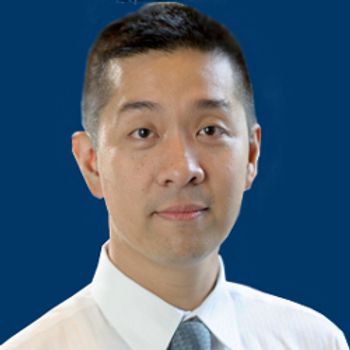
Alexander E. Drilon, MD, discusses developing markers in the non–small cell lung cancer paradigm.
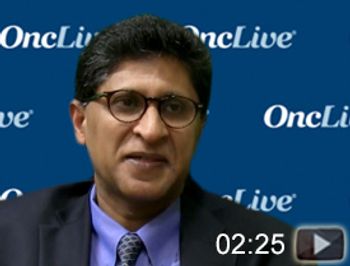
Ravi Vij, MD, MBA, professor of medicine, Division of Oncology, Section of Bone Marrow Transplant, Washington University School of Medicine, Siteman Cancer Center, discusses the use of maintenance and consolidation in multiple myeloma.
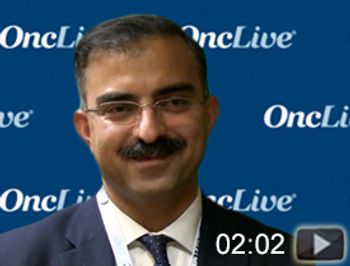
Armin Ghobadi, MD, assistant professor of medicine, Division of Medical Oncology, Washington University School of Medicine, Siteman Cancer Center, discusses the potential development of chimeric antigen receptor (CAR) T cells in solid tumors.
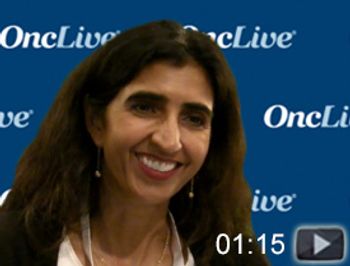
Syma Iqbal, MD, associate professor of clinical medicine, Keck School of Medicine, University of Southern California, discusses the impact of peptide receptor radionuclide therapy (PRRT) on the treatment of patients with neuroendocrine tumors (NETs).
Afsaneh Barzi, MD, assistant professor of clinical medicine, Norris Comprehensive Cancer Center, University of Southern California, discusses available and emerging neoadjuvant strategies for the treatment of patients with nonmetastatic pancreatic cancer.
Robert Dean, MD, staff physician, Cleveland Clinic, discusses the evolution of treatment approaches in mantle cell lymphoma (MCL).
Syma Iqbal, MD, discusses the evolving treatment paradigm of neuroendocrine tumors.
The second-line treatment of gastric and gastroesophageal junction cancers has shifted considerably in the last few years, due in part to the addition of immunotherapy for select subgroups of patients.
Brad Kahl, MD, discusses the rapidly evolving therapeutic landscape of CLL and the novel combinations on the horizon.
Armin Ghobadi, MD, discusses the evolution and expansion of CAR T-cell therapy in oncology and how to maximize its application across liquid and solid tumors.
Nancy L. Bartlett, MD, discusses factors in treatment decisions for patients with advanced-stage Hodgkin lymphoma.
Nancy Bartlett, MD, Koman Chair in Medical Oncology, Washington University School of Medicine, Siteman Cancer Center, discusses treatment regimens for patients with Hodgkin lymphoma.
Heinz-Josef Lenz, MD, associate director for Adult Oncology and co-leader of the Gastrointestinal Cancers Program, USC Norris Comprehensive Cancer Center, discusses the benefit of regorafenib (Stivarga) in the treatment of patients with colorectal cancer (CRC).
Brad Kahl, MD, professor in the Department of Medicine, Washington University School of Medicine in St. Louis, Siteman Cancer Center, discusses the impact of venetoclax (Venclexta) in the treatment of patients with chronic lymphocytic leukemia (CLL).
Toni Choueiri, MD, director, Lank Center for Genitourinary Oncology, director, Kidney Cancer Center, Jerome and Nancy Kohlberg Associate Professor of Medicine, Harvard Medical School, Dana-Farber Cancer Institute, discusses the impact of the JAVELIN Renal 100 trial on the treatment landscape of renal cell carcinoma.
Hisham Mehanna, PhD, BMedSc, MBChB, FRCS, chair, Head and Neck Surgery director, Institute of Head and Neck Studies and Education at the School of Cancer Studies, University of Birmingham, discusses the new staging system for patients with HPV-positive head and neck cancer.
Edward S. Kim, MD, chair, Department of Solid Tumor Oncology, Levine Cancer Institute, discusses the primary efficacy results from the B-F1RST trial in non–small cell lung cancer (NSCLC).
Peter Schmid, MD, PhD, lead at the Centre for Experimental Cancer Medicine, Barts Cancer Institute, discusses findings from the IMpassion130 trial in triple-negative breast cancer (TNBC).
Geoffrey Uy, MD, assistant professor of medicine, Division of Oncology, Section of Bone Marrow Transplantation, Washington University School of Medicine, Siteman Cancer Center, discusses therapy selection in acute myeloid leukemia (AML).

Syma Iqbal, MD, associate professor of clinical medicine, Keck School of Medicine, University of Southern California, discusses second- and third-line therapies in gastric cancer.
Asian patients with untreated ALK-positive advanced NSCLC lived significantly longer without disease progression if they received the next-generation tyrosine kinase inhibitor alectinib instead of crizotinib as initial therapy.
First results from a study of neoadjuvant ipilimumab plus nivolumab in patients with early-stage colon cancer found a major pathologic response achieved in all 7 patients with mismatch repair deficient tumors.
The first-line triplet of atezolizumab, carboplatin, and nab-paclitaxel was associated with a statistically significant improvement in both progression-free and overall survival compared with chemotherapy alone in patients with stage IV nonsquamous NSCLC, according to results from the phase III IMpower130 trial.
Barbara Burtness, MD, professor of medicine, Yale Cancer Center, discusses findings from the KEYNOTE-048 in head and neck squamous cell carcinoma (HNSCC).
Chris Parker, MD, consultant clinical oncologist, The Royal Marsden NHS Foundation Trust, discusses the role of radiotherapy in newly diagnosed prostate cancer.
Cisplatin plus radiotherapy results in better overall survival and the same rate of all-grade toxicity compared with cetuximab plus radiotherapy in patients with HPV-positive oropharyngeal cancer.