
Bruno Sangro, MD, discussed the current landscape for systemic therapies, new directions with immunotherapy, and the need for greater research into combination therapies for patients with hepatocellular carcinoma.

Your AI-Trained Oncology Knowledge Connection!
Bruno Sangro, MD, discussed the current landscape for systemic therapies, new directions with immunotherapy, and the need for greater research into combination therapies for patients with hepatocellular carcinoma.
Regorafenib maintained a prolonged overall survival benefit as second-line therapy for patients with advanced hepatocellular carcinoma in a 2-year updated analysis of key findings from the pivotal RESORCE trial.
The positive outcomes that lenvatinib demonstrated as first-line therapy for patients with hepatocellular carcinoma are confirmed in an independent assessment conducted as part of the pivotal, international phase III REFLECT trial.
Ann-Lii Cheng, MD, PhD, distinguished professor and director of the cancer center of National Taiwan University, discusses the challenges that tumor heterogeneity in hepatocellular carcinoma (HCC) pose for clinical trials.
Ghassan K. Abou-Alfa, MD, of Memorial Sloan Kettering Cancer Center, describes what he sees as key areas of research into the treatment of hepatocellular carcinoma as therapy moves beyond existing drugs and into novel approaches.
Morris Sherman, MD, PhD, shared his insight on the news and discussions coming out of this year’s meeting, the surge of immunotherapy and targeted therapy research, optimal sequencing approaches, and the challenges that remain in treating patients with hepatocellular carcinoma.
Cabozantinib improved survival as second-line therapy for patients with hepatocellular carcinoma who also had a history of hepatitis B virus infection.
The combination of atezolizumab and bevacizumab demonstrated strong signals of efficacy with a tolerable safety profile as first-line therapy for patients with unresectable or metastatic hepatocellular carcinoma.
Augusto Villanueva, MD, PhD, assistant professor, Icahn School of Medicine, discusses the potential of liquid biopsy to improve treatment for patients with hepatocellular carcinoma (HCC).
Josep M. Llovet, MD, PhD, Icahn School of Medicine, discusses the potential for biomarkers to improve the treatment of hepatocellular carcinoma (HCC).
The rapid development of novel therapies for patients with unresectable hepatocellular carcinoma has dramatically expanded the options for systemic treatments over the past 2 years, creating the need for new sequencing strategies.
Updates to the European Association for the Study of the Liver clinical guidelines introduce more opportunities for individual patient management of hepatocellular carcinoma.
As the checkpoint inhibitors move into the frontline setting for patients with non–small cell lung cancer, the focus has been placed on the duration of therapy and what to do in the second-line setting following progression.
Recent positive clinical trial data have provided the oncology community with several sequencing strategies for patients with EGFR-mutant non-small cell lung cancer.
RET is set to join the list of ever-expanding actionable driver mutations for non–small cell lung cancer, as there are now 3 highly effective therapies in development.
The use of frontline versus second-line tyrosine kinase inhibitor use is controversial in many oncogene-driven non-small cell lung cancers.
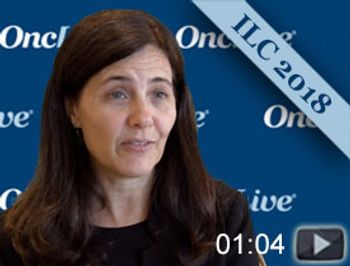
Heather Wakelee, MD, associate professor of medicine (oncology) at the Stanford University Medical Center, discussed the latest therapeutic developments in EGFR-mutant non-small cell lung cancer.
Roy S. Herbst, MD, PhD, Ensign Professor of Medicine and professor of pharmacology, chief of Medical Oncology, Yale Cancer Center and Smilow Cancer Hospital; associate director for Translational Research, Yale Cancer Center; Disease Aligned Research Team (DART) Leader, Thoracic Oncology Program, Yale Cancer Center, discusses immunotherapy combinations that have potential in non-small cell lung cancer (NSCLC).
Vassiliki A. Papadimitrakopoulou, MD, shares insight on how the lung cancer paradigm continues to evolve with the identification of targetable driver mutations, the challenges that remain, and the ongoing clinical trial efforts designed to better reach patients and improve their outcomes.
Checkpoint inhibition following chemoradiation has shown remarkable successes for patients with locally advanced non–small cell lung cancer, after more than 2 decades without major advances.
The past year has witnessed an explosion in immunotherapy combinations for patients with lung cancer, accompanied by a growing knowledge of biomarkers such as PD-L1 and tumor mutation burden; however, an exact standard of care remains elusive.
Paul A. Bunn Jr, MD, distinguished professor, Division of Medical Oncology/University of Colorado, James Dudley Chair in Lung Cancer Research, University of Colorado Denver, 2014 Giant of Cancer Care
Karen Reckamp, MD, co-director, Lung Cancer and Thoracic Oncology Program, medical director, Clinical Research Operations, professor, Department of Medical Oncology & Therapeutics Research, thoracic oncologist, discusses current and emerging therapeutic strategies to target MET in non-small cell lung cancer.
Molecular pathologists have helped to advance translational research significantly for lung cancer over the past 10 years; nowhere is that more obvious than in EGFR-mutant non-small cell lung cancer.
Immunotherapy should be given as a tailored, not blanket, treatment approach, especially for patients with lung cancer, according to Giorgio Scagliotti, MD, PhD.
Corey J. Langer, MD, director, Thoracic Oncology, Abramson Cancer Center, professor of medicine, Perelman School of Medicine, University of Pennsylvania, discusses the practice-changing data from the PACIFIC trial, which evaluated durvalumab (Imfinzi) for the treatment of patients with locally advanced, unresectable stage III non-small cell lung cancer (NSCLC) who have not progressed following chemoradiotherapy.
Lyudmila A. Bazhenova, MD, medical oncologist professor of medicine, University of California, San Diego, discusses the prevalence of NTRK mutations in non–small cell lung cancer.
Several novel targeted therapies are emerging for a growing number of driver mutations in lung cancer, with multiple targeted agents now confirmed standards of care.
Gabriela S. Hobbs, MD, clinical director, Leukemia Service, assistant in medicine, Massachusetts General Hospital, discusses the updated NCCN guidelines in chronic myeloid leukemia (CML).
Danielle Marie Brander, MD, assistant professor of medicine, Duke Cancer Institute, discusses the treatment landscape for patients with high-risk chronic lymphocytic leukemia (CLL).