

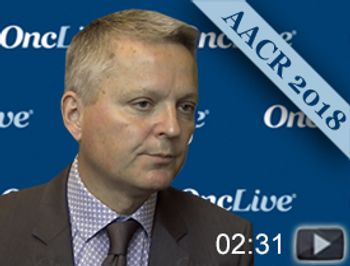
Brian D. Crompton, MD, physician, Pediatric Hematology/Oncology, Dana-Farber Cancer Institute, assistant professor of pediatrics, Harvard Medical School, discusses the utilization of liquid biopsies in pediatric patients with sarcoma.

Your AI-Trained Oncology Knowledge Connection!
Brian D. Crompton, MD, physician, Pediatric Hematology/Oncology, Dana-Farber Cancer Institute, assistant professor of pediatrics, Harvard Medical School, discusses the utilization of liquid biopsies in pediatric patients with sarcoma.
CAR T-cell therapy can induce next generation sequencing negativity in patients with relapsed/refractory acute lymphoblastic leukemia, suggesting a "synergistic" relationship with hematopoietic cell transplant.
Robert Ferris, MD, PhD, vice chair for Clinical Operations, associate director for Translational Research, and co-leader of the Cancer Immunology Program at the University of Pittsburgh Cancer Institute, discusses the updated findings from the CheckMate-141 trial in head and neck cancer.

Komal L. Jhaveri, MD, FACP, medical oncologist, Memorial Sloan Kettering Cancer Center, discusses the results of a basket study of taselisib in patients with PIK3CA-mutated solid tumors.

A search for molecular guidance in the use of anti-PD-1 therapy in urothelial cancer pointed toward myeloid-derived suppressor cells as a potentially useful biomarker.
Tumor mutational burden in non–small cell lung cancer identified patients who were more likely to respond to first-line combination immunotherapy with nivolumab and ipilimumab, an updated analysis of CheckMate-586 clinical trial data showed.
Alice T. Shaw, MD, PhD, associate professor of medicine, Harvard Medical School, attending physician, Thoracic Cancer Program, Massachusetts General Hospital, discusses the efficacy of lorlatinib in ALK-positive non–small cell lung cancer.
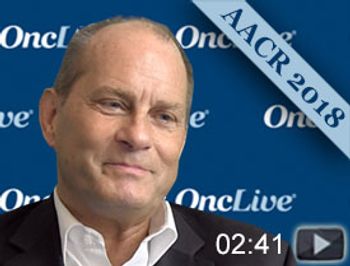
Alexander M. M. Eggermont, MD, PhD, director general of Gustave Roussy Cancer Campus Grand Paris in Villejuif, France, discusses the impact of adjuvant anti–PD-L1 agents on the treatment landscape of melanoma.
Treatment with nivolumab reduced the risk of death by 32% compared with investigator’s choice of therapy for patients with metastatic or recurrent squamous cell carcinoma of the head and neck.
Combination use of CMP-001, an intratumoral toll-like receptor 9 agonist, and pembrolizumab (Keytruda) showed clinical activity in reversing PD-1 checkpoint inhibition resistance in patients with metastatic melanoma.
Adding atezolizumab to chemotherapy and an angiogenesis inhibitor led to significant improvement in progression-free survival for patients with untreated advanced nonsquamous non-small cell lung cancer.
Adding the IDO1 inhibitor epacadostat to the PD-L1 inhibitor durvalumab (Imfinzi) failed to induce any clinical responses in patients with pancreatic cancer.

Padmanee Sharma, MD, PhD, scientific director, Immunotherapy Platform, The University of Texas MD Anderson Cancer Center, discusses updated findings from the CheckMate-275 trial in bladder cancer during an interview at the 2018 AACR Annual Meeting.

Arjun V. Balar, MD, assistant professor, Department of Medicine, director, Genitourinary Medical Oncology Program, NYU Langone’s Perlmutter Cancer Center, discusses the results of a study investigating durvalumab (Imfinzi) plus tremelimumab in patients with metastatic urothelial cancer.
The combination of nivolumab and ipilimumab more than tripled the 1-year progression-free survival rate versus chemotherapy for treatment-naïve patients with non–small cell lung cancer with high tumor mutation burden.

Neoadjuvant treatment with nivolumab demonstrated a 45% major pathologic response rate in patients with resectable stage I to III non–small cell lung cancer irrespective of PD-L1 expression.

Suresh S. Ramalingam, MD, deputy director, Winship Cancer Institute of Emory University, discusses the significance of the phase III results of the FLAURA trial, which explored osimertinib (Tagrisso) in the frontline setting for patients with EGFR-mutant non

An off-the-shelf, dual-targeted chimeric antigen receptor T-cell approach yielded positive results in preclinical specificity, functionality, and efficacy studies.
Combining pembrolizumab (Keytruda) with standard chemotherapy in the frontline setting reduced the risk of death by over 50% in patients with nonsquamous non–small cell lung cancer without EGFR or ALK mutations.

Women with HER2-negative metastatic breast cancer associated with a germline BRCA mutation may have a slight survival advantage with a PARP inhibitor instead of chemotherapy.
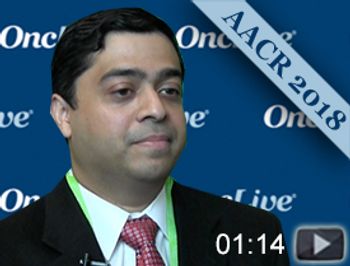
Vivek Subbiah, MD, associate medical director, Clinical Center for Targeted Therapy, assistant professor, Department of Investigational Cancer Therapeutics, Division of Cancer Medicine, The University of Texas MD Anderson Cancer Center, discusses the safety and efficacy findings of BLU-667 in RET-altered solid tumors in an interview during the 2018 AACR Annual Meeting.
Patrick Schöffski, MD, MPH, head of the Department of General Medical Oncology at the University Hospital Leuven, discusses the findings from the CREATE study during the 2018 AACR Annual Meeting.

Treatment with crizotinib elicited an objective response rate of 50% for patients with ALK-positive advanced, inoperable inflammatory myofibroblastic tumor.

BLU-667, a next-generation tyrosine kinase inhibitor, appeared to be well-tolerated and had broad clinical benefit among patients with advanced, RET-altered solid tumors who progressed on prior therapies.

Adjuvant pembrolizumab (Keytruda) reduced the risk of recurrence or death by 43% in patients with resected, high-risk stage III melanoma, according to phase III results from the EORTC 1325-MG/KEYNOTE-054 trial.
Durvalumab treatment over 12 months had no negative effect on key symptoms of lung cancer, physical function, global health status, or quality of life in patients with locally advanced, unresectable stage III non–small cell lung cancer who have not progressed following concurrent chemoradiotherapy.
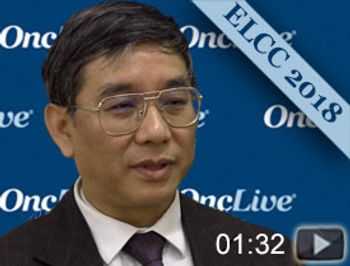
James CH Yang, MD, PhD, Professor of Medicine, Deputy Director, Department of Medical Oncology, National Taiwan University Hospital, Director, Cancer Research, Center National Taiwan University College of Medicine, discusses resistance mechanisms that develop from treatment with osimertinib (Tagrisso) and other EGFR tyrosine kinase inhibitors (TKIs). Yang discussed this in an interview during the 2018 European Lung Cancer Congress, which is a joint collaboration between ESMO and the IASLC.
First-line treatment with osimertinib resulted in a clinically meaningful delay in time from randomization to second progression on subsequent treatment or death, establishing the agent as a new standard of care in the frontline setting for patients with EGFR-mutant non–small cell lung cancer.
Benjamin Besse, MD, Institut Gustave Roussy, Villejuif, Paris Sud University, discusses challenges facing the treatment of patients with stage IV non
Martin Reck, MD, Department of Thoracic Oncology, Lung Clinic Grosshansdorf, discusses the IMpower150 trial data for patients with non