
After nearly 40 years with little in the way of drug development for the treatment of acute myeloid leukemia, four new drugs have been approved by the FDA in 2017 for AML, and several promising agents are in development.

Your AI-Trained Oncology Knowledge Connection!
After nearly 40 years with little in the way of drug development for the treatment of acute myeloid leukemia, four new drugs have been approved by the FDA in 2017 for AML, and several promising agents are in development.
The treatment approach for patients with relapsed/refractory multiple myeloma should be tailored based on biology of the disease, frailty of the patient, and comorbidities.
Shaji K. Kumar, MD, discusses proper diagnosis, risk stratification, and personalized medicine for patients with newly-diagnosed multiple myeloma.
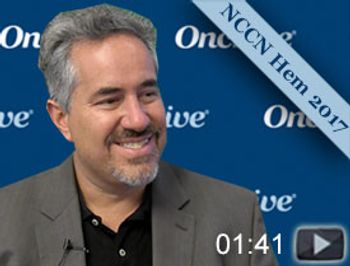
Ruben Mesa, chair of the Division of Hematology and Medical Oncology at Mayo Clinic, discusses the guideline updates in polycythemia vera and essential thrombocythemia.
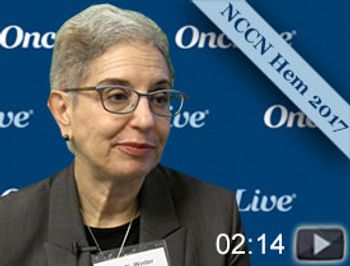
Jane N. Winter, MD, professor of medicine, Division of Hematology/Oncology, Northwestern University, discusses response in follicular lymphoma.
In relapsed classical Hodgkin lymphoma, the era of therapies post-brentuximab vedotin is developing rapidly.
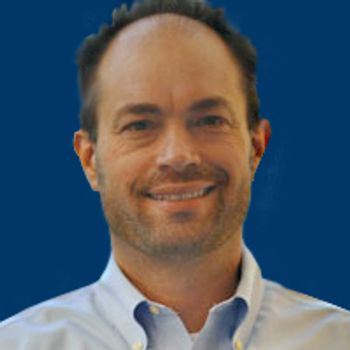
William G. Wierda, MD, PhD, discusses the continued importance of ibrutinib, the promise for novel combinations, and the impact this progress has had on sequencing for CLL.
Survival for patients with grade 1 to 2 follicular lymphoma is now measured in decades to coincide with improvements in therapy.
Shaji K. Kumar, MD, professor of medicine, Mayo Clinic, discusses the management of newly diagnosed patients with multiple myeloma.
William G. Wierda, MD, PhD, medical director of the Leukemia Center at The University of Texas MD Anderson Cancer Center, discusses trials of novel combinations on chronic lymphocytic leukemia.
Robert Jones, MD, discusses the future treatment landscape for patients with urothelial carcinoma in a more multidisciplinary setting.
Eva Comperat, MD, Hospital Tenon, discusses the treatment strategy for patients with neuroendocrine tumors (NETs).
John Wagstaff, MD, professor at Swansea University Medical School, discusses the survival benefit of immunotherapy for patients with bladder cancer.
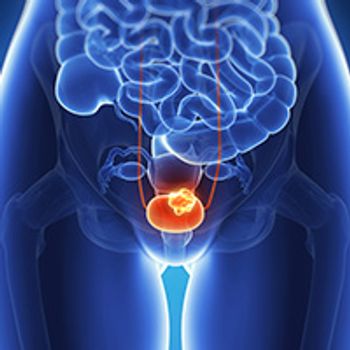
Delivering IMRT to the bladder and pelvic nodes in patients with node-positive bladder cancer or high-risk node-negative bladder cancer is feasible with patients experiencing low toxicity and demonstrating low pelvic nodal rates of recurrence
A new procedure for monitoring RNA indicators of disease recurrence in urine samples from patients with a history of non-muscle invasive bladder cancer could spare these patients from undergoing multiple cystoscopies during routine follow-up.
Although immunotherapy shows great promise in meeting the need for effective treatment of muscle invasive bladder cancer, chemotherapy continues to be an important tool in treating patients with this disease and other forms of bladder and urothelial cancer.
Badrinath Konety, MD, MBA, department chair, Department of Urology, University of Minnesota, discusses the guidelines for the management of patients with bladder cancer.
Maria De Santis, MD, associate clinical professor at the University of Warwick, discusses the future treatment landscape for patients with bladder cancer.
Andrea Necchi, MD, discusses the current role of immunotherapy and chemotherapy for patients with muscle-invasive bladder cancer.
As first-line therapy in cisplatin-ineligible advanced urothelial cancer, pembrolizumab (Keytruda) was safe and provided tumor reduction as well as durable responses.

Direct acting antivirals are a novel and completely oral hepatitis C therapy that is associated with a high response rate in hepatocellular carcinoma (HCC).
BLU-554 induced an overall response rate of 16% in patients with FGF19-positive hepatocellular carcinoma.
Massimo Cristofanilli, MD, professor of medicine, Feinberg School of Medicine, Robert H. Lurie Comprehensive Cancer Center, discusses endocrine therapy for patients with breast cancer.
Arti Hurria, MD, director, Cancer and Aging Research Program, co-leader, Cancer Control and Population Sciences Program, professor, Department of Medical Oncology and Therapeutics Research and Department of Population Sciences, City of Hope, discusses challenges facing geriatric patients with breast cancer.
Ongoing studies are hoping to find a biomarker to guide which premenopausal women with ER-positive breast cancer need extended adjuvant therapy and which need ovarian function suppression.
Treating older patients with breast cancer must include more quality of life considerations and different types of survival calculations.
The sequencing of therapies for patients with HER2-positive breast cancer is largely driven by stage of disease and hormone receptor status.
Theodore H. Welling, MD, associate professor of surgery, director of the Liver Tumor Program at Perlmutter Cancer Center of NYU Langone Medical Center, discusses the purpose of the CheckMate-040 trial, which explored nivolumab (Opdivo) in patients with hepatocellular carcinoma. (HCC).
Robert Montal, MD, visiting researcher, Icahn School of Medicine, Mount Sinai Hospital, discusses biomarker findings of the phase III STORM trial, which explored adjuvant treatment with sorafenib (Nexavar) in patients with hepatocellular carcinoma (HCC).
First-line therapy with lenvatinib continued to be noninferior in overall survival and achieve significant improvements in progression-free survival, time to progression, and objective response rate compared with sorafenib for patients with unresectable hepatocellular carcinoma.