
Health investment is failing to match the challenge presented by a growing cancer burden in countries at all economic levels, enhancing the need for new approaches that help optimize the delivery of care.

Your AI-Trained Oncology Knowledge Connection!
Health investment is failing to match the challenge presented by a growing cancer burden in countries at all economic levels, enhancing the need for new approaches that help optimize the delivery of care.
There is a significant transformation underway in the treatment of breast cancer as research advances and new laboratory techniques continue to shrink the so-called "undruggable genome."
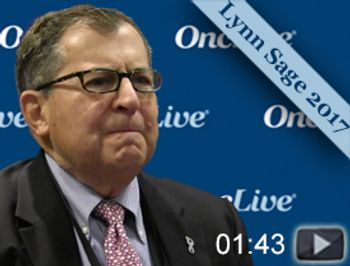
Hyman B. Muss, MD, School of Medicine, University of North Carolina (UNC)-Chapel Hill, Breast Cancer, Geriatric Oncology Program, Mary Jones Hudson Distinguished Professorship in Geriatric Oncology, UNC Lineberger Comprehensive Cancer Center, UNC School of Medicine, 2017 Giant of Cancer Care in Supportive/Palliative/Geriatric Care, discusses adjuvant therapy for elderly patients with HER2-positive or triple-negative breast cancer (TNBC).
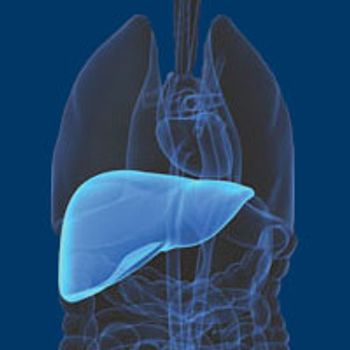
Hepatocyte pERK-positive immunostaining and microvascular invasion were independent prognostic factors of recurrence-free survival for patients with hepatocellular carcinoma treated with adjuvant sorafenib; however, a predictive biomarker for recurrence was not uncovered.

Precision screening for hepatocellular carcinoma (HCC) could improve on current screening techniques through its risk-stratifying approach.
Patients have a hard time with artificially induced menopause and some research suggests it may have a negligible effect on the success of their treatment.
Ruth O’Regan, MD, division head of Hematology and Oncology in the Department of Medicine at the University of Wisconsin School of Medicine and Public Health, discusses treatment for premenopausal patients with breast cancer.
Richard Finn, MD, associate professor of medicine at the UCLA David Geffen School of Medicine, discusses the significance of the phase III trial of frontline lenvatinib (Lenvima) versus sorafenib (Nexavar) in patients with hepatocellular carcinoma (HCC).
Theodore H. Welling, MD, associate professor of surgery, director of the Liver Tumor Program at Perlmutter Cancer Center of NYU Langone Medical Center, discusses how immunotherapy agents will eventually fit into the paradigm of hepatocellular carcinoma. (HCC).
Theodore H. Welling, MD, shares insight on the top presentations at the ILCA meeting, and how he believes the future will look for the treatment of HCC.
José Baselga, MD, PhD, medical oncologist at Memorial Sloan Kettering Cancer Center, discusses biomarker research for patients with breast cancer.
Benjamin O. Anderson, MD, a surgical oncologist at the Seattle Cancer Care Alliance, discusses the biggest unmet need for patients with breast cancer in low- and middle-income countries.
Robert Montal, MD, visiting researcher, Icahn School of Medicine, Mount Sinai Hospital, discusses advancements regarding systemic therapies in the field of hepatocellular carcinoma (HCC).
Richard Finn, MD, associate professor of medicine at the UCLA David Geffen School of Medicine, shares insight on some current and emerging agents in the field of hepatocellular carcinoma (HCC).
The 11th International Liver Cancer Association Annual Conference, taking place September 15 to 17 in Seoul, South Korea, is showcasing multidisciplinary findings across the field of hepatocellular carcinoma.
Multigene panel testing offers a new but often puzzling tool for breast cancer treatment, since the results are often difficult to interpret, both for relative risk and risk management.

Even with advancements in technology, the prospect of artificial intelligence treating patients with cancer still remains out of reach. At least, for now.

Extra vigilance, careful management, and an emphasis on empathy makes treating cancer pain more effective during an opioid addiction epidemic.
William F. Symmans, MD, professor of Pathology, The University of Texas MD Anderson Cancer Center, discusses the staging system for patients with breast cancer.
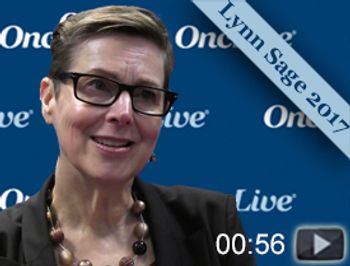
Judith Paice, PhD, RN, director of the Cancer Pain Program, Division of Hematology-Oncology, and research professor of Medicine, Northwestern University, discusses the pain management for patients with breast cancer.

Although anti-PD-1/PD-L1 immunotherapy has greatly improved the treatment of patients with non–small cell lung cancer and is generally well-tolerated, the therapy backfires in a newly defined subset of patients who experience accelerated tumor growth indicative of hyperprogressive disease.
Nearly half of patients with resectable stage IIIB/C BRAF V600-mutant melanoma achieved pathologic complete response with neoadjuvant combination therapy consisting of dabrafenib (Tafinlar) and trametinib (Mekinist).
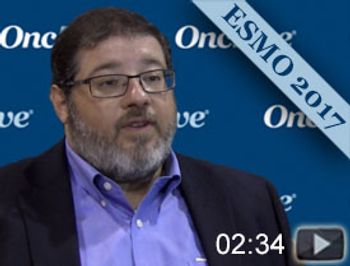
H. Jack West, MD, thoracic oncologist, Swedish Cancer Institute of Swedish Medical Center, discusses the significance of the PACIFIC trial in patients with non
Pembrolizumab (Keytruda) reduced the risk of death compared with standard of care therapy in patients with relapsed/metastatic head and neck squamous cell carcinoma, but the difference fell just shy of statistical significance.
Sumanta K. Pal, MD, medical oncologist, assistant clinical professor, Department of Medical Oncology and Therapeutics Research, City of Hope, discusses both the CheckMate-214 and CABOSUN trials for patients with renal cell carcinoma (RCC).
Adjuvant therapy with vemurafenib for high-risk melanoma led to mixed results, as patients with stage IIIC or later did not benefit, but those with earlier stage disease did.
Reinhard Dummer, MD, of University Hospital Zurich, discusses the results of the phase III COMBI-AD study presented at the 2017 ESMO Congress in patients with stage III BRAF-mutant melanoma.
Suresh S. Ramalingam, MD, deputy director, Winship Cancer Institute of Emory University, discusses the phase III results of the FLAURA trial, which explored osimertinib (Tagrisso) in the frontline setting for patients with EGFR-mutant non-small cell lung cancer (NSCLC).
The combination of bevacizumab plus niraparib demonstrated clinical activity in women with relapsed, platinum-sensitive epithelial ovarian cancer and had a manageable toxicity profile.
Although second-line treatment with combined pazopanib and gemcitabine demonstrated disease control in the majority of patients with metastatic or relapsed uterine or soft tissue leiomyosarcomas, the phase II UNICANCER SARCOME 11 study did not meet statistical endpoints and is considered a negative trial.