

Bart Scott, MD, Fred Hutchinson Cancer Research Center, explains the importance of the intensity of conditioning for stem cell transplants.

Your AI-Trained Oncology Knowledge Connection!
Bart Scott, MD, Fred Hutchinson Cancer Research Center, explains the importance of the intensity of conditioning for stem cell transplants.
Robert Korngold, PhD, John Theurer Cancer Center looks back on the advances we've made so far in bone marrow transplant.
Treatment with an inactivated varicella zoster virus vaccine, known as V212, lowered the cumulative incidence rate of herpes zoster infection and complications for patients undergoing autologous hematopoietic stem cell transplantation.
Rates of early relapse post-autologous stem cell transplant in patients with relapsing multiple myeloma have not changed over time, but post-relapse survival among early relapsers has improved for patients transplanted after 2005 and for those relapsing since 2008.
Dr. Lancet of Moffitt Cancer Center explains the use of CPX-351 treatment compared to induction chemotherapy, for older adult patients with acute myeloid leukemia.
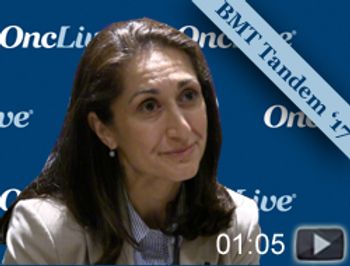
Partow Kebriaei, MD, discusses the Iomab-B clinical trial for older patients with acute myeloid leukemia.
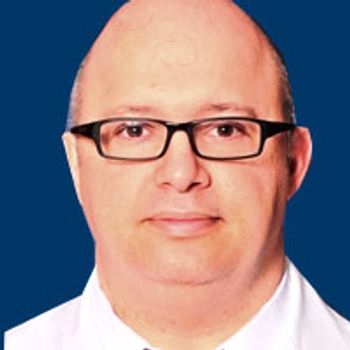
According to data from a phase I/II clinical trial, carfilzomib can be safely combined with melphalan in a conditioning regimen prior to autologous hematopoietic cell transplantation in patients with relapsed multiple myeloma.
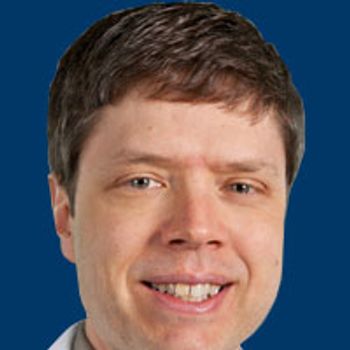
More patients with acute myeloid leukemia could proceed to transplant following treatment with CPX-351 compared with the traditional 7+3 chemotherapy regimen.
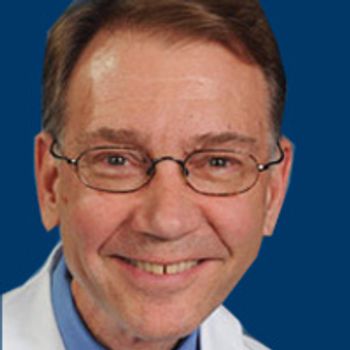
At the 2017 Genitourinary Cancers Symposium, Nicholas J. Vogelzang, MD, discussed diagnostic practices and emerging therapies in the field of bladder cancer.
The combination of cabozantinib and nivolumab, with or without ipilimumab, proved safe and active in advanced genitourinary cancers, particularly urothelial cancer.
Patients with PD-L1-positive metastatic renal cell carcinoma had a reduction in the risk of progression or death when treated in frontline with the combination of atezolizumab and bevacizumab instead of sunitinib, according to results of a randomized trial.
Fred Saad, MD, professor and chairman of Urology, director of Genitourinary Oncology, the University of Montreal Hospital Centers, discusses recent updates in active surveillance for patients with prostate cancer.
Thomas Powles, MD, Barts Cancer Institute, discusses durvalumab as a second-line therapy in locally advanced and metastatic urothelial cancer.

Five of 8 patients with metastatic urothelial cancer benefited from the combination of ipilimumab and nivolumab after having no response to single-agent nivolumab.
Combining the PD-1 inhibitor pembrolizumab with chemotherapy induced objective responses in one-third of patients with previously treated metastatic urothelial carcinoma.
Eric Jonasch, MD, professor, The University of Texas MD Anderson Cancer Center, discusses the promise of immuno-oncology agents in sarcomatoid renal cell carinoma (RCC).
Gary Steinberg, MD, director, Urologic Oncology, The University of Chicago Medicine, discusses the immune response results of vesigenurtacel-I (HS-410) vaccine in non-muscle invasive bladder cancer (NMIBC).
Michael J. Morris, MD, Memorial Sloan Kettering Cancer Center, discusses bone biomarkers for radium-223 dichloride (Xofigo) in castration-resistant prostate cancer.
The PD-L1 inhibitor durvalumab demonstrated compelling clinical activity and a manageable safety profile as second-line therapy for locally advanced or metastatic urothelial cancer.
The genomic-based Decipher test effectively predicted metastasis and prostate cancer-specific mortality from diagnostic biopsy specimens for patients with intermediate- and high-risk prostate cancer.
Arjun Balar, MD, director, Genitourinary Medical Oncology Progam, NYU Langone Medical Center, discusses the results from the KEYNOTE-053 trial in cisplatin-ineligible advanced urothelial carcinoma.

According to preliminary results from an ongoing trial, half of a small group of patients with metastatic castration-resistant prostate cancer had a PSA response during treatment with the PD-L1 inhibitor durvalumab and the PARP inhibitor olaparib (Lynparza).
According to results of a prospective clinical study, circulating tumor cell mRNA of full-length androgen receptor (AR) correlated with detection of the AR-V7 variant and with response to AR-targeted therapy for castration-resistant prostate cancer.
William Oh, MD, professor, Mount Sinai Hospital, discusses the results from a trial that compared second-line chemotherapy to alternative androgen receptor-targeted agents (ARTA) in patients with metastatic castration-resistant prostate cancer (mCRPC).

Josh Armenia, PhD, Memorial Sloan Kettering Cancer Center, discusses the results of an analysis of significantly mutated genes in prostate cancer.
Andrea B. Apolo, MD, chief of bladder cancer section, National Cancer Institute, discusses the phase I study of cabozantinib (Cabometyx) plus nivolumab (Opdivo) and ipilimumab (Yervoy) in patients with refractory metastatic urothelial carcinoma (mUC) and other genitourinary tumors.
Hans Hammers, MD, PhD, associate professor, Internal Medicine, UT Southwestern Medical Center, discusses HyperAcute Renal (HAR) immunotherapy in patients with renal cell carcinoma (RCC).
Scott T. Tagawa, MD, Weill Cornell Medicine/New York-Presbyterian, discusses updated results from the IMMU-132 trial in metastatic urothelial cancer (mUC).
Up to 94% of patients with metastatic castration-resistant prostate cancer have circulating tumor DNA with at least 1 genetic alteration, suggesting ctDNA could be a noninvasive alternative to traditional tumor biopsies and help personalize treatment in this setting.
Use of antibiotics up to a month before treatment with a checkpoint inhibitor may decrease the efficacy of the immunotherapy agent, results of a retrospective analysis show.