

Aflibercept added to FOLFIRI chemotherapy improved PFS and OS in previously treated patients with metastatic colorectal cancer.

Your AI-Trained Oncology Knowledge Connection!
Aflibercept added to FOLFIRI chemotherapy improved PFS and OS in previously treated patients with metastatic colorectal cancer.
T-DM1 extended progression-free survival by 40% in HER2+ metastatic breast cancer and was less toxic, compared with standard therapy.
Panitumumab + chemo improves OS and PFS in patients with metastatic carcinoma of the head and neck that were negative for HPV.
Investigational drug that emits alpha radiation shows significant improvement in overall survival.
Patients with liver metastases from uveal melanoma had improved survival after treatment with percutaneous hepatic perfusion (PHP).
Two studies enhance understanding of risk factors for prostate cancer.

The 16th ECCO, 36th ESMO, 30th ESTRO Congresses from the 2011 European Multidisciplinary Cancer Congress in Stockholm, Sweden, September 23-27.

American Society of Clinical Oncology (ASCO) 2011 Annual Meeting Daily Picture Slideshow
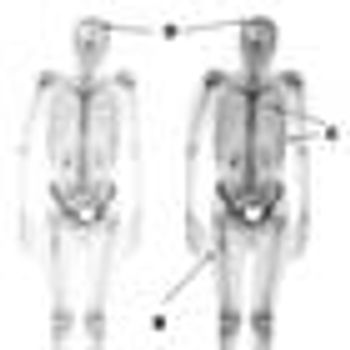
Cabozantinib (XL184), a novel tyrosine kinase inhibitor, caused the deaths of 6 patients in a phase II clinical trial.

Dr. Vogelzang from the Comprehensive Cancer Centers of Nevada discusses mortalities in cabozantinib trial.

Women who present with BRCA1 and BRCA2 mutation face an increased risk of breast and ovarian cancer.
Dr. Infante from Sarah Cannon Research Institute Talks About BRAF Mutation Testing

Phosphatase and tensin homolog (PTEN)-positive breast cancer can be treated with trastuzumab (Herceptin) as effectively as PTEN-negative breast cancer

American Society of Clinical Oncology 2011 Annual Meeting Picture Slideshow Day Four

Axitinib demonstrated significantly better progression-free survival (PFS) compared with sorafenib
Luminal A genetic signature in node-negative, estrogen receptor- (ER-) positive breast cancer predicts a very high disease-free survival rate

Lapatinib and capecitabine is a reasonable approach in a well-informed patient with brain metastasis and HER2+ breast cancer

New treatment approaches that improve overall survival for patients with late-stage melanoma spotlighted
3 years of treatment with imatinib (Gleevec) after surgery in patients with high-risk GIST improved overall and recurrence-free survival
Continuation maintenance with pemetrexed (Alimta) improves progression-free survival in patients with advanced nonsquamous non–small cell lung cancer

Dr. Wolchok from Memorial Sloan-Kettering Cancer Center Describes the Immunotherapy Ipilimumab

Dr. Kris From Memorial Sloan-Kettering Cancer Center on the Use of Genetic Testing in Lung Cancer

The combination of the MEK inhibitor GSK212 and the oral BRAF inhibitor GSK436 resulted in anti-tumor activity in patients with advanced melanoma

Dr. Katherine Virgo from the American Cancer Society Discusses Survivorship Care Training & Policies

Dr. Axel Hoos from Bristol Myers-Squib on the Patients That Respond to Ipilimumab

Dr. Paul Chapman from Memorial Sloan-Kettering Cancer Center Describes the Side Effects of Vemurafenib

Apostolia M. Tsimberidou, MD, PhD, from MD Anderson Cancer Center discusses improving cancer care.

Dr. Cella from Northwestern University Feinberg School of Medicine on Patient Assessment Reference Scores

Taking a page from breast cancer treatment, clinicians managing lung cancer patients can now detect mutations that drive the development of lung cancer

Metastatic breast cancer patients with demonstrated disease progression after taxane therapy face an uphill battle in fighting their disease.