

Sacituzumab govitecan in combination with pembrolizumab led to pathologic complete responses in early-stage triple-negative breast cancer.
Sacituzumab govitecan in combination with pembrolizumab led to pathologic complete responses in early-stage triple-negative breast cancer.

Ribociclib plus a nonsteroidal aromatase inhibitor improved iDFS, DDFS, RFS, and DRFS in HR+/HER2– early breast cancer.

Sacituzumab tirumotecan showed statistically significant improvements in responses and survival vs docetaxel alone in advanced EGFR-mutant NSCLC.
Patritumab deruxtecan did not improve OS vs platinum-based chemotherapy in patients with EGFR mutation–positive locally advanced or metastatic NSCLC.
Nivolumab plus ipilimumab failed to improve overall survival in cisplatin-ineligible, unresectable urothelial carcinoma.
Savolitinib plus osimertinib was safe and effective in patients with EGFR-mutated, MET-amplified advanced NSCLC after disease progression on an EGFR TKI.
Glofitamab plus gemcitabine/oxaliplatin demonstrated improved PFS and OS compared with rituximab in patients with relapsed/refractory DLBCL.
CARTITUDE-4 subgroup data further support cilta-cel’s positive benefit-risk profile in relapsed/refractory multiple myeloma.
Treatment with the oral TKI showed promising responses among 2 subgroups of patients with advanced, HER2-mutant non–small cell lung cancer.
Nivolumab plus relatlimab generated favorable intracranial responses in patients with advanced PD-(L)1-refractory melanoma with brain metastases.
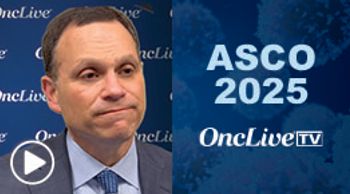
David Spigel, MD, discusses evaluating the utility of adjuvant chemotherapy in patients with stage IA to IIA NSCLC identified as high risk by a 14-gene molecular assay.
The efficacy of relatlimab/nivolumab was consistent across patient subgroups vs ipilimumab/nivolumab in advanced melanoma.

Sintilimab/chidamide followed by P-GemOx demonstrated preliminary efficacy in treatment-naive, early-stage extranodal natural killer/T-cell lymphoma.
Adagrasib plus pembrolizumab was efficacious in patients with KRAS G12C-mutant NSCLC.

Neoadjuvant therapy with PAXG chemotherapy prolonged event-free survival vs mFOLFIRINOX in patients with stage I to III pancreatic ductal adenocarcinoma.

Adjuvant nivolumab generated durable DFS and DMFS outcomes in resectable esophageal or GEJ cancer.

TTFields plus chemotherapy improved overall survival in unresectable, locally advanced pancreatic ductal adenocarcinoma.

Adjuvant atezolizumab plus mFOLFOX6 improved disease-free survival vs mFOLFOX6 alone in patients with stage III, mismatch repair–deficient colon cancer.
Emergent ESR1-mutant, ER-positive, HER2-negative advanced breast cancer was best treated with camizestrant and continued CDK4/6 inhibition vs SOC therapy.
The addition of durvalumab to perioperative FLOT improved event-free survival in resectable gastric/GEJ adenocarcinoma.

Patients with locally advanced, high-risk head and neck cancer showed significantly improved DFS with adjuvant nivolumab plus cisplatin and radiotherapy.
A post hoc analysis of NAPOLI-3 reveals insights on long-term survivors with pancreatic cancer who received NALIRIFOX.
A fruquintinib regimen appeared safe and effective when used as a frontline treatment in esophageal squamous cell carcinoma.
T-DXd maintained efficacy in HR-positive, HER2-low or -ultralow metastatic breast cancer irrespective of mutational subtype.
Ipatasertib plus fulvestrant extended PFS vs placebo plus fulvestrant in patients with ER-positive/HER2-negative metastatic breast cancer.

Thomas Powles, MD, MBBS, MRCP, shares data from an EFS subgroup analysis from the phase 3 CREST study in BCG-naive, high-risk NMIBC.

Sasanlimab plus BCG led to a PFS benefit vs BCG alone in patients with CIS and T1 high-risk non–muscle invasive bladder cancer.
Amivantamab/chemotherapy demonstrated sustained efficacy, despite the osimertinib resistance mechanism in patients with EGFR-mutated NSCLC.
Zanubrutinib in combination with venetoclax was highly active in patients with untreated chronic lymphocytic leukemia or small lymphocytic lymphoma.
Vincent Picozzi, MD, discusses the addition of TFields to gemcitabine and nab-paclitaxel in locally advanced pancreatic ductal adenocarcinoma.