

The investigation of treatments harnessing the immune system in patients with T-cell lymphoma could lead to "a new era" of therapy for this patient population.

Your AI-Trained Oncology Knowledge Connection!
The investigation of treatments harnessing the immune system in patients with T-cell lymphoma could lead to "a new era" of therapy for this patient population.
Imetelstat sustained red blood cell (RBC) transfusion independence in patients with RBC transfusion–dependent lower-risk myelodysplastic syndrome.
Reid W. Merryman, MD, discusses notable advancements with minimal residual disease assays in lymphoma.

Tisagenlecleucel is moving to earlier lines of therapy for pediatric and young adult patients with relapsed/refractory B-cell acute lymphoblastic leukemia.
Sonali M. Smith, MD, discusses the current arsenal of bispecific antibodies available for the management of relapsed/refractory follicular lymphoma.
Sergio A. Giralt, MD, discusses how to determine transplant eligibility and the evolving role of transplant for patients with myelodysplastic syndromes.

Fred R. Hirsch, MD, PhD, discusses the pros and cons of completing a tissue biopsy compared with a liquid biopsy in non–small cell lung cancer.

Wearable-captured physiological metrics and electronic patient reported outcomes were practical and generated knowledge in Waldenström macroglobulinemia.

Atezolizumab plus bevacizumab showed efficacy in patients with hepatocellular carcinoma who had Child-Pugh B7 liver function.

Stephen Opat, MBBS, discusses data for sonrotoclax plus zanubrutinib in relapsed/refractory chronic lymphocytic leukemia and small lymphocytic lymphoma.

High pCR rates were observed for patients with uncommon breast cancer subtypes who received response-predictive subtype–optimized therapy.

Enfortumab vedotin plus pembrolizumab improved survival vs chemotherapy with no QOL detriment in previously untreated metastatic urothelial cancer.
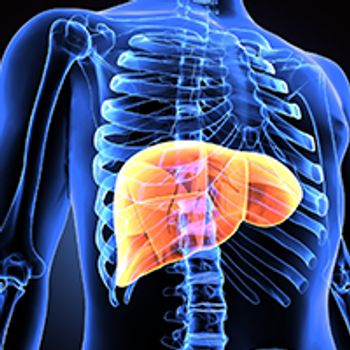
CIRT plus durvalumab and tremelimumab was safe in patients with advanced hepatocellular carcinoma with macrovascular invasion.
Olomorasib plus pembrolizumab demonstrated responses in first-line metastatic KRAS G12C–mutant non–small cell lung cancer.

Pacritinib was tolerable with a reasonable safety profile in patients with solid tumors harboring 1q21.3 copy number amplifications.
Bite-on-bite biopsies and endoscopic ultrasonography with fine needle aspiration were accurate in detecting MRD after neoadjuvant chemoradiotherapy in ESCC.

East Asian patients with RET fusion-positive NSCLC experienced a PFS benefit when treated with selpercatinib vs chemotherapy with/without pembrolizumab.

Radiotherapy was non-inferior vs chemoradiotherapy in patients with nasopharyngeal carcinoma, and less toxicity was observed with radiotherapy alone.

Lyudmila A. Bazhenova, MD, discusses steps that the lung cancer field can take to improve biomarker research.

Narjust Florez, MD, discusses the importance of addressing crucial gaps in care for patients with lung cancer.
Jonathan Wesley Riess, MD, MS, discusses developments in the treatment of patients with NSCLC harboring ALK or ROS1 rearrangements.
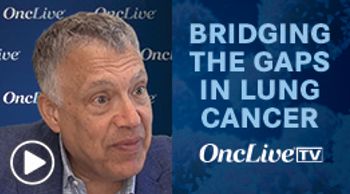
Roy S. Herbst, MD, PhD, discusses the evolution of targeted therapies in EGFR-mutated NSCLC, as well as hurdles associated with biomarker testing.
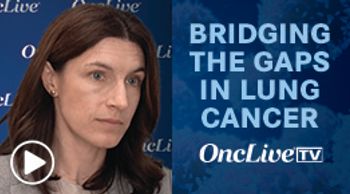
Julia Rotow, MD, discusses existing unmet needs for patients with lung cancer and CNS metastases.

Leah Backhus, MD, MPH, FACS, discusses the evolving definition of borderline resectable lung cancer.

Eileen M. O’Reilly, MD, and Tanios S. Bekaii-Saab, MD, FACP, discuss key topics in gastrointestinal cancer to be presented during the 2024 ISGIO Meeting.
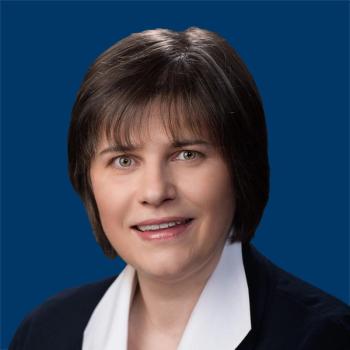
Circulating tumor cells and circulating extracellular vesicles should be integrated into liquid biopsy assays to improve their utility in oncology.
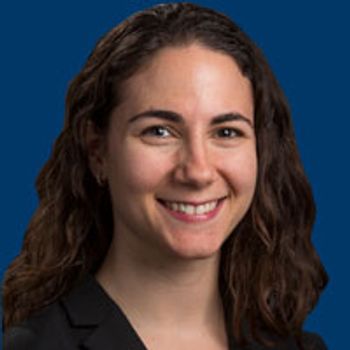
A panel of oncologists engage in a case-based discussion of patients with locally advanced disease at the 25th Annual International Lung Cancer Congress.

David R. Gandara, MD, discusses research reflecting the capabilities of ctDNA assays to detect MRD and prognosticate adjuvant NSCLC treatment outcomes.
Jonathan W. Riess, MD, MS, and James Chih-Hsin Yang MD, PhD, debate the benefits of upfront osimertinib with/without chemotherapy in EGFR-mutant NSCLC.

Jacob Sands, MD, discusses updates to the role of antibody-drug conjugates in the treatment of patients with small cell lung cancer.