
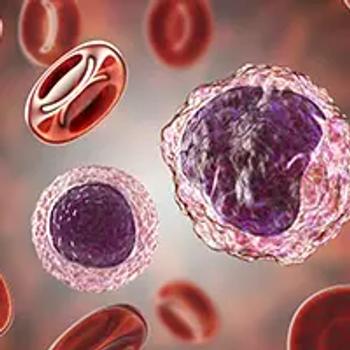
Belantamab mafodotin plus BPd improved PFS vs PVd in relapsed/refractory multiple myeloma.

Your AI-Trained Oncology Knowledge Connection!
Belantamab mafodotin plus BPd improved PFS vs PVd in relapsed/refractory multiple myeloma.

OncLive® will be LIVE with OncLive® News Network: On Location at the 2024 ASCO Annual Meeting. Each day, we will broadcast a series of interviews with top thought leaders, to learn their thoughts and reactions to data presented across oncology during the conference
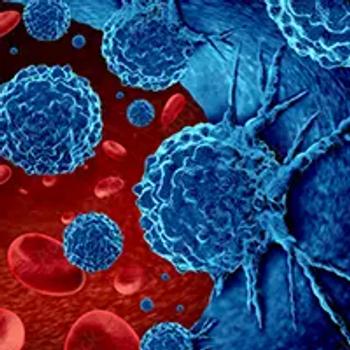
Tucidinostat plus R-CHOP improved efficacy and was safe in previously untreated DLBCL expressing MYC and BCL2.
Abemaciclib plus fulvestrant improved PFS vs fulvestrant alone in select patients with hormone receptor–positive/HER2-negative advanced breast cancer.
Inavolisib plus palbociclib and fulvestrant reduced the risk of progression or death in HR+/HER2– PIK3CA-mutated advanced or metastatic breast cancer.

Byoung Chol Cho, MD, PhD, discusses findings from the CHRYSALIS-2 trial of amivantamab plus lazertinib in patients with atypical EGFR-mutant NSCLC.

Stephen J. Freedland, MD, discusses the correlation between treatment suspension and HRQoL in patients with nmHSPC who were enrolled on the phase 3 EMBARK trial.
Anthracycline/taxane/cyclophosphamide was linked to improved RFS in MammaPrint high-2–risk, BluePrint Luminal B, HR-positive, HER2-negative breast cancer.

Compared with standard-of-care chemotherapy, adagrasib significantly improved PFS and tumor responses in KRASG12C-mutated locally advanced or metastatic NSCLC.
The small molecule inhibitor DFF332 elicited clinical activity and had a tolerable safety profile in patients with advanced clear cell renal cell carcinoma.

Neoadjuvant sacituzumab govitecan demonstrated efficacy in patients with muscle-invasive bladder cancer, but its future role in the space is uncertain.
Subcutaneous amivantamab was displayed noninferiority in terms of ORR vs intravenous administration in EGFR-mutated non–small cell lung cancer.

Induction encorafenib/binimetinib before nivolumab/ipilimumab did not improve PFS in unresectable or metastatic BRAF V600E/K–positive melanoma.
Amivantamab plus lazertinib improved progression-free survival vs osimertinib as frontline therapy in patients with high-risk, EGFR-mutant advanced NSCLC.

Four-year progression-free survival outcomes revealed the BrECADD regimen was superior to the eBEACOPP regimen, and BrECADD had a promising benefit-risk profile.
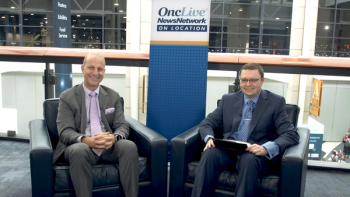
OncLive® will be LIVE with OncLive® News Network: On Location at the 2024 ASCO Annual Meeting. Each day, we will broadcast a series of interviews with top thought leaders, to learn their thoughts and reactions to data presented across oncology during the conference.
The addition of pelabresib and ruxolitinib (Jakafi) led to a significant and durable reduction in splenomegaly, among other improvements, vs ruxolitinib alone in JAK inhibitor–naive patients with myelofibrosis.

Ponatinib generated long-term efficacy and displayed manageable safety in chronic-phase chronic myeloid leukemia harboring a T315I mutation.
Viktor Grünwald, MD, PhD, on patterns of progression and subsequent therapy for patients with advanced RCC treated during the phase 3 CLEAR trial.

Aaron Gerds, MD, discusses updated efficacy and safety results for pelabresib and ruxolitinib in JAK inhibitor–naive myelofibrosis.
Treatment with asciminib led to a superior 48-week major molecular response rate vs investigator-selected TKIs in patients with Ph-positive chronic phase chronic myeloid leukemia.

Lorlatinib extended PFS and improved time to intracranial progression vs crizotinib in patients with ALK-positive non–small cell lung cancer.

Frontline rivoceranib plus camrelizumab continued to show a significant improvement in OS vs sorafenib in advanced unresectable hepatocellular carcinoma.

Sumanta Kumar Pal, MD, FASCO, discusses key biomarker analyses in renal cell carcinoma that will be presented at the 2024 ASCO Annual Meeting.

Most women who attempted to conceive following treatment for stage I to III breast cancer were able to become pregnant at least once.
Patients under the age of 40 who received HPV vaccines were associated with lower rates of HPV-related cancer vs unvaccinated patients.

An artificial intelligence-based navigation tool may be used to call patients who previously missed their colonoscopy appointment with the goal that they will reschedule and attend the new appointment.

Treatment with CEE alone was associated with increased ovarian cancer incidence and mortality rates in postmenopausal women who had undergone hysterectomy.

Eliezer Van Allen, MD, discusses immuno-oncology in relation to precision cancer medicine.

Rebecca Porter, MD, PhD, discusses mirvetuximab soravtansine plus pembrolizumab in serous endometrial cancer and future directions for ADCs in the space.