

Nina Bhardwaj, MD, PhD, of Mount Sinai has been elected to the National Academy of Medicine for her pioneering work in cancer immunotherapy.
Nina Bhardwaj, MD, PhD, of Mount Sinai has been elected to the National Academy of Medicine for her pioneering work in cancer immunotherapy.

Supriya Gupta, MD, details pros/cons with different BTK inhibitors and promising combination therapies in CLL, as well as how liso-cel is affecting care.

The phase 3 ARES trial of MaaT013 in third-line GI-aGVHD met its primary end point of GI-ORR at day 28.

Subcutaneous isatuximab plus Pd led to a noninferior ORR and observed concentration before dosing at steady state vs IV isatuximab plus Pd in RRMM.

Daniel DeAngelo, MD, PhD, discusses the expanded role of blinatumomab in B-cell precursor acute lymphoblastic leukemia management
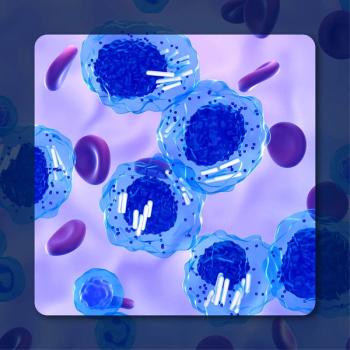
Duvelisib plus venetoclax was active in relapsed/refractory CLL and Richter syndrome with high-risk, TP53-aberrant disease after BTK inhibition.

Durvalumab plus vaccine therapy demonstrated evidence of preliminary antitumor activity without substantial additive toxicity in BCG-unresponsive NMIBC.

The FDA has issued a draft guidance offering recommendations regarding tissue biopsies in clinical trials for pediatric and adult patients.
Rebecca Arend, MD, and Kathryn Lyle, CRNP, discuss their approach to managing ocular and other treatment-related toxicities associated with mirvetuximab soravtansine.
Dana-Farber Cancer Institute will launch the Center for RAS Therapeutics to advance scientific investigation and clinical care for RAS-driven cancers.

The phase 3 ALA-BCC-CT013 study of Ameluz and RhodoLED PDT in sBCC had its last enrolled patient complete a 1-year follow-up visit.

Phase 1 data showed the potential for invikafusp alfa as a precision cancer immunotherapeutic agent in solid tumors after exposure to PD-(L)1 therapy.

Enfortumab vedotin-efjv plus has received NMPA approval for patients with locally advanced or metastatic urothelial cancer.

Fixed-duration zanubrutinib/venetoclax elicited responses in patients with relapsed/refractory chronic lymphocytic leukemia.
The FDA released a draft guidance document detailing their interpretation of when a confirmatory clinical trial for an accelerated approval is underway.
Toni Choueiri, MD, details the PFS outcomes and safety profiles for tivozanib plus nivolumab vs tivozanib alone in metastatic renal cell carcinoma

Sheela Rao, MBBS, MD, FRCP, discusses data from the phase 3 POD1UM-303/InterAACT 2 trial of retifanlimab plus chemotherapy vs chemotherapy in advanced SCAC.

Nirav N. Shah, MD, MSHP, details how BTK degraders could fill an unmet need in pretreated CLL/SLL and highlights promising data seen with NX-5948.

Press Release
Genetic markers for venetoclax could help personalize treatment and improve outcomes

A marketing authorization application has been submitted to the EMA seeking the approval of eflornithine for patients with high-risk neuroblastoma.

The FDA has granted priority review to sunvozertinib for advanced/metastatic NSCLC with EGFR exon 20 insertion mutations after progression on chemotherapy.

Amivantamab plus lazertinib prolonged overall survival vs osimertinib as first-line therapy in locally advanced or metastatic, EGFR-mutant NSCLC.

Flonoltinib maleate generated rapid clinical benefits, including spleen volume reduction and symptom improvement, for patients with myelofibrosis.

Lenalidomide plus luspatercept demonstrated safety, tolerability, and efficacy in patients with non-del(5q) myelodysplastic syndrome.
Armin Ghobadi, MD, discusses the safety profile of WT-7 in heavily pretreated relapsed/refractory T-ALL and LBL.
Ropeginterferon alfa-2b improved responses in patients with essential thrombocythemia with resistance or intolerance to hydroxyurea.

Tom van Meerten, MD, PhD, discusses key efficacy and safety data with brexu-cel in BTK inhibitor–naive relapsed/refractory mantle cell lymphoma.

Dasom (Caroline) Lee, MD, discusses real-world data for second-line axi-cel in relapsed/refractory large B-cell lymphoma.

A study published in Science by researchers from Dana-Farber Cancer Institute demonstrated that rare germline genetic abnormalities could increase the risk of childhood cancers.

China’s NMPA has approved zolbetuximab plus chemotherapy for CLDN18.2-positive advanced gastric or GEJ adenocarcinoma.