
Neil D. Gross, MD, FACS, shares how neoadjuvant cemiplimab followed by surgery improved EFS in patients with stage II-IV cutaneous squamous cell carcinoma.
Neil D. Gross, MD, FACS, shares how neoadjuvant cemiplimab followed by surgery improved EFS in patients with stage II-IV cutaneous squamous cell carcinoma.

Joshua Hurwitz, MD, shares how multifocal MRI-directed SIB plus SBRT was not linked with added toxicity vs unifocal SIB in patients with prostate cancer.

Although use of immunotherapy near the end of life has increased over time, a closer look at the benefit of this in those with advanced cancers is needed.

The FDA has granted fast-track status to RC88 for use in patients with platinum-resistant recurrent epithelial ovarian cancer.

Maurie Markman, MD, details how public trust is critical in the future of cancer care, diving into what leads to mistrust and misinformation today.
Neal Shore, MD, FACS, discusses attempts to expand the current prostate cancer armamentarium through the development of novel, targeted therapies.
Alessandra Ferrajoli, MD, discusses the research needs for describing the risk of hypertension linked with BTK inhibitors in chronic lymphocytic leukemia.
Neal Shore, MD, FACS, highlights the significance of the FDA approval of enzalutamide in nonmetastatic castration-sensitive prostate cancer.
Davide Melisi, MD, PhD, discusses the potential of NALIRIFOX as a new first-line standard for patients with metastatic pancreatic ductal adenocarcinoma.
Press Release
National Family Caregivers Month is observed every November to honor the contributions and sacrifices caregivers make to support their loved ones.
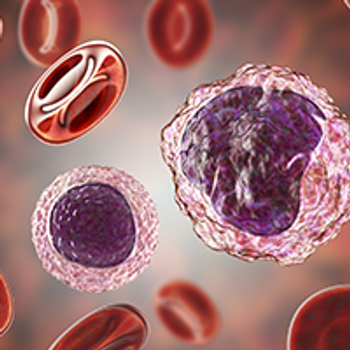
The China National Medical Products Administration has accepted the NDA seeking approval of sovleplenib in patients with primary immune thrombocytopenia.
The FDA has accepted the filing of an ANDA for Lutetium Lu 177 Dotatate indicated for patients with gastroenteropancreatic neuroendocrine tumors.

Investigators hope that first-in-class agents will combat dysfunction of the Hippo pathway by inhibiting the transcription function of TEAD-YAP.function of TEAD-YAP.

Charles Swanton, FRCP, BSc, PhD, has a craving to understand cancer’s evolution, and his list of achievements can prove it.

The FDA has granted fast track designation to SLS009 for use in patients with relapsed or refractory acute myeloid leukemia.
R. Lor Randall, MD, FACS, emphasizes the overall potential for investigating the utility of engineered bone marrow in patients with osteosarcoma.
The European Commission has granted conditional marketing authorization to adagrasib for patients with KRAS G12C+ advanced non–small cell lung cancer.
The FDA has announced that it had accepted the new drug application for SH-105 for the treatment of patients with breast and ovarian cancer.

Cobolimab plus dostarlimab-gxly showed activity and acceptable safety across all dose levels assessed in patients with non–small cell lung cancer.
Alana Welm, PhD, received the 2023 American Association for Cancer Research Outstanding Investigator Award for Breast Cancer Research.
Heather Wakelee, MD, discusses the importance of balancing toxicities with efficacy as the non–small cell lung cancer treatment paradigm shifts.

Eirwen M. Miller, MD, spotlights updated data within the endometrial, cervical, and ovarian cancer spaces following the 2023 ESMO Congress.

The NCCN has updated its guidelines for soft tissue sarcoma to include nirogacestat as a systemic therapy option for patients with desmoid tumors.
Camidanlumab tesirine was well tolerated as a monotherapy and elicited responses when given with pembrolizumab in patients with advanced solid tumors.

BRL-201 had a manageable safety profile and elicited early indications of efficacy in patients with relapsed/refractory non-Hodgkin lymphoma.

Thomas G. Martin, MD, has received a grant from the California Institute of Regenerative Medicine to produce a CAR T cell therapy for multiple myeloma.
The FDA has granted priority review to a sBLA seeking to convert the accelerated approval of tisotumab vedotin to full approval in select patients with cervical cancer.
The FDA has issued a CRL to the zolbetuximab BLA for patients with HER2- gastric or GEJ junction adenocarcinoma whose tumors are Claudin18.2 positive.

Expert oncologists who treat patients with advanced renal cell carcinoma discuss updates from clinical trials presented during the 2023 ESMO Congress.
Eirwen M. Miller, MD, highlights data that have impacted the treatment armamentarium for patients with endometrial cancer and mismatch repair–deficient or mismatch repair–proficient disease throughout the course of 2023.