
Press Release
Mount Sinai study is first to document association that had been hypothesized.
Press Release
Mount Sinai study is first to document association that had been hypothesized.
Because STEAP1 is often overexpressed in prostate cancer, a disease that still largely lacks safe and effective treatment options, investigators are using it as the basis for developing novel therapies.

The combination of inetetamab, pertuzumab, paclitaxel, and carboplatin elicited responses with an acceptable safety profile when administered as neoadjuvant treatment in patients with locally advanced HER2-positive breast cancer.

CMG901 induced responses with a manageable toxicity profile in patients with CLDN18.2-positive gastric or gastroesophageal junction cancer, according to updated data from the dose-expansion phase of the phase 1 KYM901 study.

The combination of domvanalimab, zimberelimab, and FOLFOX elicited responses in patients with locally advanced unresectable or metastatic gastric, gastroesophageal junction, or esophageal adenocarcinoma, irrespective of PD-L1 status.

Mark Leick, MD, discusses how the emergence of CAR T-cell therapies have affected the treatment paradigms in various hematologic malignancies, expands on how persisting challenges with the use of this type of treatment are being addressed, and details research into the use of CAR T-cell therapy in patients with solid tumors.
Kathryn C. Arbour, MD, discusses the unique mechanism of action of RMC-6236, the preliminary efficacy and safety findings for this agent in patients with KRAS-mutant NSCLC, and future directions for the RMC-6236-001 trial.
Belzutifan significantly reduced the risk of progression of clear cell renal cell carcinoma, the most common type of kidney cancer, in patients previously treated with immune checkpoint inhibitors and anti-angiogenic therapies compared with everolimus in a phase 3 clinical trial.

First-line treatment with the PD-1/CTLA-4 bispecific antibody cadonilimab in combination with oxaliplatin and capecitabine led to a statistically significant improvement in overall survival vs placebo plus oxaliplatin and capecitabine in patients with unresectable locally advanced or metastatic gastric or gastroesophageal junction adenocarcinoma, meeting the primary end point of the phase 3 AK104-302 trial.
Despite advanced ovarian and endometrial cancer still being accompanied by a poor prognosis and remaining largely difficult-to-treat diseases, optimism among clinicians has steadily ramped up in recent years with the development of multiple new promising agents and treatment regimens.
Treatment with vic-trastuzumab duocarmazine demonstrated a trend toward numerically prolonged overall survival compared with physician’s choice of treatment in patients with pretreated HER2-positive metastatic breast cancer.
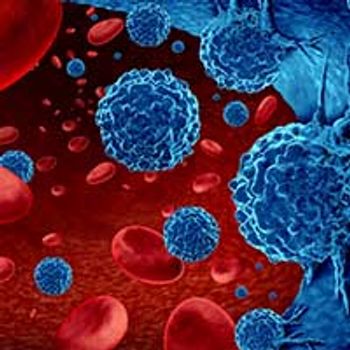
The FDA has cleared the investigational new drug application for CHM 2101, a novel CDH17-targeted CAR T-cell therapy, for the treatment of patients with gastrointestinal cancers.

The addition of panitumumab to FOLFIRINOX or mFOLFOX6 led to comparable overall response rates and complete response rates in patients with RAS or BRAF V600E wild-type, unresectable, metastatic colorectal cancer without liver-limited disease.
The combination of garsorasib and cetuximab elicited responses and was found to be well tolerated in heavily pretreated patients with KRAS G12C–mutated colorectal cancer.
Jesus Berdeja, MD, discussed considerations when choosing between bispecific antibodies and CAR T-cell therapy for patients with multiple myeloma, clinical trials that may move CAR T-cell therapy into earlier lines, and research with agents directed at targets other than BCMA.
In their updated guidelines for patients with small cell lung cancer (SCLC), ASCO has recommended the CDK4/6 inhibitor trilaciclib as a myeloid supportive agent for patients with untreated or previously treated extensive-stage SCLC who are receiving chemotherapy or chemoimmunotherapy.
The FDA has granted an orphan drug designation to AL102 as a potential therapeutic option for patients with desmoid tumors.

Press Release
The Mount Sinai Health System has received a $7 million grant from the Multiple Myeloma Research Foundation for a three-year project that aims to fast-track novel translational concepts to improve outcomes for people with high risk myeloma, the second most common blood cancer in the United States.
It is time for society to address the critical nature of our current unsustainable oncology pharmaceutical marketplace, and it is also essential that whatever solutions are proposed and implemented do not incorporate inappropriate labeling of outcomes that negate meaningful measures of clinical benefit.
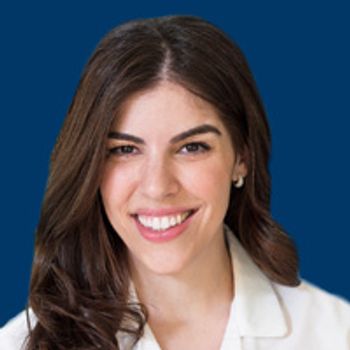
Rebecca Shulman, MD, assistant professor in the Department of Radiation Oncology at Fox Chase Cancer Center, was recently recognized with the Robert A. Winn Diversity in Clinical Trials Career Development Award.

The Claudin-6–directed CAR T-cell therapy, BNT211, showed signs of clinical activity in patients with CLDN6-positive relapsed or refractory solid tumors.
Miriam Merad, MD, PhD, an esteemed immunologist at the Icahn School of Medicine at Mount Sinai, has been elected to the National Academy of Medicine in recognition of her pioneering contributions to the fields of immunology and cell biology.
Elizabeth I. Buchbinder, MD, discusses findings from a retrospective study evaluating the resumption of nivolumab maintenance therapy in patients with advanced melanoma who discontinued treatment with the combination of nivolumab and ipilimumab due to immune-related adverse effects.
Press Release
Florida Cancer Specialists & Research Institute physicians will present at the Society for Immunotherapy of Cancer Annual Meeting this week in San Diego.
The addition of atezolizumab to bevacizumab and chemotherapy resulted in a significant improvement in progression-free survival and overall survival vs standard treatment with bevacizumab and chemotherapy in patients with metastatic, persistent, or recurrent cervical cancer.
Improved toxicity, advanced technology, and novel techniques have helped increase the use of radiotherapy for the treatment of different subgroups of patients with prostate cancer.
Active surveillance can provide eligible patients with low-risk prostate cancer the opportunity to defer or avoid treatment and instead opt for routine monitoring of their disease; however, challenges arise when determining which patients should be eligible for this approach and how to maintain patient and provider protocol compliance.
David Morris, MD, FACS, discusses the increasing the use of active surveillance in patients with low-risk prostate cancer and the goals of avoiding adverse effects associated with possible therapies.
The FDA has granted an orphan drug designation to rhenium obisbemeda as a potential therapeutic option for patients with breast cancer and leptomeningeal metastases.

Gautam Jayram, MD, discusses current standards of care in the bladder cancer treatment arena, novel therapies under investigation in clinical trials that may expand the arsenal of available treatment strategies, and emphasizes the importance of implementing bladder cancer programs.