

Treatment with the next-generation anthracycline annamycin was found to result in preliminary clinical activity without dose-limiting toxicities in patients with soft tissue sarcoma lung metastases.
Treatment with the next-generation anthracycline annamycin was found to result in preliminary clinical activity without dose-limiting toxicities in patients with soft tissue sarcoma lung metastases.

The administration of NBTXR3 monotherapy activated by radiotherapy resulted in encouraging survival improvements in difficult-to-treat elderly and frail patients with locally advanced head and neck squamous cell carcinoma who are ineligible for cisplatin and intolerant to cetuximab.
The FDA has granted a fast track designation to the interleukin-2 variant immunotherapy nemvaleukin alfa for use in combination with pembrolizumab in the treatment of patients with platinum-resistant ovarian cancer.
Florida Cancer Specialists & Research Institute has opened its new state-of-the-art North Port Cancer Center, providing the most advanced and personalized treatments and services for patients with all forms of cancers and blood disorders.

Prostate cancer is a highly hetero-geneous disease, with individual tumor cells having distinct genomic and pheno-typic characteristics, resulting in a great deal of variability in patients’ disease course.

Jonathan A. Chatzkel, MD, discusses updates in first-line treatment options for metastatic urothelial cancer, as well as recommended treatments for patients with previously treated, locally advanced or metastatic urothelial cancer, and also newly diagnosed metastatic renal cell carcinoma.
Antoinette Wozniak, MD, FACP, FASCO, highlights the importance of monitoring patients with lung cancer for toxicities and significant advances on the horizon that are expected to further expand the lung cancer armamentarium.

The FDA has granted a fast track designation to the universal cancer vaccine UV1 for use in combination with checkpoint inhibitors in patients with unresectable or metastatic melanoma, either as an add-on therapy to pembrolizumab or to ipilimumab.

Although the addition of eryaspase to chemotherapy improved overall survival over chemotherapy alone in patients with metastatic pancreatic cancer, the difference in benefit was not found to be statistically significant, missing the primary end point of the phase 3 TRYbeCA-1 trial.
The combination of durvalumab and chemotherapy resulted in a statistically significant and clinically meaningful improvement in overall survival compared with chemotherapy alone when used in the first-line treatment of patients with advanced biliary tract cancer, meeting the primary end point of the phase 3 TOPAZ-1 trial.
The use of risk stratification in children and adolescent and young adult patients with synovial sarcoma is an essential approach to appropriately tailoring local and systemic therapy and avoiding overtreatment.

Canakinumab plus pembrolizumab and platinum-based doublet chemotherapy did not significantly improve progression-free survival or overall survival in previously untreated patients with locally advanced or metastatic non–small cell lung cancer, missing the primary end points of the phase 3 CANOPY-1 trial.

The Association of Community Cancer Centers (ACCC) today announced the winning programs for its eleventh annual ACCC Innovator Awards, spotlighting forward-thinking cancer care programs tackling challenges ranging from financial toxicity to telehealth advancements.
Maurie Markman, MD, highlights the ongoing regulatory concerns that demand attention of the FDA in the cancer arena amidst evolving issues regarding COVID-19.

Approximately 20% of pediatric patients with cancer infected with COVID-19 experienced severe illness and deaths due to the infection were proportionally higher in this patient population compared with the general pediatric population, providing evidence that children with cancer are at higher risk of developing severe illness from COVID-19.
The overwhelming number of options for the treatment of patients with lung cancer underscores the importance of broad molecular testing up front to ensure patients receive optimal care.
The immuno-oncology company Agenus has made the decision to withdraw its biologic license application for the use of the PD-1 inhibitor balstilimab in patients with recurrent or metastatic cervical cancer who experienced disease progression on, or after, chemotherapy.

Three medical oncologists at Florida Cancer Specialists & Research Institute are co-authors on a new integrated safety analysis of umbralisib, used to treat lymphoid malignancies.
Oncopeptides AB has made the decision to withdraw the indication of melphalan flufenamide in combination with dexamethasone in select adult patients with relapsed or refractory multiple myeloma from the US market.

The frontline combination of trifluridine/tipiracil and bevacizumab was not found to result in a significant improvement in progression-free survival over capecitabine and bevacizumab in patients with unresectable metastatic colorectal cancer who are not eligible to receive intensive therapy, missing the primary end point of the phase 3 SOLSTICE trial.

The European Commission has approved pembrolizumab plus chemotherapy for the frontline treatment of patients with locally recurrent unresectable or metastatic triple-negative breast cancer whose tumors have a PD-L1 expression combined positive score of 10 or higher and who have not previously received chemotherapy for metastatic disease.
The FDA has approved the VENTANA PD-L1 assay to assist in identifying which adult patients with stage II to IIIA non–small cell lung cancer whose tumors have PD-L1 expression on 1% or more of tumor cells are eligible to receive adjuvant atezolizumab following surgery and platinum-based chemotherapy.

The National Institutes of Health has awarded a grant to fund cellular senescence research in lymphoid organs at Yale Cancer Center.
Clinical advances in treatment of small cell lung cancer have lagged behind those of other tumor types, but the delay is not for lack of effort.

Treatment with the small molecule oral immunomodulator EC-18 resulted in a reduction in both the duration and incidence of severe oral mucositis in patients with head and neck cancer who are undergoing concurrent chemoradiation.
Chan Cheah, MBBS, discusses TG-1701 as a more target-specific BTK inhibitor, the outcomes in response rates in the cohorts of the trial, and where future research is headed with this agent.
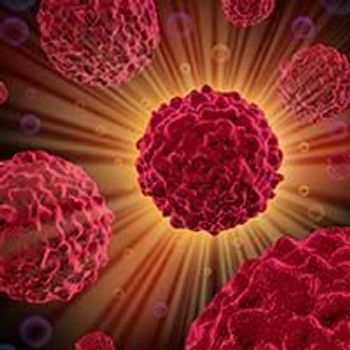
The presence of at least 1 mutation captured by next-generation sequencing was associated with a shorter time to first treatment among patients with newly diagnosed chronic lymphocytic leukemia, particularly those with mutations in POT1, ATM, FBXW7, and MYD88 genes.

The European Commission has approved nivolumab plus fluoropyrimidine- and platinum-based chemotherapy for the frontline treatment of adult patients with HER2-negative advanced or metastatic gastric, gastroesophageal junction, or esophageal adenocarcinoma whose tumors have a PD-L1 combined positive score of 5 or higher.

Teams of researchers from Roswell Park Comprehensive Cancer Center and the University of Chicago Medicine Comprehensive Cancer Center are combining efforts after together securing a nearly $9 million grant from the National Cancer Institute to develop new and better treatments for ovarian cancer.
Fibrolamellar carcinoma is an extremely rare form of liver cancer that affects approximately 1 in 5 million Americans. However, because the disease appears so infrequently, it may be underdiagnosed.