

Suchitra Sundaram, MD, discusses the assortment of therapies available in chronic lymphocytic leukemia and frontline approaches.
Suchitra Sundaram, MD, discusses the assortment of therapies available in chronic lymphocytic leukemia and frontline approaches.
Matthew Galsky, MD, discusses the present and future treatment landscape of MIBC during Bladder Cancer Awareness Month.

Sevabertinib has received priority review designation from the FDA in locally advanced or metastatic, HER2 TKD–mutant NSCLC.
OncLive announced the 2026 Giants of Cancer Care winners.

Ibrutinib/Rituximab Preserves QOL vs FCR in Previously Untreated CLL

In an indirect comparison, NAI+BCG showed numerically higher, significantly longer responses and a trend toward greater bladder preservation vs nadofaragene.

Enzalutamide plus radium-223 demonstrated no early survival advantage but an 80% death risk reduction for long-term survivors in mCRPC at over 60 months.
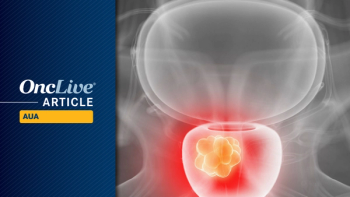
Rucaparib showed a manageable and consistent safety profile in patients with BRCA-mutated prostate cancer.

The FDA has issued a ‘safe to proceed’ for an application for a novel CAR T-cell therapy in CD94-positive lymphomas.
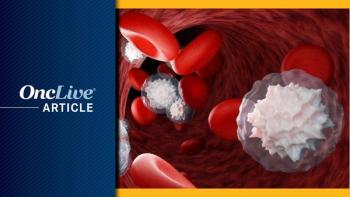
Second-line annamycin plus cytarabine injections demonstrated promising responses in patients with relapsed or refractory acute myeloid leukemia.

No new safety signals were identified, and imAEs were predominantly low-grade and consistent with the known durvalumab safety profile.
In case you missed any, check out our recap of the episodes of OncLive On Air that aired in April 2026.

The PD-1/antiangiogenic combination yielded a 24% ORR and 28-month median PFS, surpassing prior monotherapy benchmarks in refractory chordoma.
Adding lutetium Lu 177 vipivotide tetraxetan to ADT and ARPI deepened PSA responses and reduced the risk of PSA progression by 58% in patients with mHSPC.
Talazoparib plus enzalutamide data show rPFS correlates moderate-to-strongly with OS in first-line mCRPC across biomarker-defined subgroups.
Enzalutamide plus leuprolide produced a median treatment suspension of 17 months vs 11.5 months with leuprolide alone in biochemically recurrent prostate cancer.

The top 5 OncLive TV videos of the week cover insights in breast cancer, acute myeloid leukemia, bladder cancer, multiple myeloma, and melanoma.

The FDA approved T-DXd in early HER2+ breast cancer, adjuvant atezolizumab in MRD+ MIBC, and more.

Two doses of intravesical mitomycin-C administered before TURBT produced a 77% reduction in the risk of recurrence or death vs TURBT alone in NMIBC.
A biomarker analysis of SunRISe-4 found that high baseline TMB, GBD, and PD-L1 expression were associated with pathologic overall response to the regimen.

The FDA approved trastuzumab deruxtecan for the adjuvant and neoadjuvant treatment of select early-stage HER2-positive breast cancer.
Durvalumab plus BCG induction and maintenance yielded an HR of 0.68 vs BCG alone for DFS in BCG-naive, high-risk non–muscle-invasive bladder cancer.
Darolutamide plus ADT demonstrated a 50% reduction in the risk of death in metastatic hormone-sensitive prostate cancer.
Did you catch all of this week's top oncology news? Test your knowledge with OncLive's Weekly News Quiz.
Pembrolizumab plus BCG achieved a 92% 6-month complete response rate in very high-risk T1 bladder cancer with no progression to muscle-invasive disease.
The FDA approved adjuvant atezolizumab for muscle-invasive bladder cancer with circulating tumor DNA molecular residual disease.

TRAEs were generally reversible and low grade, and 96.8% of patients remained free from progression to T2 or greater disease at the data cutoff.

Members of Roswell Park Comprehensive Cancer Center participated in the 2026 World Indigenous Cancer Conference.

GU experts identified key abstracts of interest from the upcoming ASCO Annual Meeting via OncLive’s social media.

Polls highlighted key abstracts of interest from the upcoming ASCO Annual Meeting.