
Nivolumab plus ipilimumab was approved by the European Commission for first-line, unresectable or advanced HCC.

Your AI-Trained Oncology Knowledge Connection!
Nivolumab plus ipilimumab was approved by the European Commission for first-line, unresectable or advanced HCC.

Sacituzumab govitecan was active with low rates of neutropenia—especially in patients receiving G-CSF—in real-world metastatic TNBC.
Researchers at Fox Chase Cancer Center published 2 reviews on the role of AKT, also known as protein kinase B, in the development and treatment of cancer.
Treatment with liso-cel induced long-term CR/CRi rates and high uMRD rates in patients with CLL/SLL following progression on BTK inhibition and venetoclax.

Sewit Teckie, MD, discusses the advantages and disadvantages of a cfDNA blood-based assay compared with colonoscopy in diagnosing colorectal cancer.

Versamune HPV plus PDS01ADC and bintrafusp alfa demonstrated clinical benefit in locally advanced or metastatic HPV-associated cancers.
Roswell Park’s Dr Kenan Onel leads large international team that sheds light on pineoblastoma and Wilms tumor.

Treatment with 177Lu-edotreotide significantly improved PFS and numerically increased OS vs SOC everolimus in grade 1 or 2 SSTR-positive GEP-NETs.
First-line olverembatinib plus low-intensity chemotherapy has received breakthrough therapy designation in China for patients with Ph-positive ALL.
Nirav N. Shah, MD, MSHP, and Michael T. Tees, MD, MPH, detail BTK degraders such as NX-5948 under investigation in the CLL/SLL space.
Matthew Wagar, MD, discusses treatment considerations for advanced/recurrent endometrial cancer.
R. Lor Randall, MD, FACS, discusses the significance of the FDA approval of vimseltinib for patients with symptomatic TGCT.
SON-1010 is being investigated for its potential to improve outcomes in solid tumors.
Alberto Chiappori, MD, details how to select between ensartinib and approved ALK TKIs for NSCLC, as well as considerations with ensartinib’s FDA approval.

Aditya Bardia, MD, MPH, FASCO, discusses how the FDA approval of T-DXd for HER2-low/-ultralow metastatic breast cancer has affected the treatment paradigm.
Rachna Shroff, MD, MS, FASCO, discusses the potential role for nab-paclitaxel plus gemcitabine and cisplatin in select patients with biliary tract cancers.
The FDA granted RMAT designation to nogapendekin alfa inbakicept/CAR-NK for lymphopenia reversal in patients with advanced or metastatic pancreatic cancer.
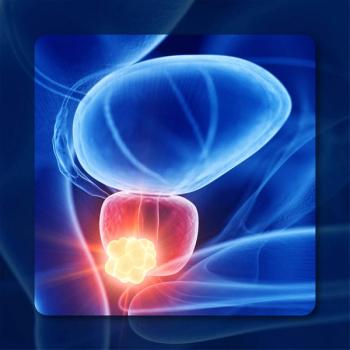
NOMA has approved the PET imaging agent for the identification of PSMA-positive lesions in patients with prostate cancer.
Clinicians parse through the impacts of tumor-agnostic FDA approvals, examining T-DXd and repotrectinib's 2024 approvals in particular.

ARX788 was safe and effective in HER2+ advanced breast cancer after disease progression on 1 line of a trastuzumab-based regimen.

Thierry André, MD, discusses findings from the phase 3 CheckMate 8HW trial of nivolumab plus ipilimumab in MSI-H/dMMR mCRC.

Katy Beckermann, MD, PhD, discusses key findings from a PRO analysis of tivozanib/nivolumab vs tivozanib alone in ICI-pretreated RCC.
Brandon G. Smaglo, MD, FACP, discusses upfront treatment considerations for patients with metastatic pancreatic cancer.

Treatment with ivosidenib plus CPX-351 showed early efficacy in patients with relapsed/refractory AML or high-risk MDS harboring an IDH1 mutation.

Erin K. Tagai, PhD, MPH, has received a grant from the Prevent Cancer Foundation to fund development of a ChatBot for patients receiving genetic testing results.
The FDA has approved 2 denosumab biosimilars for all indications of their respective reference medications.

The FDA has granted orphan drug designation to bexmarilimab for myelodysplastic syndromes.
During an OncLive Peer Exchange at the 2024 ASH Meeting, expert investigators in hematology discussed findings from several clinical trial updates in CLL.
Lisaftoclax plus azacitidine demonstrated clinical activity and was safe in higher-risk MDS.
The FDA has approved tislelizumab-jsgr plus chemotherapy for frontline use in adult patients with advanced esophageal squamous cell carcinoma and PD-L1 expression.