

Marina Kremyanskaya, MD, PhD, discusses the safety and efficacy of pelabresib in patients with myelofibrosis, additional data from the MANIFEST trial, and other efforts investigating the agent in this disease.

Your AI-Trained Oncology Knowledge Connection!
Marina Kremyanskaya, MD, PhD, discusses the safety and efficacy of pelabresib in patients with myelofibrosis, additional data from the MANIFEST trial, and other efforts investigating the agent in this disease.
The administration of daily aspirin did not improve invasive disease-free survival in patients with high-risk, HER2-negative breast cancer.
Zeynep Eroglu, MD, discusses the potential of ctDNA as a noninvasive biomarker in melanoma, outlines different assays under development, and details potential opportunities to leverage ctDNA in treatment decision making.

The FDA has placed a clinical hold on a phase 1 trial evaluating the safety and efficacy of the autologous CAR T-cell product LB1901 as a potential therapeutic option in adult patients with relapsed or refractory T-cell lymphoma.
Cristina Gasparetto, MD, shares pearls regarding treatment in frontline, early relapsed, and late relapsed multiple myeloma.

Rutgers Cancer Institute of New Jersey has named Sanjay Goel, MD, MS as director of its Phase I/Investigational Therapeutics Program.
the development of PD-1/PD-L1 immune checkpoint inhibitor therapy underwent a course correction in 2021, with the withdrawal of a range of indications due to study results that failed to reach thresholds for confirming clinical benefit.
Aaron T. Gerds, MD, MS, discusses the use of TKIs, targeted agents, JAK inhibitors, and cellular therapy in hematologic malignancies.
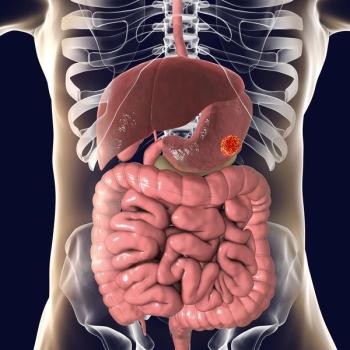
The FDA has granted an orphan drug designation to the off-the-shelf natural killer cell therapy CYNK-101 as a potential treatment for patients with advanced HER2-positive gastric or gastroesophageal junction adenocarcinoma.

The FDA has accepted a new drug application for the use of adagrasib in the treatment of patients with non–small cell lung cancer whose tumors harbor a KRAS G12C mutation and who have previously received at least 1 prior systemic therapy.
The safety and efficacy of the CD19-targeted CAR T-cell therapy obecabtagene autoleucel in the treatment of adult patients with relapsed or refractory B-cell acute lymphoblastic leukemia as part of the phase 1/2 FELIX trial.
Thomas C. Krivak, MD, discusses his approach to up-front treatment for women with newly diagnosed advanced ovarian cancer.

The FDA has granted a breakthrough device designation to the TriNetra-Prostate blood test for use in the detection of early-stage prostate cancer.
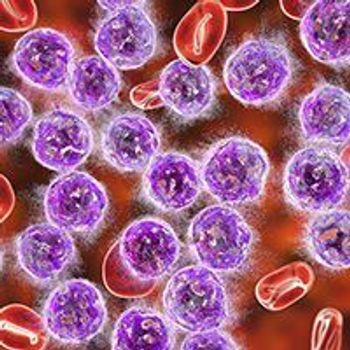
The survival rate for Americans diagnosed with several of the most common cancers has increased dramatically in the past nearly three decades, thanks in large part to scientific discoveries and treatment advances.
Much has been written regarding the essential role of clinical trials in the major advances in cancer therapy and observed improvement in disease-related morbidity and mortality.
R. Lor Randall, MD, discusses the importance of collaborations between orthopedic surgeons and interventional radiologists, and how they are beginning to pick up steam in the United States for patients with metastatic bone cancer.
Jennifer M. Matro, MD provides an in-depth look at clinical trials that have added to the breast cancer paradigm and how she is interpreting the findings for clinical practice.
Fill rates of data elements on electronic health records are a major contributing factor limiting the uptake of automated services.

The addition of dalpiciclib to fulvestrant significantly prolonged progression-free survival vs fulvestrant alone in patients with hormone receptor–positive, HER2-negative advanced breast cancer, according to data from an interim analysis of the phase 3 DAWNA-1 trial.
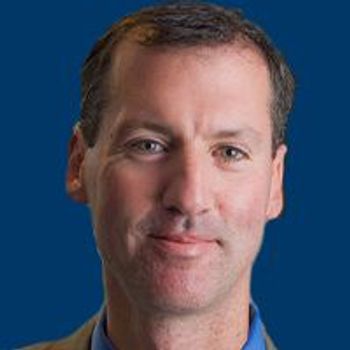
Ian E. Krop, MD, PhD, has been appointed chief clinical research officer, associate cancer center director for clinical research, and director of the Yale Cancer Center Clinical Trials Office.
It is a life-changing experience to see people take the hurt, suffering, pain, and loss of cancer and transform it into a superhuman force for good and for hope.
The FDA has accepted for review a new drug application for poziotinib in patients with previously treated locally advanced or metastatic non–small cell lung cancer with HER2 exon 20 insertion mutations.
Thomas G. Martin, MD, discusses some of the exciting clinical trials open at UCSF Helen Diller Family Comprehensive Cancer Center in multiple myeloma, especially for those in the relapsed/refractory setting.
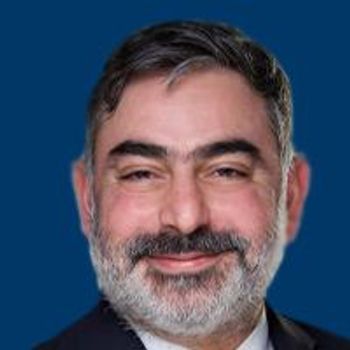
Mohammed M. Milhem, MBBS, discusses the unique elements of oncolytic vaccines in oncology and ongoing research with RP1 in melanoma and other solid tumors.

Joanne Mortimer, MD, discusses current applications for HER2-directed antibody-drug conjugates, CDK4/6 inhibitors, PARP inhibitors, and checkpoint inhibitors in early-stage and metastatic breast cancer.
Dan Vogl, MD, MSCE, discusses the unique mechanism of action of modakafusp alfa and the updated results from an expansion cohort in patients with relapsed/refractory multiple myeloma.
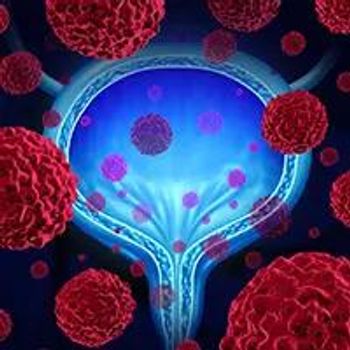
The novel non-viral gene therapy, EG-70, produced a complete response rate of 83% at 3 months in evaluable patients with high-grade non–muscle invasive bladder cancer with carcinoma in situ who were unresponsive to Bacillus Calmette-Guérin.
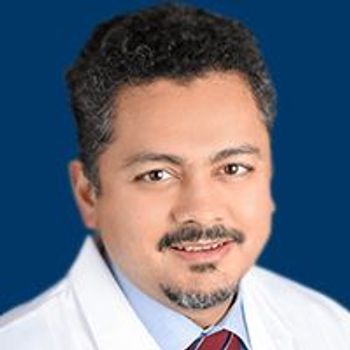
Saad Z. Usmani, MD, MBA, FACP, shares key takeaways from presentations given during the meeting on the evolving paradigms of frontline, early relapsed, and late relapsed multiple myeloma, the current role of bispecific antibodies and CAR T-cell therapy, and emerging immunotherapies and also trials in progress in the space.
Laura Finn, MD, provides a deep dive into pivotal data with combinations and novel agents that have changed the paradigm for patients with newly diagnosed, early relapsed, and late relapsed multiple myeloma.
John T. Cole, MD, discusses how updates in HER2-positive breast cancer have affected sequencing strategies, selecting between CDK4/6 inhibitors in the adjuvant and metastatic settings of hormone receptor HR–positive breast cancer, and the need for additional therapies in triple-negative breast cancer.