

Cleveland Clinic has partnered with Anixa Biosciences, Inc. to open a phase 1 trial examining a vaccine aimed at preventing the development of triple-negative breast cancer.

Your AI-Trained Oncology Knowledge Connection!
Cleveland Clinic has partnered with Anixa Biosciences, Inc. to open a phase 1 trial examining a vaccine aimed at preventing the development of triple-negative breast cancer.
Secura Bio decided to withdraw the approval of the new drug application for panobinostat for use in combination with bortezomib and dexamethasone to treat select patients with multiple myeloma.

Nasser Khaled Altorki, MD, provides insight on the results of the IMpower010 trial as well as post hoc analyses from the trial and what they signal for the remainder of this patient population.

The FDA has placed a partial clinical hold on the phase 1b KOMET-001 trial, which is examining KO-539 in patients with relapsed or refractory acute myeloid leukemia.

The FDA’s Centers for Devices and Radiological Health has granted a breakthrough device designation to ZetaMet technology for use in the treatment of metastatic bone cancers and osteologic interventions.

The addition of BO-112 to pembrolizumab produced clinical benefit in patients with unresectable malignant melanoma who have experienced disease progression on anti–PD-1 therapy, according to data from the preliminary analysis of the phase 2 SPOTLIGHT-203 trial.
The FDA has approved daratumumab and hyaluronidase-fihj plus carfilzomib and dexamethasone for the treatment of adult patients with relapsed or refractory multiple myeloma who have received 1 to 3 prior lines of therapy.
The FDA has issued a complete response letter to the new drug application seeking the approval of plinabulin in combination with granulocyte colony-stimulating factor for the prevention of chemotherapy-induced neutropenia.

Investigators have known about hereditary diffuse gastric cancer syndrome for decades, but only identified its molecular causes in the 1990s, said gastrointestinal oncologist Bryson Katona, MD, PhD.

Researchers from Rutgers Cancer Institute of New Jersey and Dana-Farber Cancer Institute developed and evaluated a computational pipeline that utilizes information commonly provided in tumor sequencing assays to predict the origin of detected DNA alterations.

Maurie Markman, MD, discusses how agency leaders should be encouraged to improve regulatory science, include a patient’s perspective in approval decisions, reduce unnecessary bureaucracy and costs associated with the conduct of trials, and accelerate the overall review process for drug approval.

Retifanlimab demonstrated encouraging antitumor activity with favorable tolerability in patients with recurrent microsatellite instability–high or mismatch repair deficient endometrial cancer, according to data from the phase 1 POD1UM-101 trial.
The FDA has extended the review period for the new drug application for pacritinib as a treatment for adult patients with intermediate- or high-risk primary or secondary (post-polycythemia vera or post-essential thrombocythemia) myelofibrosis and severe thrombocytopenia with a baseline platelet count of 50 x 109/L.

First-line maintenance treatment with the PARP inhibitor niraparib yielded a clinically meaningful and statistically significant improvement in progression-free survival vs placebo in Chinese patients with platinum-responsive advanced ovarian cancer, regardless of biomarker status, according to data from the phase 3 PRIME trial.
The Japan Pharmaceuticals and Medical Devices Agency has approved the PD-1 inhibitor pembrolizumab for frontline use in combination with 5-fluorouracil plus cisplatin chemotherapy in patients with radically unresectable, advanced, or recurrent esophageal carcinoma.

The combination of pembrolizumab and axitinib demonstrated comparable activity and safety vs sunitinib in Japanese patients vs the global population of patients with newly diagnosed metastatic renal cell carcinoma enrolled in the phase 3 KEYNOTE-426 trial.

The antibody-drug conjugate mirvetuximab soravtansine has shown promising response rates and a favorable toxicity profile in patients with folate receptor alpha-high, platinum-resistant ovarian cancer who have received previous treatment with bevacizumab.
The FDA has granted a priority review designation to a supplemental new drug application for the use of olaparib as adjuvant therapy in patients with BRCA-mutated, high-risk, HER2-negative early breast cancer who have previously received neoadjuvant or adjuvant chemotherapy.
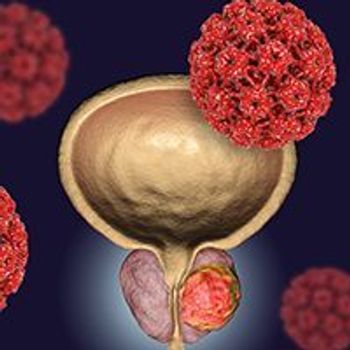
Patients with locally advanced or metastatic hormone-sensitive prostate cancer who received docetaxel and abiraterone acetate plus prednisone or prednisolone and standard of care androgen deprivation therapy had superior patient-reported quality of life compared with patients who received docetaxel plus ADT, although the improvement narrowly missed the predefined value for clinical significance.

Howard S. Hochster, MD, discusses molecular markers for patients with gastric cancer, using gene expression profiles as biomarkers, and choosing between anti–PD-1 and anti–CTLA-4 agents.

Florida Cancer Specialists & Research Institute held a ribbon-cutting ceremony to mark the opening of its new state-of-the-art cancer center in Manatee County.

The FDA has approved pafolacianine sodium injection (Cytalux) for adult patients with ovarian cancer as an adjunct for intraoperative identification of malignant lesions.

The European Commission has approved the combination of pembrolizumab and lenvatinib for the treatment of patients with advanced renal cell carcinoma.

The European Commission has granted an approval to the combination of pembrolizumab and lenvatinib for the treatment of patients with advanced or recurrent endometrial carcinoma who have disease progression on or following prior platinum-containing therapy in any setting and who are not eligible for curative surgery or radiation.
The combination of CG0070 and pembrolizumab was well tolerated and demonstrated early signals of activity in patients with Bacille Calmette-Guérin-unresponsive non–muscle invasive bladder cancer.

Several leading experts discussed a variety of tumor types set to influence the next wave of investigative directions and change the standard of care for patients in abstracts at the European Society for Medical Oncology Congress 2021.

Lisocabtagene maraleucel demonstrated durable responses and a favorable safety profile in patients with relapsed/refractory large B-cell lymphoma.

Panelists discuss the latest advances in targeting HER2-positive breast cancer, the rapidly evolving landscape of triple-negative breast cancer, the role of maintenance therapy in ovarian cancer, and recent updates in the treatment of patients with endometrial and cervical cancers.

Manojkumar Bupathi, MD, MS, shares the main highlights from the meeting, which centered on frontline, second, and later-line treatment of metastatic urothelial carcinoma and metastatic renal cell carcinoma.

The combination of cabozantinib and atezolizumab led to a statistically significant improvement in progression-free survival and a numerical improvement in overall survival vs sorafenib as frontline treatment in patients with advanced hepatocellular carcinoma, according to findings from the first planned analysis of the phase 3 COSMIC-312 trial.