
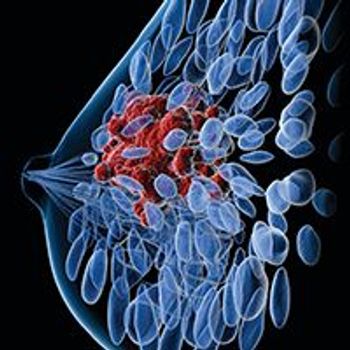
Post-treatment care for breast cancer survivors must be personalized to address each survivor’s unique experiences.

Your AI-Trained Oncology Knowledge Connection!
Post-treatment care for breast cancer survivors must be personalized to address each survivor’s unique experiences.

Erminia Massarelli, MD, MS, PhD, shares key updates in immunotherapy and targeted treatment for patients with NSCLC

Although the standard-of-care treatment for patients with metastatic pancreatic cancer remains largely unchanged with multi-agent chemotherapy, the role for multidisciplinary care has expanded significantly in recent years.

Ravi Salgia, MD, PhD, discusses pivotal trials that have shaken up the SCLC treatment paradigm and novel immunotherapy regimens under investigation.

The recently FDA-approved loncastuximab tesirine-lpyl has been added to the latest National Comprehensive Cancer Network Clinical Practice Guidelines for B-cell lymphomas.
Arsen Osipov, MD, discusses the potential for ongoing research with immunotherapeutic approaches in gastrointestinal malignancies, including CAR T-cell therapy, bispecific T-cell engagers, and vaccines.

Olwen Hahn, MD, discusses the clinical significance of the KATHERINE and FeDeriCa trials in the treatment of patients with early-stage HER2-postive breast cancer.

The FDA has granted priority review to applications that are seeking 2 approvals of pembrolizumab in combination with lenvatinib in advanced renal cell carcinoma and advanced endometrial carcinoma.
The highly heterogeneous nature of cholangiocarcinoma at the genomic, epigenetic, and molecular levels has led to the development of effective new treatments for patients with these rare malignant tumors.

Syed M. Quadri, MD, discusses the role of surgery in early-stage and locally advanced lung cancer, as well future directions with robotic and minimally invasive surgery.

The cancer-specific biomarker TRIM63 was highly expressed in all classes of microphthalmia-associated transcription factor family aberration–associated renal cell carcinoma compared with other subtypes of RCC, where TRIM63 expression was low or absent.

The FDA has approved pembrolizumab for use in combination with trastuzumab, fluoropyrimidine- and platinum-containing chemotherapy for the frontline treatment of patients with locally advanced unresectable or metastatic HER2 positive gastric or gastroesophageal junction adenocarcinoma.
Although checkpoint inhibition has been shown to benefit some patients with metastatic triple-negative breast cancer, there is not yet a role for immune-based treatment in the neoadjuvant setting.

The European Commission has approved atezolizumab for use as a frontline treatment in patients with metastatic non–small cell lung cancer whose tumors have a high PD-L1 expression and do not harbor EGFR or ALK aberrations.
Primary tumor resection followed by chemotherapy failed to demonstrate a survival benefit compared with chemotherapy alone in patients with stage IV colorectal cancer who have asymptomatic primary tumors and synchronous unresectable metastases, suggesting that PTR should no longer be considered a standard of care in this patient population.

The FDA has granted a priority review to the supplemental new drug application for ivosidenib tablets as a treatment option for patients with previously treated, IDH1-mutant cholangiocarcinoma.

New triplet combinations anchored by anti-CD38 antibodies are expanding the therapeutic landscape for relapsed or refractory multiple myeloma, providing exciting options that extend progression-free survival windows from months to years for heavily pretreated patients.
Roy Decker, MD, PhD, discusses the utility of interventional radiology and SBRT in patients with oligometastatic disease and detailed ongoing clinical trials for NSCLC as they relate to radiation therapy.

The addition of motixafortide to granulocyte colony stimulating factor resulted in a 4.9-fold increase in achieving target stem-cell mobilization for autologous bone marrow transplantation in up to 2 apheresis sessions vs G-CSF alone in patients with multiple myeloma, meeting the primary end point of the phase 3 GENESIS trial.

The American Society of Clinical Oncology and Association of Community Cancer Centers announced plans to test a research site assessment tool and implicit bias training program, both of which are designed to address one of the barriers to clinical trials participation: trials not routinely offered by clinicians to eligible patients.

RAD51C and RAD51D mutations and high-level BRCA1 promotor methylation are predictive of response to rucaparib in patients with recurrent ovarian cancer, while genomic scars linked with homologous recombination deficiency is predictive of response only in those with platinum-sensitive disease.

Edward S. Kim, MD, highlights the impact of osimertinib in the treatment of patients with EGFR-mutant non–small cell lung cancer, next steps with the agent, and the importance of early genetic testing to provide personalized care.
Patient enrollment has commenced for the randomized phase 3 ULTRA-V trial, which will evaluate the efficacy of a time-limited combination of umbralisib plus ublituximab and venetoclax vs continuous umbralisib/ublituximab in patients with newly diagnosed or relapsed/refractory chronic lymphocytic leukemia.

Marianne Davies, NP, DNP, MSN, BSN, discussed the potential severity of immune-related adverse effects and detailed recommended management strategies for patients receiving checkpoint inhibitors, especially in lung cancer.
The European Commission has approved enzalutamide for the treatment of adult patients with metastatic hormone-sensitive prostate cancer.

Nearly 30 years after National Institutes of Health sought to increase participation of minorities in clinical trials, a demographic imbalance remains.

Intermediate-fit, elderly patients with newly diagnosed multiple myeloma were found to have similar outcomes with a reduced dose of lenalidomide maintenance therapy after completing 9 cycles of lenalidomide plus dexamethasone compared with standard, continuous dexamethasone.

Julia K. Rotow, MD, discusses how she approaches molecularly testing in patients with liquid- and tissue-based biopsies, the importance of waiting to initiate immunotherapy until a patient’s molecular testing results are confirmed, and other nuances that she considers when treating patients with advanced non–small cell lung cancer.

The rolling submission of a new drug application to the FDA for surufatinib for the treatment of patients with pancreatic and non-pancreatic neuroendocrine tumors has been completed.

Whole-genome sequencing has the potential to accurately differentiate between stable and progressive precursor conditions to multiple myeloma in low disease burden clinical states and the use of this technology in the clinic may result in a significant shift in the management of these patients.