Erik P. Castle, MD, discusses the role of cytoreductive nephrectomy in renal cell carcinoma based on interpretation of the CARMENA trial results.

Your AI-Trained Oncology Knowledge Connection!
Erik P. Castle, MD, discusses the role of cytoreductive nephrectomy in renal cell carcinoma based on interpretation of the CARMENA trial results.
Erika P. Hamilton, MD, discussed several studies in the HER2-positive breast cancer space and the sequencing challenges that have emerged.
Treatment with the selective ROCK2 inhibitor KD025 led to statistically significant overall response rates in patients with chronic graft-versus-host disease who have received ≥2 prior lines of systemic therapy.

The 2019 ACCC Annual Achievement Award was presented posthumously to Arti Hurria, MD, FASCO, City of Hope.
Thai H. Ho, MD, PhD, discusses frontline treatment considerations in metastatic renal cell carcinoma, the utility of TKI monotherapy, and new combinations on the horizon.

Komal Jhaveri, MD, FACP, discusses updates in research for metastatic HR-positive, HER2-negative breast cancer.
Varlitinib combined with capecitabine did not improve progression-free survival nor overall response rate compared with capecitabine/placebo as a second-line treatment in patients with biliary tract cancer.
The use of immunotherapy, either as monotherapy or in combination with chemotherapy, continues to raise the bar with regard to overall survival benefit in patients with newly diagnosed, advanced nonsquamous non–small cell lung cancer.
The FDA has granted a priority review designation to a supplemental biologics license application for the combination of nivolumab and ipilimumab for the treatment of patients with advanced hepatocellular carcinoma who received prior therapy with sorafenib.
Joseph A. Sparano, MD, discusses using gene expression profiles as a means to guide therapy in breast cancer.
Andreas Kaubisch, MD, sheds light on systemic therapies available in liver cancer and some of the practice-changing phase III trials that have read out in the space.
Phillip J. Koo, MD, discusses the use of conventional imaging as well as the next-generation imaging tools that have the potential to change the management of patients with recurrent prostate cancer.
Joshua M. Lawrenz, MD, discusses the use of hypofractionated radiotherapy versus conventional radiotherapy in soft tissue sarcoma.
Avelumab did not improve overall survival as frontline maintenance following induction chemotherapy in patients with unresectable, locally advanced, or metastatic HER2-negative gastric or gastroesophageal junction cancer.
The FDA has approved luspatercept-aamt (Reblozyl) for the treatment of anemia in adult patients with beta thalassemia who require regular red blood cell transfusions.
A supplemental new drug application has been submitted to the FDA for ibrutinib (Imbruvica) for use in combination with rituximab (Rituxan) for the first-line treatment of patients ≤70 years old with chronic lymphocytic leukemia or small lymphocytic lymphoma.
Michael D. Offin, MD, discusses ongoing research focusing on some of the less-common targetable mutations in non–small cell lung cancer.
The ACCC David King Community Clinical Scientist Award was awarded to Paul D. Hansen, MD, FACS, a pioneering leader in research on minimally invasive approaches to major liver and pancreas surgery and the promise these techniques hold for improving the quality of care, the patient experience, and potentially reducing healthcare costs.
The phase I/II CIRLL study, which is evaluating the combination of the monoclonal antibody cirmtuzumab (UC-961) plus ibrutinib has opened an expansion cohort to include patients with mantle cell lymphoma.
Three game-changing immunotherapy trials have transformed the treatment paradigm in frontline clear cell renal cell carcinoma. At the 37th Annual CFS®, Robert J. Motzer, MD, compared the findings from the three studies.

As PARP inhibitors have now moved into the frontline maintenance setting in ovarian cancer, researchers are now seeking to even further capitalize on use of these agents, including indications in treatment-naïve patients.
Quickly following on the approval of single agents, adjuvant immunotherapy combinations are quickly progressing through development, with promising signs of clinical activity seen in phase II studies, according to a presentation by Jeffrey S. Weber, MD, PhD, at the 37th Annual CFS®.
Ixazomib significantly improved progression-free survival as a first-line maintenance therapy compared with placebo in adult patients with multiple myeloma who have not undergone stem cell transplantation, meeting the primary endpoint of the phase III TOURMALINE-MM4 study.
Novel combinations of biologic therapies, third-generation TKIs, and chemotherapy could lead to significantly higher cure rates for adult patients with acute lymphoblastic leukemia, with a number of early stage studies already showing promising results, according to Hagop M. Kantarjian, MD, at the 37th Annual CFS®.
Given that a watch-and-wait approach is a viable option, clinicians must carefully consider disease characteristics when selecting a treatment strategy in newly diagnosed follicular lymphoma.
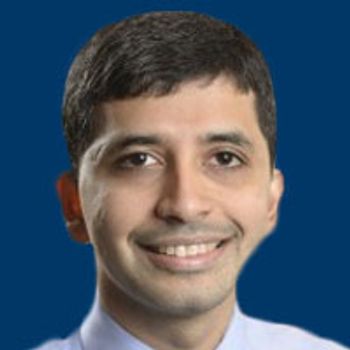
Anti-BCMA directed treatments, including CAR T-cell therapy, bispecific antibodies, and antibody-drug conjugates, have the potential to revolutionize the multiple myeloma treatment paradigm. At the 37 Annual CFS®, Sham Mailankody, MBBS, discussed the emerging BCMA-directed therapies that have shown the greatest potential.
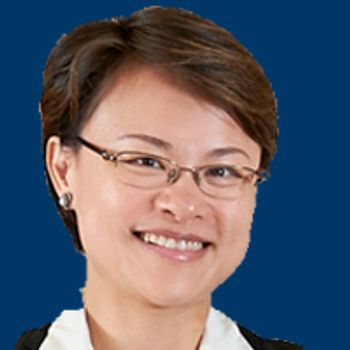
Jia Ruan, MD, PhD, hematologist/oncologist, Weil Cornell Medicine, examined the evolving treatment landscape for mantle cell lymphoma, with an emphasis on BTK inhibitors.
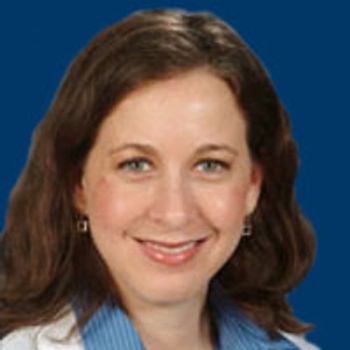
Allyson Ocean, MD, discusses pivotal trials in early pancreatic cancer, the need for genetic testing, and other research efforts focused on improving patient outcomes.
The combination of INO-5401 and INO-9012 with cemiplimab, plus chemoradiation, demonstrated promising 6-month progression-free survival rates in patients with newly diagnosed glioblastoma multiforme that is O6-methylguanine-DNA methyltransferase methylated or unmethylated.

Ryan B. Corcoran, MD, PhD, discusses emerging therapeutics for patients with relapsed/refractory colorectal cancer.