

Subcutaneous daratumumab received EU approval for the treatment of patients with smoldering multiple myeloma at high risk of developing multiple myeloma.

Your AI-Trained Oncology Knowledge Connection!
Subcutaneous daratumumab received EU approval for the treatment of patients with smoldering multiple myeloma at high risk of developing multiple myeloma.

Ibrutinib has received an expanded indication from the European Commission for the treatment of patients with newly diagnosed MCL eligible for transplant.

R. Lor Randall, MD, FACS, discusses global disparities in sarcoma care during Sarcoma Awareness Month.

Jyoti S. Mayadev, MD, discusses a ctDNA analysis from the CALLA study of chemoradiation with or without durvalumab in locally advanced cervical cancer.

Natural language processing models could help streamline processes within clinical settings.

Hetty E. Carraway, MD, MBA, highlights the evolving molecular classification of MDS and novel agents in the therapeutic arsenal.

The combination of talazoparib and tazemetostat was safe and led to PSA reductions in certain patients with metastatic castration-resistant prostate cancer.

Doctors join cancer center with expertise in surgical and medical oncology, pathology, dermatology, anesthesia.

The FDA granted fast track designation to DB-1310 for patients with pretreated, advanced non–small cell lung cancer harboring select EGFR mutations.
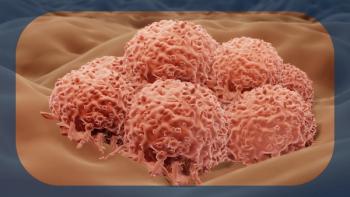
Among patients with advanced melanoma and the target HLA type—representing 80% of the study population—treatment with iSCIB1+ yielded an ORR of 69%.

Evan S. Wu, Md, PhD, concludes a three-part series highlighting the translatability of Chinese clinical data into US regulatory pathways.
The FDA has issued a complete response letter for RP1 plus nivolumab for advanced melanoma after a PD-1 inhibitor–containing regimen.

Joshua K. Sabari, MD, discusses the design of the phase 1/2 ARROS-1 study, as well as key efficacy data with zidesamtinib in ROS1 fusion–positive NSCLC.

The oral formulation of decitabine-cedazuridine helps empower patients with MDS or CMML to maintain their quality of life from the comfort of their home.

Darren Pan, MD, highlighted key sequencing strategies for T-cell redirection therapy in relapsed/refractory multiple myeloma.

Innovative engineering teams at Huntsman Cancer Institute tackle cancer treatment challenges through collaborative grants.

Mirdametinib received conditional EU approval for treating NF1-associated plexiform neurofibromas in patients 2 years of age and older.
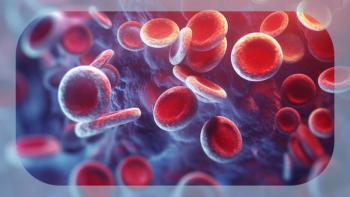
The European Commission approved obe-cel for adult patients with relapsed/refractory B-cell precursor acute lymphoblastic leukemia.

Darolutamide receives EU approval with ADT for metastatic hormone-sensitive prostate cancer.

Qian (Janie) Qin, MD, discusses the importance of early molecular testing, evolving PARP inhibitor strategies, and the phase 2 HARMONY trial in mHSPC.

Osimertinib plus chemotherapy improved overall survival in the first-line treatment of advanced non–small cell lung cancer harboring EGFR mutations.
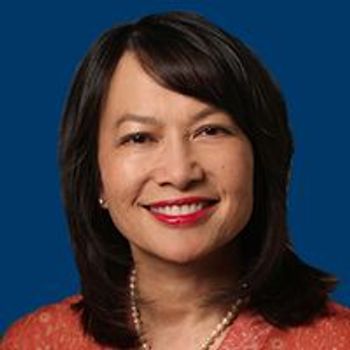
Cathy Eng, MD, FACP, FASCO, discusses real-world data on KRAS G12C–mutated mCRC, highlighting its potential prognostic impact in the frontline setting.

PF-07248144 is a first-in-class selective inhibitor of KAT6A and KAT6B that has displayed the ability to suppress ER expression in a preclinical study.

The top 5 OncLive videos of the week cover insights in ovarian cancer, RCC, melanoma, non–small cell lung cancer, and non–muscle-invasive bladder cancer.

Mats Jerkeman, MD, discusses long-term follow-up data of the Nordic MCL2 and MCL3 trials in younger patients with mantle cell lymphoma.

Glofitamab received a CRL from the FDA in R/R DLBCL, ODAC voted against belantamab mafodotin in R/R multiple myeloma, and more.

JSKN003 demonstrated tolerability and antitumor activity in heavily pretreated HER2-positive breast cancer.
Treatment with casdatifan in combination with cabozantinib produced responses and was safe in patients with pretreated clear cell renal cell carcinoma.
High levels of CD163-positive TAMs and exhausted CD8-positive TILs could potentially affect efficacy results in metastatic RCC by reprogramming TAMs.
KIM-1 levels have shown the ability to predict therapeutic benefit in patients with renal cell carcinoma.