
Andrew Kuykendall, MD, discusses the importance of a nuanced, multidisciplinary approach to expedite the diagnosis of indolent systemic mastocytosis.
Andrew Kuykendall, MD, discusses the importance of a nuanced, multidisciplinary approach to expedite the diagnosis of indolent systemic mastocytosis.

Alyssa R. Goldbach, DO, is joining Fox Chase Cancer Center as an assistant professor for Breast Imaging in the Department of Diagnostic Imaging.

Camizestrant plus a CDK4/6 inhibitor was safe and effective in frontline ESR1-mutated HR-positive/HER2-negative advanced breast cancer.

The resubmission of a BLA for odronextamab was accepted by the FDA for the treatment of patients with relapsed/refractory follicular lymphoma.

Faculty at Hackensack Meridian School of Medicine developed a novel curriculum to improve medical training through practical, clinic-focused learning.

Amandeep Salhotra, MD, discusses data that have demonstrated the anti-GVHD activity of post-transplant Orca-Q in patients with hematologic malignancies.

For American Heart Month, cardiologist Amy M. Ahnert, MD, and oncologist Kevin T. Nead, MD, MPhil, unpacked the link between CVD and breast cancer.

At 5 years of follow-up, sustained disease control was demonstrated with ibrutinib plus venetoclax and obinutuzumab in patients with newly diagnosed MCL.
Pedro Barata, MD, provides insights on key updates in RCC, MIBC, and prostate cancer, as discussed during a State of the Science Summit™.

Mohammed Najeeb Al Hallak, MD, MS explores treatment considerations in advanced pancreatic, colorectal, and neuroendocrine cancers.

OH2 monotherapy was safe and treatment with the agent led to responses in combination with HX008 in locally advanced or metastatic sarcoma.

Isatuximab plus VRd has been approved in Japan for transplant-ineligible, newly diagnosed multiple myeloma.

The FDA has granted priority review to the sBLA for perioperative pembrolizumab plus adjuvant radiotherapy in resectable locally advanced HNSCC.

MD Anderson was awarded nearly $23 million from the CPRIT for cancer research and faculty recruitment.

A phase 3 study will be initiated after completion of the first neoadjuvant phase 2 trial of platinum-based chemotherapy plus immunotherapy in UTUC.

During the whirlwind of emotions and obligations brought on by a cancer diagnosis, the sexual health needs of patients are often overlooked by clinicians.
Pedro Barata, MD, discusses the expansion of radioligand therapies and the identification of novel targets beyond PSMA in prostate cancer.
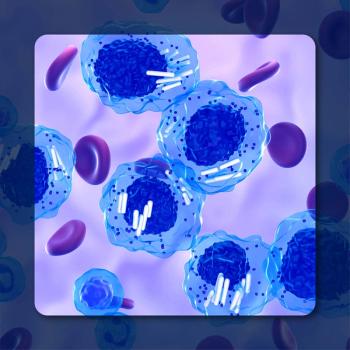
Time-limited zanubrutinib/rituximab was well tolerated and continued to elicit remissions 13 months after treatment discontinuation in treatment-naive CLL.
Sia Daneshmand, MD, discusses how TAR-200 addresses an unmet need for patients with BCG-unresponsive, high-risk NMIBC.

The long-acting IL-7 agent efineptakin alfa was tolerable and led to responses in patients with Kaposi sarcoma, including in HIV-associated disease.
Cameron S. Bader, PhD, discusses findings from a study evaluating the prevalence of FOXP3 and Helios expression in Orca-T recipients.

The FDA has granted the novel, oral KAT2A/B degrader AUTX-703 fast track designation for the treatment of patients with relapsed/refractory AML.

The combination of nivolumab and ipilimumab is under priority review for the frontline treatment of patients with unresectable/metastatic MSI-H/dMMR CRC.
Anna Parks, MD, Huntsman Cancer Institute investigator, has been awarded the ASH Junior Faculty Scholar Award.

Noam E. Shabani, MS, PA-C, director of the Dana-Farber Postgraduate PA Oncology Fellowship highlights the program and its impact on improved access to care for patients.

Darolutamide generated lower treatment discontinuation rates and longer MFS vs enzalutamide or apalutamide in both Black and White patients with nmCRPC.

The top 5 videos of the week cover insights in prostate cancer, multiple myeloma, RCC, urothelial carcinoma, and LBCL.
Darolutamide plus ADT and docetaxel demonstrated efficacy benefits in men with mHSPC regardless of whether they were younger or older than 75 years of age.

Most patients with mCRPC included in a real-world study did not undergo HRR testing at the time of diagnosis.

D. Ross Camidge, MD, PhD, discusses ways that ALK-positive NSCLC management has changed based on 5-year follow-up data with lorlatinib in the CROWN trial.