

Experts spotlight the triple-negative breast cancer abstracts they’re most excited to see at the 2026 ASCO Annual Meeting.
Experts spotlight the triple-negative breast cancer abstracts they’re most excited to see at the 2026 ASCO Annual Meeting.

Read on to see what data are poised to shape clinical discussions and decision-making in lung cancer at 2026 ASCO Annual Meeting in Chicago, Illinois.

Megan M. Dupuis, MD, PhD, discusses how oncology fellows can keep their personal and professional curiosities alive during fellowship.

R. Lor Randall, MD, FACS, discusses how the introduction of systemic therapies such as pimicotinib in TGCT enables a tumor biology–informed approach to care.

Treatment with neoadjuvant T-DXd followed by THP resulted in lower RCB vs ddAC-THP in patients with high-risk, HER2-positive early-stage breast cancer.

An sNDA with updated data for taletrectinib was accepted by the FDA for TKI-naive and pretreated advanced ROS1+ NSCLC

The State of Utah has made a visionary investment in AI and advanced computing infrastructure to advance research.
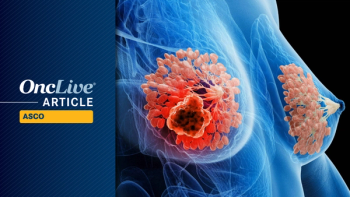
Breast cancer experts spotlight the abstracts they’re most excited to see at the 2026 ASCO Annual Meeting.

Ajai Chari, MD, outlines key consensus viewpoints and recommendations for multiple myeloma management from Bridging the Gaps 2025.

Simlukafusp alfa plus atezolizumab with/without bevacizumab was safe and active but did not improve upon responses with SOC treatments in metastatic RCC.

Phase 1 data show HS-10504 yields encouraging responses and manageable safety in EGFR C797S–mutant NSCLC post TKI therapy.

Experts in a range of breast cancer subtypes highlight research data being presented at the 2026 ESMO Breast Cancer Congress.

Research from Yale Cancer Center showed that the type of fat consumed may matter more than amount in pancreatic cancer.

Iopofosine I 131 produced strong responses in Waldenström macroglobulinemia, according to 12-month folllow-up data from CLOVER WaM requested by the FDA.

Lore Gruenbaum, PhD, discusses the direction mantle cell lymphoma is headed in addition to other critical areas of unmet needs.
Here is your cheat sheet to all oncology therapeutic options that were cleared or rejected by the FDA in April 2026.

Treatment with gedatolisib-based regimens led to significant PFS benefits vs alpelisib/fulvestrant in PIK3CA-mutant HR-positive advanced breast cancer.

Research from Roswell Park Comprehensive Cancer outlines other potential uses for CDK inhibition in breast cancer management.

Pelareorep plus bevacizumab and FOLFIRI showed a 33% response rate and 19.5-month median response duration in RAS-mutant MSS CRC.

The FDA approved Guardant360 CDx as a companion diagnostic for vepdegestrant in ER-positive advanced or metastatic breast cancer with ESR1 mutations.

Duvelisib demonstrated deep, durable responses and promising efficacy data across peripheral T-cell lymphoma subgroups.

The top 5 OncLive TV videos of the week cover insights in multiple myeloma, HER2+ breast cancer, pancreatic cancer, colorectal cancer, and melanoma.

A one-stop-shop for regulatory updates across GI malignancies from the past month.

Orca-Q Receives FDA RMAT Designation for High-Risk Hematologic Malignancies.

The FDA cleared vepdegestrant in ER+ breast cancer with ESR1 mutations, ODAC voted on key questions in breast and prostate cancer, and more.

The FDA has approved a once-daily, extended-release formulation of ruxolitinib for select myelofibrosis, polycythemia vera, and graft-vs-host disease.
The FDA has permitted expanded access to daraxonrasib for patients with previously treated metastatic pancreatic ductal adenocarcinoma.

Nivolumab plus cabozantinib was safe and active for the real-world frontline treatment of patients with advanced RCC.
Read a refresh of the top FDA news in breast cancer from April 2026, including an ODAC decision and a breakthrough device designation.
The FDA approved vepdegestrant for ER-positive, HER2-negative, ESR1-mutated advanced or metastatic breast cancer after at least 1 line of endocrine therapy.