
Alan Tan, MD, discusses how utilizing circulating tumor DNA may provide valuable insight into when to escalate vs de-escalate treatment for patients with renal cell carcinoma.
Alan Tan, MD, discusses how utilizing circulating tumor DNA may provide valuable insight into when to escalate vs de-escalate treatment for patients with renal cell carcinoma.

Jennifer R. Brown, MD, PhD, discusses the clinical implications of the ALPINE study and highlights a subgroup analysis of acquired mutations in patients with chronic lymphocytic leukemia, demonstrating which mutations were associated with resistance to covalent BTK inhibitors.

Jaime R. Merchán, MD, spotlights case studies of patients with rare non-ccRCC histologies, discussing their clinical presentation, recent data on immunotherapy and targeted treatment options for the management of these disease subtypes, and patient outcomes on these therapies.
The combination regimen comprised of acalabrutinib, venetoclax, and obinutuzumab proved to be safe and feasible and to elicit responses in patients with high-risk, relapsed or refractory mantle cell lymphoma.

Press Release
Allina Health Cancer Institute is collaborating with St. Paul-based Astrin Biosciences for a first-of-its-kind clinical trial using artificial intelligence and a simple blood draw to revolutionize how cancer is diagnosed and treated.
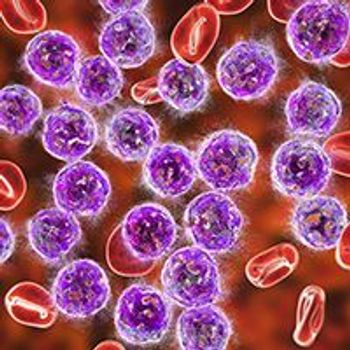
Relmacabtagene autoleucel continued to induce responses with acceptable tolerability in Chinese patients with relapsed or refractory mantle cell lymphoma.

The oral selective PIM1 kinase inhibitor TP-3654 appeared to be well tolerated and to show early signals of spleen volume reduction, symptom improvement, and correlating cytokine reductions in patients with relapsed or refractory myelofibrosis, according to preliminary data.

Maria Hafez, MD, spotlights the KATHERINE trial in HER2-positive breast cancer, expanding on the respective toxicity profiles of T-DM1 and trastuzumab that were identified in an exploratory safety analysis of the trial; updated outcomes with T-DM1 in those with residual invasive disease after neoadjuvant treatment and surgery; and more.

Treatment with SD-101 distributed via pressure-enabled drug delivery with immune checkpoint inhibition was tolerated and resulted in the depletion of Tregs, M-MDSCs, and M2 macrophages in liver metastases in patients with uveal melanoma.
Kathleen N. Moore, MD, MS, expands on the importance of continuing to investigate PARP inhibitors in ovarian cancer and highlights key updates to have come out of the 2023 ESMO Congress

Oliver Sartor, MD, discusses the significance of the data with lutetium Lu 177 vipivotide tetraxetan in the open-label, multicenter randomized study, highlights potential next steps with this approach, and expands on unique adverse effects to be aware of when treating patients with this drug.

The FDA has issued a complete response letter to the biologic license application seeking the approval of cosibelimab for use in patients with metastatic or locally advanced cutaneous squamous cell carcinoma who are not eligible for curative surgery or radiation.

Press Release
Diagnosing early-stage lung cancer with low-dose computed tomography screening drastically improves the survival rate of cancer patients over a 20-year period, according to a large-scale international study being presented by Mount Sinai researchers at the annual meeting of the Radiological Society of North America.

Investigators hypothesized that testosterone replacement does not have a negative impact on the oncologic outcomes of treatment-naive patients with prostate cancer on surveillance and they performed a retrospective review of an institutional active surveillance prostate cancer database.

Hope Cottrill, MD, highlights practice-changing developments in endometrial cancer care, the benefits of local control with radiation in patients with locally aggressive disease, and questions that remain regarding treatment sequencing with immunotherapy.

Press Release
A phase 1/2 study will assess the safety and efficacy of azeliragon in patients refractory to first-line treatment of metastatic pancreatic cancer.

Alexander Drilon, MD, highlights how the approval of repotrectinib addresses the need for improved therapies for patients who have progressed on a previous TKI and delves into notable neurologic toxicities seen with the agent.
Press Release
Groundbreaking study opens new avenues for future treatment and diagnosis.
The tumor-infiltrating lymphocyte cell therapy OBX-115 produced responses with no dose-limiting toxicities in heavily pretreated patients with advanced or metastatic melanoma whose who had progressed on anti–PD-1 and anti–CTLA-4 therapy with disease that was primary-resistant to immune checkpoint inhibitor therapy.

Rui-Hua Xu, MD, PhD, and Kohei Shitara, MD, expand on the advantages of targeting CLDN18.2 with zolbetuximab in gastric/GEJ adenocarcinoma and key efficacy data from the GLOW and SPOTLIGHT trials in support of zolbetuximab’s potential FDA approval.

Paul G. Richardson, MD, shares clinical findings and several case studies showcasing the encouraging activity and safety of mezigdomide in patients with relapsed/refractory multiple myeloma.

The FDA has approved enfortumab vedotin in combination with pembrolizumab for patients with locally advanced or metastatic urothelial cancer.

Marijo Bilusic, MD, PhD, highlights key insights about renal cell carcinoma that were presented at the meeting covering considerations on sequencing TKIs, the need for further research to elucidate novel therapies, and the importance of offering clinical trials to all patients with genitourinary malignancies.

The combination of pembrolizumab and lenvatinib failed to produce a statistically significant improvement in progression-free survival and overall survival vs platinum-based chemotherapy with carboplatin and paclitaxel as frontline therapy in patients with advanced or recurrent endometrial cancer whose disease in mismatch repair proficient/not microsatellite instability–high or mismatch repair deficient.

The FDA has granted fast track designation to naporafenib plus trametinib for use as a potential therapeutic option in adult patients with unresectable or metastatic melanoma with an NRAS mutation who progressed on or are intolerant to a PD-1/PD-L1–based regimen.
Treatment with zanubrutinib conferred a PFS benefit vs bendamustine plus rituximab across most biomarker subgroups of patients with treatment-naive chronic lymphocytic leukemia or small lymphocytic lymphoma without del(17p), according to findings from the phase 3 SEQUOIA trial.
The FDA has approved belzutifan (Welireg) for the treatment of patients with advanced renal cell carcinoma (RCC) following a PD-1 or PD-L1 inhibitor and a VEGF TKI.

The majority of patients with relapsed CLL treated with zanubrutinib or ibrutinib in the phase 3 ALPINE study did not acquire a BTK or PLCG2 mutation at the time of disease progression, indicating that these mutations may not be the primary drivers of resistance and relapse in this population.

The combination of RP1 and cemiplimab provided a numerical, but not statistically significant, improvement in response rates vs cemiplimab alone in patients with locally advanced or metastatic cutaneous squamous cell carcinoma, missing the primary end points of the phase 2 CERPASS trial.

Idecabtagene vicleucel has received marketing and manufacturing approval in Japan for its supplemental new drug application in patients with relapsed/refractory multiple myeloma who have received at least 2 prior lines of therapy.