
The FDA has granted accelerated approval to enfortumab vedotin-ejfv (Padcev) plus pembrolizumab (Keytruda) for patients with locally advanced or metastatic urothelial carcinoma who are not eligible for cisplatin-containing chemotherapy.
The FDA has granted accelerated approval to enfortumab vedotin-ejfv (Padcev) plus pembrolizumab (Keytruda) for patients with locally advanced or metastatic urothelial carcinoma who are not eligible for cisplatin-containing chemotherapy.
Mark Levis, MD, PhD, discusses potential changes to the FLT3-ITD-mutated acute myeloid leukemia treatment landscape that may occur if the FDA approves quizartinib, key efficacy and safety data with the agent, and how quizartinib compares with midostaurin.
Gautam Borthakur, MD, discussed the rationale for targeting RARA-overexpressing AML, the potential efficacy and safety benefits of tamibarotene, and how SELECT AML-1 and SELECT MDS-1 could change the respective treatment landscapes in AML and MDS.

Treatment with eftilagimod alpha plus pembrolizumab resulted in tumor shrinkage and a tolerable safety profile in patients with anti–PD-1/PD-L1–resistant non–small cell lung cancer.

Press Release
With a National Cancer Institute grant, investigators from Rutgers Cancer Institute of New Jersey and Georgetown University’s Lombardi Comprehensive Cancer Center will work to close racial disparity gaps in cancer care delivery by examining a novel approach to genetic testing and care based on community identified needs.

The European Medicines Agency’s Committee for Medicinal Products for Human Use has recommended the approval of sodium thiosulfate injection for the prevention of ototoxicity induced by cisplatin chemotherapy in patients 1 month to less than 18 years of age with localized, nonmetastatic solid tumors.
Treatment with rusfertide led to a higher response rate of 69.2% vs 18.5% with placebo in patients with polycythemia vera, meeting the primary end point of the phase 2 REVIVE trial.
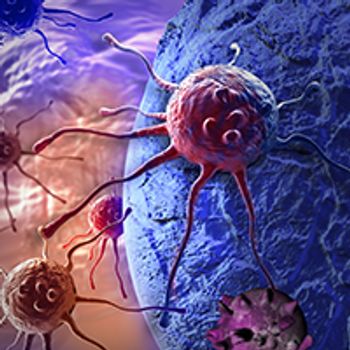
In the setting of cancer, cytokines contribute to cells’ antitumor response, cell damage, inflammation, angiogenesis, metastasis, and other cellular processes that enable tumor survival
Andre Goy, MD, discusses advances in the field of oncology that prompted the development of the Hennessy Institute, how early cancer detection can improve patient outcomes, and the importance of employing accessible cancer prevention strategies.

Second-line atezolizumab plus cabozantinib did not generate a clinical benefit over standard-of-care docetaxel in patients with metastatic non–small cell lung cancer previously treated with immune checkpoint inhibitors and chemotherapy.

Andrew Kin, MD, expands on the ways BCMA-targeted therapies that are currently available and under development have shifted the treatment landscape for relapsed/refractory multiple myeloma, the implications of the approval of teclistamab, and the limitations that still exist for using BCMA-targeted agents.

The combination of tusamitamab ravtansine and pembrolizumab with or without chemotherapy generated responses and was well tolerated when used as first-line treatment for patients with CEACAM5-positive nonsquamous non–small cell lung cancer.
Frontline cemiplimab plus chemotherapy improved overall survival and progression-free survival compared with investigator’s choice of chemotherapy for patients with PD-L1–positive non–small cell lung cancer that has metastasized to the brain.

The use of 4 cycles of chemotherapy plus durvalumab with or without tremelimumab-actl was associated with improved or sustained response and similar toxicity compared with chemotherapy alone as frontline therapy in patients with metastatic non–small cell lung cancer, according to post hoc exploratory findings from the phase 3 POSEIDON trial.

A new drug application seeking the approval of fruquintinib for use in the treatment of patients with refractory metastatic colorectal cancer has been submitted to the FDA.

Taletrectinib continued to demonstrate meaningful efficacy in the form of a durable objective response rate and a high intracranial ORR with acceptable tolerability in both TKI-naïve and crizotinib-pretreated patients with ROS1-positive non–small cell lung cancer.
The FDA has granted a fast track designation to PBP1510 (ulenistamab) for the treatment of patients with unresectable or metastatic pancreatic adenocarcinoma that has relapsed following and/or is refractory to at least 1 prior line therapy.
The European Medicines Agency’s Committee for Medicinal Products for Human Use has recommended the approval of lisocabtagene maraleucel for the treatment of select patients with large B-cell lymphoma who relapsed within 12 months from completion of or developed refractory disease to frontline chemoimmunotherapy.

Press Release
As the first clinical trial of the drug novobiocin is about to open for patients with cancers carrying BRCA gene mutations, new research at Dana-Farber Cancer Institute shows the drug poses a double threat to tumor cells.
At present, there are no FDA-approved systemic therapies for patients with high-grade meningiomas. However, there has been an increase in research surrounding the disease over the past decade, which is improving the prospect a targeted agent may become for this population.
Laura J. Esserman, MD, MBA, discusses the effect early end points could have for clinical trials in breast cancer, how these end points could help usher in more individually tailored treatment options based on an individual patient’s disease and response, and how early end points have been used in the ongoing phase 2 I-SPY 2 trial.

BDC-1001 monotherapy and in combination with nivolumab generated antitumor activity with acceptable tolerability in patients with advanced HER2-expressing solid tumors, according to topline data from the dose-escalation portion of a phase 1 trial.

The addition of cemiplimab to platinum-doublet chemotherapy continued to provide a clinically meaningful and statistically significant improvement in clinical benefit over chemotherapy alone in patients with advanced non–small cell lung cancer, irrespective of histology or PD-L1 expression level.
Neoadjuvant nivolumab plus chemotherapy produced a long-term event-free survival benefit vs chemotherapy alone in patients with resectable non–small cell lung cancer, independent of whether patients underwent minimally invasive surgery or thoracotomy or complete or partial resection of the lung.

Press Release
Fox Chase Cancer Center and Temple Health are pleased to announce the hiring of Claire L. Streibert, MD, as site chief of breast imaging.
The FDA has granted a fast track designation to RRx-001 for the prevention and attenuation of severe oral mucositis associated with chemotherapy and radiation in patients with head and neck cancer.

Nearly 40 years after the first cytokine-based therapy was approved for the treatment of patients with hairy cell leukemia, investigators are taking a fresh look at ways to leverage these signaling proteins to enhance immunotherapies and vaccines in other cancers.
Amivantamab continued to be tolerable and efficacious in patients with non–small cell lung cancer harboring EGFR exon 20 insertion mutations whose disease progressed on platinum-based chemotherapy.
The FDA has granted full approval to pembrolizumab for the treatment of adult and pediatric patients with unresectable or metastatic microsatellite instability–high or mismatch repair–deficient solid tumors that have progressed following previous treatment and who have no satisfactory alternative options.

Up-front treatment with osimertinib reduced the risk of brain progression-free survival but provided a comparable overall survival benefit compared with sequential treatment with gefitinib followed by osimertinib in patients with advanced non–small cell lung cancer harboring EGFR mutations.